Cryptanthus
Cryptanthus is a genus of stemless epiphytes belonging to the pineapple family (Bromeliaceae). Native to South America, this genus consists of approximately…
What is Cryptanthus?
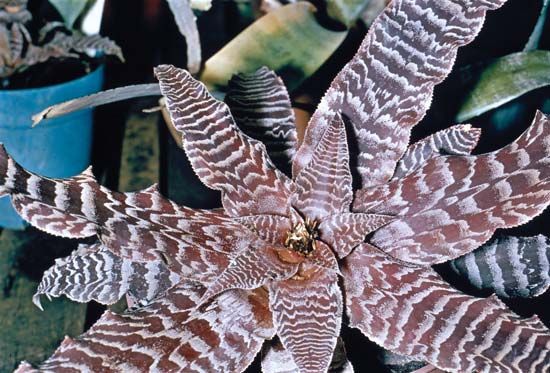
Cryptanthus is a genus of stemless epiphytes belonging to the pineapple family (Bromeliaceae). Native to South America, this genus consists of approximately 10 to 20 species characterized by prickly-edged leaves that grow in a rosette directly from the root. Their flowers are typically white and appear in a dense, stalkless cluster at the center of the rosette.1
Several species are popular as houseplants due to their striking foliage, most notably C. acaulis and C. zonatus. These plants are prized for their wavy-edged leaves, which often feature distinct color patterns, such as the greenish-brown, banded leaves of C. zonatus or the silvery undersides found on both species.1
What defines a plant as an epiphyte?
An epiphyte is any plant that grows upon another plant or object solely for physical support. Unlike parasitic plants, which derive water or nutrients from a host, epiphytes do not rely on their supporting structures for nourishment.23
Key characteristics of epiphytes include:
- Nutrient Acquisition: They obtain water from rain and water vapor in the air, often absorbing moisture through their roots or specialized leaves. Nutrients are typically gathered from organic debris that collects on the host plant.2
- Habitat: Most are found in moist tropical regions, where growing above the ground allows them to access sunlight in dense forests. While they are less common in arid environments, some species, such as ball moss, have adapted to survive in coastal deserts.2
- Diversity: The majority of epiphytes are angiosperms, including many orchids, tillandsias, and members of the pineapple family/Tillandsia), and members of the pineapple family. Mosses, ferns, and liverworts are also common.24
What are some other common types of bromeliads?
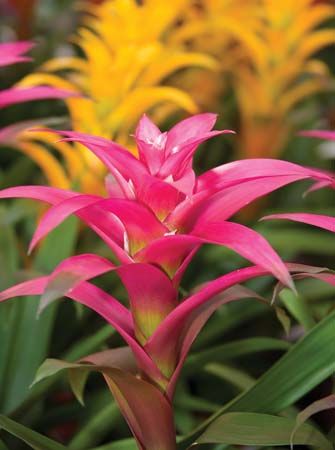
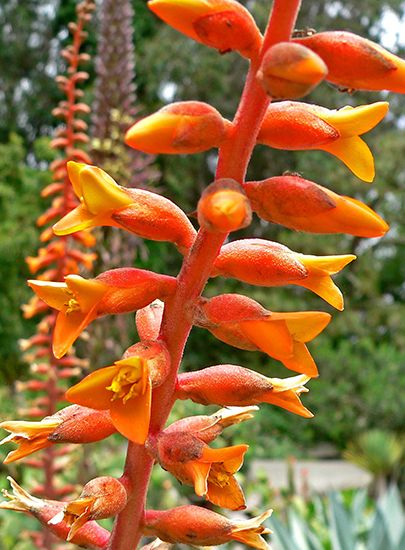
The Bromeliaceae family is highly diverse, encompassing approximately 3,000 species across 56 genera. While many are popular as houseplants, they vary significantly in form and habitat.567
Common types of bromeliads include:
- Tillandsia: Often called “air plants,” these include the well-known Spanish moss (T. usneoides). They are frequently sold as novelties due to their ability to grow without soil.56
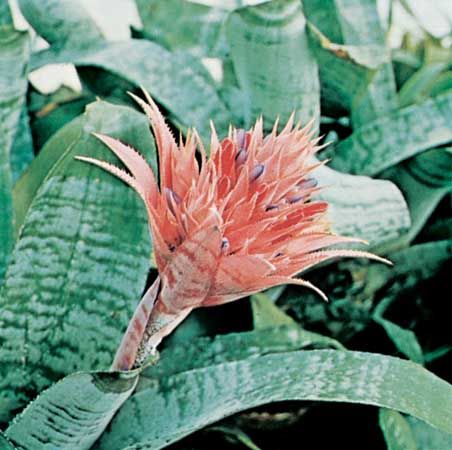
- Aechmea: A genus of over 180 species of epiphytes known for their spiny-edged leaves and showy, colorful flower spikes.8
- Neoregelia: Popular as indoor ornamentals, these plants are prized for their mottled or banded leaves and the colorful central “cup” that forms during flowering.9
- Ananas: This genus includes the commercially significant pineapple (A. comosus).56
- Puya: This genus contains the giant Puya raimondii, which can reach heights of over 10 meters.5
- Other notable genera: These include Billbergia, Dyckia, Guzmania, Hechtia, Nidularium, and Vriesea6.
How do you care for Cryptanthus as a houseplant?
To care for Cryptanthus—often referred to as “earth stars”—as houseplants, it is important to understand their unique growth habits. Unlike many other members of the pineapple family, these stemless plants grow in a rosette directly from the root and are typically kept in soil rather than being treated as true epiphytes in a home setting.
For successful cultivation:
- Light: Provide bright, indirect light to maintain the vibrant colors and patterns on their wavy-edged leaves.
- Watering: Keep the soil consistently moist but well-drained. Because they are native to humid environments, they appreciate higher humidity levels.
- Temperature: They thrive in warm, stable indoor temperatures.
- Potting: Use a well-draining potting mix suitable for bromeliads to ensure the roots do not sit in stagnant water, which can lead to rot.
Popular species like C. acaulis and C. zonatus are favored for their attractive, banded foliage, which adds visual interest to indoor spaces.
Sources
- Cryptanthus — Encyclopædia Britannica
- epiphyte — Encyclopædia Britannica
- Did you know? — Merriam-Webster
- parasitic plant — Encyclopædia Britannica
- Bromeliaceae — Encyclopædia Britannica
- list of plants in the family Bromeliaceae — Encyclopædia Britannica
- Neoregelia — Encyclopædia Britannica
- houseplant — Encyclopædia Britannica
- Aechmea — Encyclopædia Britannica
Published on · 3 min read