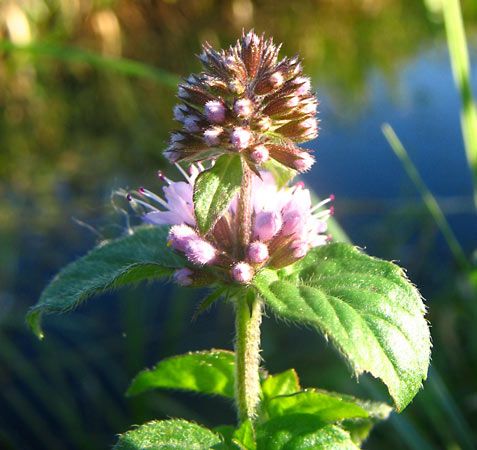
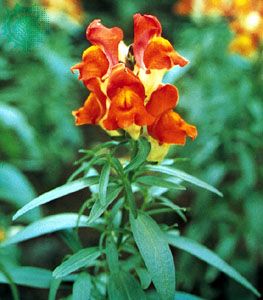
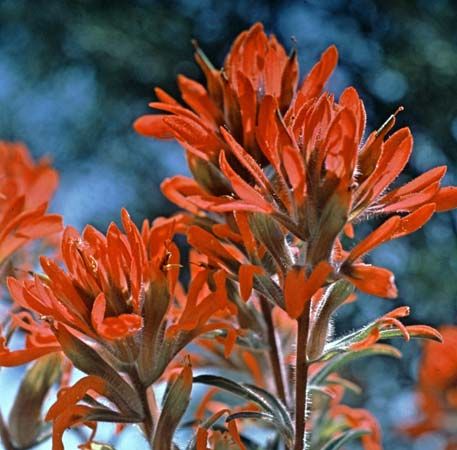
Orobanchaceae
Orobanchaceae, commonly known as the broomrape family, is the largest family of parasitic plants within the order Lamiales. It comprises approximately 100…
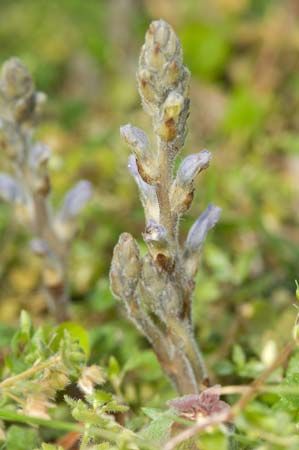
What is the Orobanchaceae plant family?
Orobanchaceae, commonly known as the broomrape family, is the largest family of parasitic plants within the order Lamiales. It comprises approximately 100 genera and 2,300 species found nearly worldwide.12
The family is divided into two primary groups based on their parasitic nature:
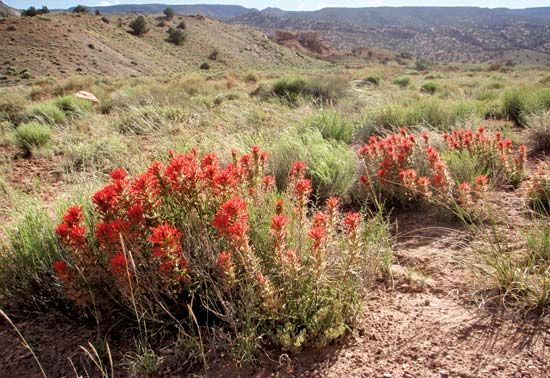
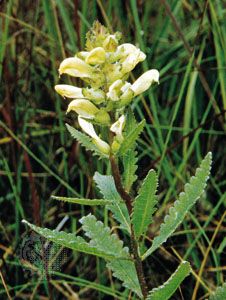
- Hemiparasites: These plants possess green foliage and are photosynthetic, but they supplement their nutrition by using specialized root connections called haustoria to siphon nutrients from host plants. Many of these species were formerly classified under Scrophulariaceae. Examples include Indian paintbrush (Castilleja) and lousewort (Pedicularis).12
- Holoparasites: These are obligate parasites that lack chlorophyll and rely entirely on their hosts. They typically feature reduced, scalelike leaves. Notable examples include broomrape (Orobanche) and beechdrops (Epifagus).12
Several members, such as witchweeds (Striga), are significant agricultural pests that can devastate crops like corn, rice, and sugarcane.12
Where are Orobanchaceae plants usually found?
Plants in the Orobanchaceae family are found nearly worldwide. They are particularly common in Africa, Madagascar, and the warm regions of the north temperate zone.2
Because these plants are parasitic, their distribution is often linked to the presence of their specific host plants. For example, certain genera like Epifagus (beechdrops) are found exclusively on the roots of beech trees, while various agricultural pests within the family are prevalent in areas where their host crops—such as corn, rice, and sugarcane—are cultivated, including the Middle East and parts of Africa including the Middle East and parts of Africa.24
What do Orobanchaceae plants look like?
The appearance of Orobanchaceae plants varies significantly depending on whether they are hemiparasites or holoparasites. Most are herbaceous plants, though some take the form of small shrubs.5
Hemiparasites
These plants retain green foliage and are capable of photosynthesis. They typically feature opposite leaves and often possess glandular hairs.5
Holoparasites
These obligate parasites lack chlorophyll, which gives them a distinct appearance compared to typical green plants:
- Coloration: They may be yellowish, brownish, purplish, or white.2
- Foliage: Instead of true leaves, they have greatly reduced, scalelike structures.25
- Form: Many are succulent in nature.5
- Growth Habit: Most species are primarily subterranean, emerging aboveground only to reproduce.2
Floral Characteristics
Regardless of their parasitic classification, most Orobanchaceae share common floral traits typical of the order Lamiales:
- Symmetry: The flowers are bilaterally symmetrical (irregularly shaped) with a corolla that often forms two lips.5
- Reproduction: They produce capsular fruits containing numerous, often dustlike seeds, some of which are less than 0.3 mm long.25
Are there any special features that make Orobanchaceae different from other plant families?
The Orobanchaceae family is distinguished by several unique features that set it apart from other plant groups:
- Sophisticated Host Detection: Unlike many other parasites that rely on chance encounters, specialist members of this family (such as Orobanche, Phelipanche, and Striga) possess a highly evolved chemical detection system. Their seeds can remain dormant in the soil for years, germinating only when they detect specific chemical signals—typically strigolactones—exuded by the roots of a suitable host plant.26
- Diverse Parasitic Strategies: The family is the largest group of parasitic plants and exhibits a wide spectrum of dependency. It includes hemiparasites, which are photosynthetic but supplement their nutrition from a host, and holoparasites, which lack chlorophyll entirely and rely exclusively on their hosts.26
- Extreme Seed Production: These plants are known for producing vast quantities of tiny, dustlike seeds. For instance, Boschniakia rossica can produce over 300,000 seeds, some of which are less than 0.3 mm in length, facilitating their survival and dispersal as parasites.2
- Agricultural Impact: Because of their specialized haustorial connections, several members are considered devastating agricultural pests. They are uniquely adapted to target specific crops like corn, rice, and legumes, often causing significant yield losses that are difficult to control due to their subterranean growth habits.26
Sources
- Lamiales - Orobanchaceae — Encyclopædia Britannica
- Orobanchaceae — Encyclopædia Britannica
- Orobanchaceae — Merriam-Webster
- orchid - Ecology — Encyclopædia Britannica
- Broomrape — Encyclopædia Britannica
- Parasitic plant — Encyclopædia Britannica
Published on · 3 min read