Broomrape
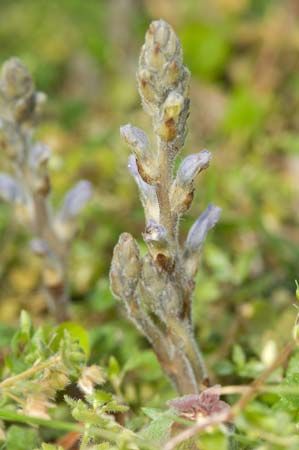
Broomrape (Orobanche) is a genus of parasitic plants that lack chlorophyll and rely entirely on host plants for nutrition. Their ecological impact is defined…
What are the ecological impacts of broomrape on other plants?
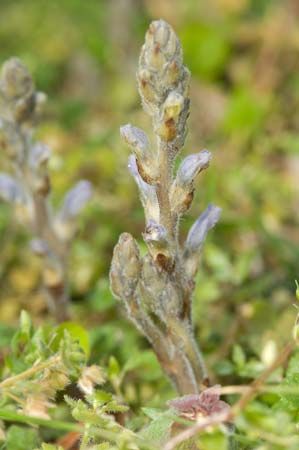
Broomrape (Orobanche) is a genus of parasitic plants that lack chlorophyll and rely entirely on host plants for nutrition. Their ecological impact is defined by their role as holoparasites, which form specialized root connections called haustoria to siphon water and nutrients directly from the host’s vascular system.123
This parasitic relationship significantly harms the host plant by:
- Arresting growth: By diverting essential resources, broomrape stunts the development of the host.23
- Reducing yields: In agricultural settings, heavy infestations can devastate the productivity of crops such as tomatoes, potatoes, legumes, and other oilseed or solanaceous crops.123
- Survival impact: As obligate parasites, they decrease the overall survival and reproductive success of their hosts.34
Because broomrape seeds can remain dormant in the soil for years until triggered by chemical signals from a host root, they are difficult to manage and represent a persistent threat to plant communities and agricultural systems.23
How do broomrape plants survive without chlorophyll?
Broomrape plants (Orobanche) survive without chlorophyll by functioning as holoparasites, meaning they are entirely dependent on a host plant for their nutrition. Because they lack the photosynthetic capacity to produce their own food, they have evolved to extract water, minerals, and nutrients directly from the host’s vascular system.13
To achieve this, broomrape plants utilize specialized organs called haustoria. These structures penetrate the roots of a host plant, creating a physical and vascular connection that allows the parasite to siphon necessary resources.13
This evolutionary transition from autotrophy (self-feeding) to heterotrophy has resulted in significant morphological changes:
- Reduced structures: Since they do not perform photosynthesis, broomrapes have little need for traditional leaves and instead possess small scales.13
- Root systems: Because they do not need to absorb water from the soil, their own root systems are often greatly reduced or entirely absent.3
- Coloration: Lacking chlorophyll, the plants typically appear in shades of cream, yellow, brown, or purple rather than green.13
What is the scientific name for broomrape and which plant family does it belong to?
The scientific name for the genus commonly known as broomrape is Orobanche. It belongs to the plant family Orobanchaceae, which is the largest family of parasitic plants.678
How do farmers and gardeners manage or control broomrape infestations?
Managing broomrape infestations is challenging because the parasite is primarily subterranean, emerging aboveground only to reproduce, and its tiny seeds can remain viable in the soil for long periods.1
Because these seeds are easily spread through contaminated soil or infected crop seeds, the primary method of control is prevention. Once a field becomes infested, it is often placed under quarantine to prevent the further spread of the parasite to other areas.1
While the provided information highlights the difficulty of detection and the importance of quarantine, effective management typically involves integrated strategies such as:
- Crop Rotation: Planting non-host crops to starve the parasite.
- Sanitation: Ensuring that farm equipment and seeds are free from contamination.
- Chemical or Biological Control: Utilizing specific herbicides or biological agents to target the parasite before it attaches to the host.
Sources
- Broomrape — Encyclopædia Britannica
- Orobanchaceae — Encyclopædia Britannica
- Parasitic plant — Encyclopædia Britannica
- community ecology - Types of parasites — Encyclopædia Britannica
- Plant - Definition of the kingdom — Encyclopædia Britannica
- broomrape family — Merriam-Webster
- broomrape — Merriam-Webster
- Orobanche — Merriam-Webster
Published on · 2 min read