Brush-footed Butterfly
Like all butterflies, brush-footed butterflies (family Nymphalidae) undergo complete metamorphosis, passing through four distinct stages: egg, larva…
How does the life cycle of a brush-footed butterfly differ from other butterflies?
Like all butterflies, brush-footed butterflies (family Nymphalidae) undergo complete metamorphosis, passing through four distinct stages: egg, larva (caterpillar), pupa (chrysalis), and adult. There is no fundamental difference in the number or type of these stages compared to other butterflies.12
However, the brush-footed butterfly family is distinguished by specific characteristics during these stages:
- Larval Appearance: Unlike the smooth larvae of some other families, the caterpillars of brush-footed butterflies are typically spiny or possess fleshy projections or processes on their bodies.34
- Pupal Behavior: The pupae of this family are often angular in outline and are characteristically found hanging suspended by the tip of the tail (the cremaster).4
- Adult Morphology: The family name derives from the adult’s first pair of legs, which are much reduced in size, brushlike, and held folded against the breast, rendering them useless for walking.34
While their life cycle follows the standard holometabolous pattern, these unique physical traits in the larval, pupal, and adult stages set them apart from other butterfly families.24
What are the defining characteristics of brush-footed butterflies?
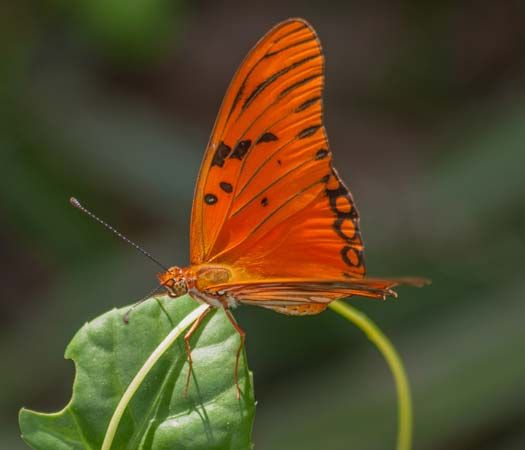
Brush-footed butterflies (family Nymphalidae) are a widely distributed group of insects defined by several distinct morphological and behavioral traits across their life stages.17
Adult Characteristics
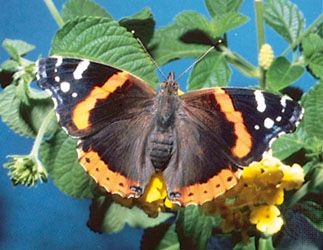
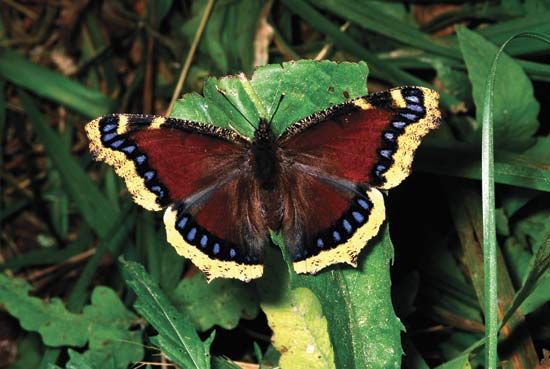
The most prominent defining feature is the structure of the adult legs. The first pair of legs is significantly reduced in size, often appearing hairy or brushlike, and is held folded against the breast rather than used for walking. Consequently, these butterflies are often referred to as “four-footed” because they rely on only two pairs of legs for locomotion. Adults typically range in wingspan from 35 to 90 mm and often exhibit contrasting wing patterns, with undersurfaces frequently displaying more protective, duller coloration.17
Larval and Pupal Traits
- Larvae: Unlike the smooth caterpillars found in other families, nymphalid larvae are typically characterized by spiny bodies, often featuring knobby projections (tubercles), horns, or branching spines.17
- Pupae: The pupae (chrysalids) are generally angular in outline and are characteristically found hanging suspended by the tip of the tail (the cremaster), usually in a head-downward position.17
What is the scientific classification of brush-footed butterflies?
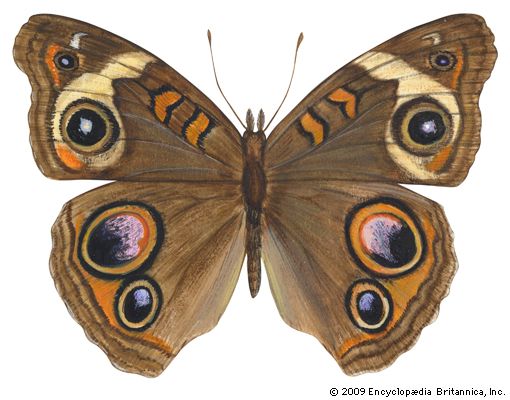
The scientific classification of brush-footed butterflies is as follows:
Within the family Nymphalidae, there are several subfamilies, such as the milkweed butterflies (subfamily Danainae), admirals (subfamilies Limenitidinae and Nymphalinae), and satyr butterflies (subfamily Satyrinae).112
How do brush-footed butterflies communicate with each other?
Brush-footed butterflies (family Nymphalidae) communicate primarily through chemical and visual signals, particularly during courtship and territorial interactions.
Chemical Communication
Chemical signaling is central to their reproductive behavior. Females often release pheromones to attract males, which are detected by the male’s antennae. Once a male locates a female, he may use his own pheromones to ensure her receptivity. These are often distributed from specialized scent scales known as androconia, located on the wings, body, or legs. In some species, such as certain monarch butterflies, males utilize specialized structures called hair pencils to produce and disperse aphrodisiac pheromones, which are dusted onto the female’s antennae to induce mating.1516
Visual and Behavioral Communication
Visual cues, such as characteristic wing colors and patterns, are essential for identifying potential mates. Courtship often involves elaborate behavioral sequences where the actions of one individual stimulate the next, serving as a mechanism to prevent hybridization. Additionally, many species exhibit territorial behavior, where males defend specific perches or areas against other males while actively seeking out passing females.15
Sources
- milkweed butterfly — Encyclopædia Britannica
- butterfly — Encyclopædia Britannica
- insect - Types of metamorphosis — Encyclopædia Britannica
- heteropteran - Metamorphosis — Encyclopædia Britannica
- Metamorphosis — Encyclopædia Britannica
- nymph — Encyclopædia Britannica
- Nymphalidae — Merriam-Webster
- Lepidoptera - Size range and distribution — Encyclopædia Britannica
- Monarch butterfly - Life cycle — Encyclopædia Britannica
- List of insects - butterflies and moths (order Lepidoptera ) — Encyclopædia Britannica
- brush-footed butterfly — Encyclopædia Britannica
- neuropteran - Annotated classification — Encyclopædia Britannica
- Lepidoptera - Evolution and paleontology — Encyclopædia Britannica
- list of butterflies and moths — Encyclopædia Britannica
- Lepidoptera - Courtship and mating — Encyclopædia Britannica
- Chemoreception - Aphrodisiac pheromones — Encyclopædia Britannica
Published on · 3 min read