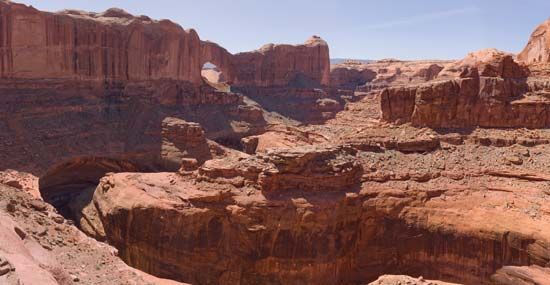
Bryce Canyon National Park
The term "amphitheatre" refers to two distinct concepts, and it is important to distinguish between them. While the term is often used to describe…
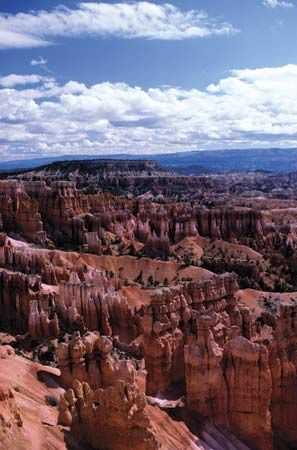
How does Bryce Canyon’s amphitheater compare to other natural amphitheaters in the world?
The term “amphitheatre” refers to two distinct concepts, and it is important to distinguish between them. While the term is often used to describe architectural structures like the Colosseum in Rome, which were built for public entertainment, the “amphitheatres” of Bryce Canyon National Park are natural geological formations.12
Because these are fundamentally different categories, they cannot be directly compared in terms of function or design. Architectural amphitheatres are man-made, oval-shaped buildings featuring a central arena and concentric seating for spectators. In contrast, the natural amphitheatres at Bryce Canyon are horseshoe-shaped basins carved into the edge of the Paunsaugunt Plateau by erosion, specifically through the freezing and thawing of water in rock cracks.21
Rather than hosting events, these natural formations contain an array of limestone and sandstone structures, including spires, pinnacles, and windowed walls. While architectural amphitheatres were engineered for human capacity, Bryce Canyon’s formations are the result of millions of years of geological processes.12
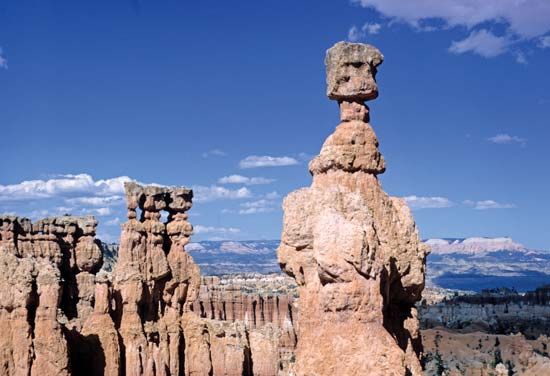
What types of recreational activities are available in Bryce Canyon National Park besides hiking?
Beyond hiking, visitors to Bryce Canyon National Park can enjoy horseback riding, which provides an alternative way to access the park’s unique rock formations and descend below the plateau’s rim.1
While the provided information highlights hiking and horseback riding as the primary ways to explore the park’s trails, the area also offers opportunities for wildlife viewing. The park is home to various species, including deer, porcupines, chipmunks, and reestablished prairie dogs, as well as numerous birds such as woodpeckers, Steller’s jays, and ravens.1
Please note that the available information does not detail other specific recreational activities beyond these options.
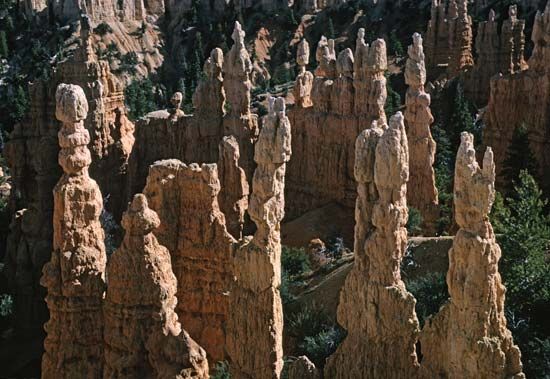
What wildlife can visitors expect to see in Bryce Canyon, and how does the park protect these species?
Visitors to Bryce Canyon National Park can observe a variety of wildlife inhabiting the park’s diverse ecosystems, which range from high-rim forests of fir, pine, and aspen to lower, drier elevations dominated by piñon pine and juniper.1
Wildlife Species
The park serves as a habitat for several mammal and bird species, including:
- Mammals: Visitors may encounter deer, porcupines, and chipmunks. Additionally, the park is home to prairie dogs, which were successfully reestablished in the 1970s after being eradicated from the area by the 1950s.1
- Birds: The avian population includes woodpeckers, Steller’s jays, blue grouse, and ravens.1
Conservation Efforts
While the provided information notes the successful reintroduction of prairie dogs as a key conservation milestone, it does not detail specific ongoing management policies or broader protection strategies currently employed by the park to safeguard these species.1
How has Bryce Canyon’s landscape been influenced by its history of Native American inhabitation and early Mormon settlers?
The landscape of Bryce Canyon National Park is primarily the result of natural geological processes, specifically the erosion of limestone and sandstone caused by the freezing and thawing of water along the Paunsaugunt Plateau. While the park’s physical features were sculpted over millions of years, its human history is tied to the region’s broader cultural narrative.
The area was historically part of the lands occupied by the Southern Paiute, a hunting and gathering culture that subsisted on local resources and maintained a presence in southern Utah. While the Paiute left a linguistic legacy in the region—such as the name of the nearby city of Panguitch, which means “abundant fish”—the provided search results do not indicate that their activities significantly altered the physical landscape of the park itself.
Similarly, the park’s name honors Ebenezer Bryce, an early settler. While Mormon pioneers and other settlers established communities in the surrounding valleys, the park’s dramatic amphitheaters remain largely defined by their natural, rugged state.
Sources
- Bryce Canyon National Park — Encyclopædia Britannica
- Amphitheatre — Encyclopædia Britannica
- Bryce Canyon National Park — Merriam-Webster
- Zion National Park — Encyclopædia Britannica
- Paiute — Encyclopædia Britannica
- Grand Staircase–Escalante National Monument — Encyclopædia Britannica
- Panguitch — Encyclopædia Britannica
Published on · 3 min read