Bubble Shell
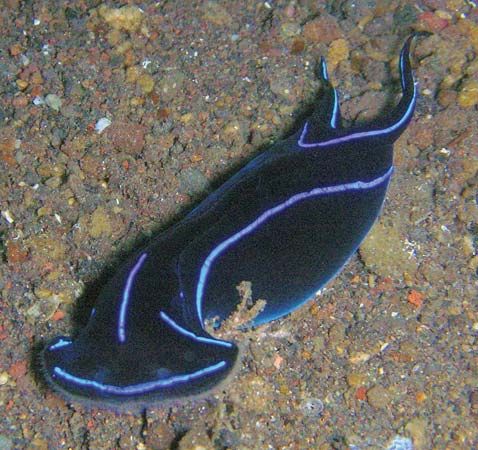
A bubble shell (also known as a bubble snail) refers to various marine snails belonging to the order Cephalaspidea within the subclass Opisthobranchia. These…
What is bubble shell?
A bubble shell (also known as a bubble snail) refers to various marine snails belonging to the order Cephalaspidea within the subclass Opisthobranchia. These mollusks are characterized by their thin, globular shells, which in some species are partially or entirely embedded within the animal’s body or entirely embedded within the animal’s body.12
Found in oceans worldwide, these snails exhibit diverse feeding habits. Many are active predators that consume other gastropods, bivalves, and polychaete worms, using specialized gizzard plates to crush their prey. Conversely, larger forms such as the genera Bulla, Haminoea, and Akera are herbivorous, primarily feeding on green algae. Bubble shells are simultaneous hermaphrodites and typically deposit their eggs in jellylike strings on seagrasses or mud.1
It is important to note that the term “bubble shell” is distinct from “bubble tea,” which is a popular beverage made with tea, milk, and chewy tapioca pearls.3
What are some other types of marine gastropods?
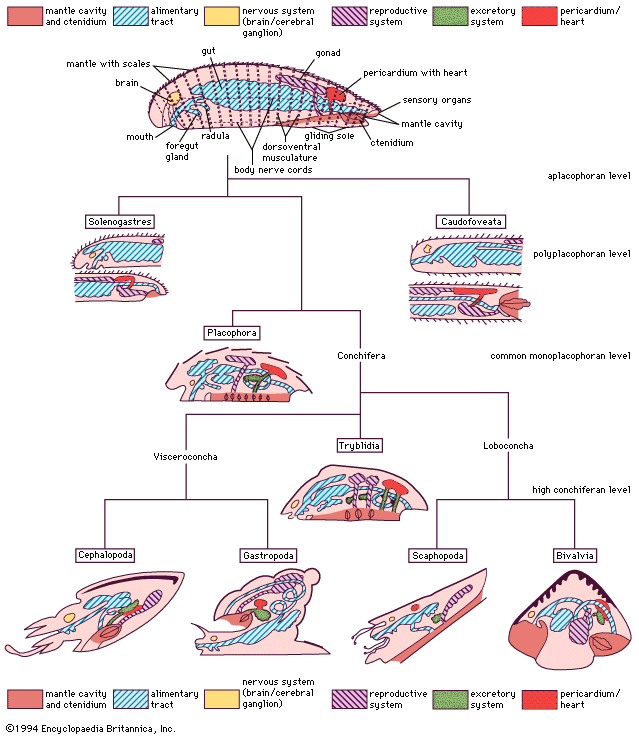
Marine gastropods are highly diverse, with over 65,000 species adapted to various aquatic and terrestrial environments. Within the class Gastropoda, marine species are primarily categorized into two main groups: prosobranchs and opisthobranchs.45
Prosobranchs
Prosobranchs are typically characterized by a substantial, coiled shell and an operculum—a calcified disk that seals the shell aperture to protect the animal from predators and desiccation. Common examples include:56
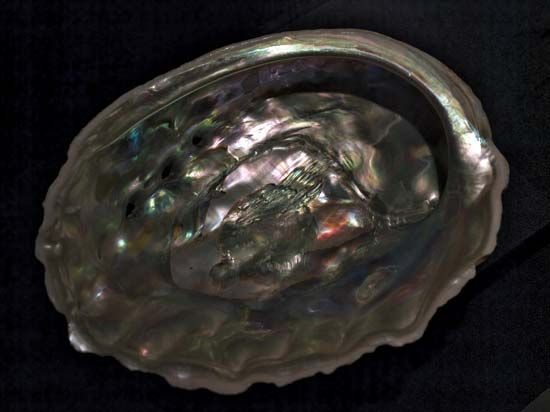
- Abalone and limpets
- Conch, cowrie, and whelk
- Cone shells, which are known for their specialized, venomous radular teeth used to capture prey567
Opisthobranchs
Opisthobranchs are marine gastropods that often have a reduced or absent shell and are frequently referred to as sea slugs. They are simultaneous hermaphrodites and exhibit a wide range of body forms. Notable types include:587
- Nudibranchs: Often brightly colored, these lack a shell and gills, instead using defensive outgrowths called cerata.9
- Sea hares: Known for their ability to cut up seaweed for food.78
- Pteropods: Some species of which are ciliary feeders on microorganisms.78
- Bubble shells: Characterized by their thin, globular shells.8
How do simultaneous hermaphrodites reproduce?
Simultaneous hermaphrodites are animals that possess both functional male and female reproductive organs—such as ovaries and testes—at the same time, allowing them to produce both sperm and eggs concurrently.1415
While these individuals are capable of producing both types of gametes, they generally prioritize cross-fertilization to ensure genetic diversity, often avoiding self-fertilization even when it is biologically possible. The reproductive process typically involves:14
- Mutual Copulation: In many species, such as slugs, land snails, and earthworms, mating pairs engage in mutual copulation. During this process, each individual introduces sperm into the body of the other, ensuring that both partners are fertilized.14
- Internal Fertilization: For many terrestrial and some aquatic hermaphrodites, eggs are well-encased and must be fertilized internally before being laid.14
- Spawning: In some aquatic species, such as certain bivalves, individuals may release both types of gametes into the water. In these cases, they often draw in sperm from another individual through specialized structures like an incurrent siphon to facilitate fertilization.16
What are gizzard plates in mollusks?
Sources
- bubble shell — Encyclopædia Britannica
- bubble shell — Merriam-Webster
- bubble tea — Encyclopædia Britannica
- gastropod — Encyclopædia Britannica
- gastropod - Size range and diversity of structure — Encyclopædia Britannica
- mollusk — Encyclopædia Britannica
- nudibranch — Encyclopædia Britannica
- prosobranch — Encyclopædia Britannica
- mollusk - Annotated classification — Encyclopædia Britannica
- gastropod - Food and feeding — Encyclopædia Britannica
- sea slug — Merriam-Webster
- prosobranch — Merriam-Webster
- opisthobranch — Encyclopædia Britannica
- Animal reproductive system - Annelids and mollusks — Encyclopædia Britannica
- bivalve - Reproduction and life cycles — Encyclopædia Britannica
- Sex - Sex patterns — Encyclopædia Britannica
- Animal reproductive system - Gonads, associated structures, and products — Encyclopædia Britannica
Published on · 2 min read