Belemnoid
The term "belemnoid" refers to a member of an extinct group of cephalopods that possessed a large internal shell and lived from the Early Devonian until the…
What is the origin of the name ‘belemnoid’ and what does it mean?
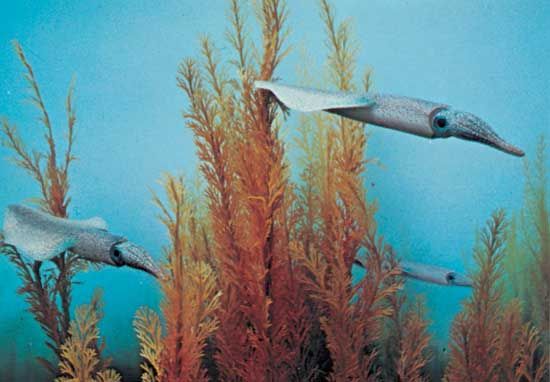
The term “belemnoid” refers to a member of an extinct group of cephalopods that possessed a large internal shell and lived from the Early Devonian until the end of the Cretaceous Period.1
The name is derived from the Greek word bélemnon, meaning “missile,” “spear,” or “arrow”. This etymology reflects the bullet-like shape of the animal’s fossilized internal shell, known as a rostrum. The New Latin term belemnītēs was popularized in the 16th century by scholars such as Georg Agricola and Conrad Gesner, who noted that the fossils resembled arrows. Historically, these fossils were sometimes referred to by German names like Alpschosz (“elf-shot” or “arrow of an incubus”) due to their distinct, pointed appearance.2
The classification “Belemnoidea” (from which “belemnoid” is derived) serves to categorize these creatures, which are considered ancestors of the modern squid.2
What is the geological time period in which belemnoids lived?
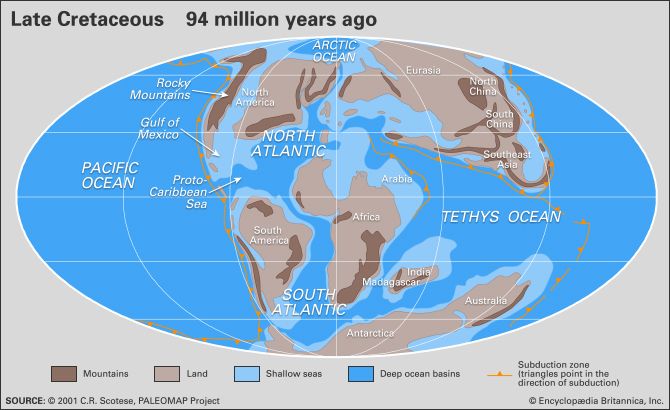
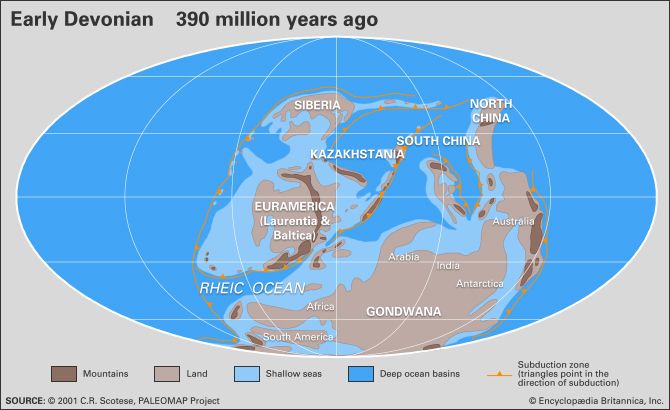
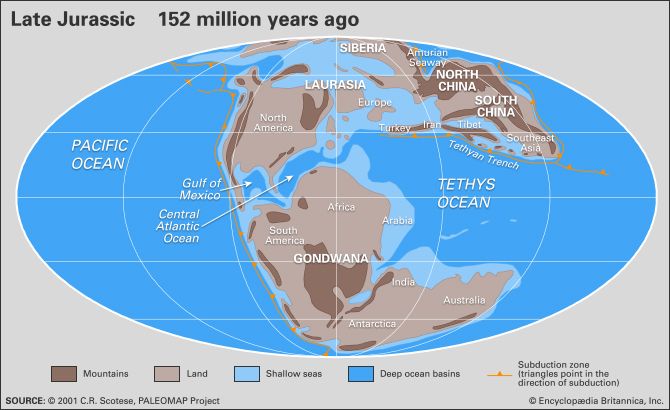
Belemnoids existed in ocean waters from the Early Devonian Period (approximately 416 million to 398 million years ago) until the end of the Cretaceous Period about 65.5 million years ago. While they reached their peak diversity and abundance during the Jurassic and Cretaceous periods, they ultimately became extinct during the Eocene Epoch, which concluded roughly 34 million years ago.1
How have belemnoid fossils contributed to our understanding of prehistoric climate changes?
While the provided search results highlight that belemnoids are significant as index fossils for correlating and sequencing rock layers due to their abundance and rapid evolution, the current Britannica knowledge base does not contain specific information detailing how these fossils have contributed to our understanding of prehistoric climate changes.
Generally, fossils can provide insights into past environments and climates by indicating the conditions required for the survival of specific species, but the specific application of belemnoid data to climate research is not addressed in the provided documentation.
How are belemnoid fossils formed and preserved?
The provided search results do not contain specific information regarding the biological or geological processes by which belemnoid fossils are formed and preserved.
While the records confirm that belemnoids possessed a complex internal shell used for support, muscle attachment, and buoyancy, the specific mechanisms of their fossilization—such as the transition from organic remains to mineralized specimens—are not detailed in the available documentation.
Sources
- belemnoid — Encyclopædia Britannica
- belemnite — Merriam-Webster
- Belemnitidae — Merriam-Webster
- fossil record — Encyclopædia Britannica
- Jurassic Period - Protists and invertebrates — Encyclopædia Britannica
- Paleozoic Era — Encyclopædia Britannica
Published on · 2 min read