Bulbophyllum
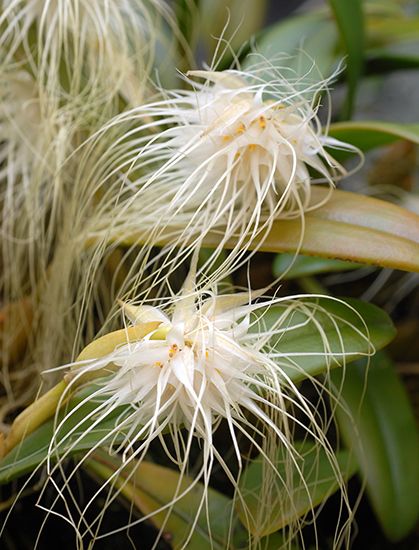
Bulbophyllum is one of the largest genera within the Orchidaceae family, encompassing more than 2,000 species of flowering plants. These plants are primarily…
What is Bulbophyllum?
Bulbophyllum is one of the largest genera within the Orchidaceae family, encompassing more than 2,000 species of flowering plants. These plants are primarily found in warm climates across Africa, Asia, and the Americas.1
Key characteristics of the genus include:
- Growth Habit: They feature creeping rhizomes and rounded pseudobulbs, with growth forms ranging from small epiphytes to large, canelike species.12
- Leaves: Most species possess a single, often succulent leaf per pseudobulb that is typically folded along the midrib.1
- Flowers: The flowers often feature colored sepals that are larger than the petals and a hinged labellum. Some species are known for emitting an offensive odor to attract flies for pollination.12
Due to habitat loss, several species are currently endangered. While some are prized for their unusual flowers, they are generally considered challenging to cultivate.1
What are epiphytes and how do they grow?
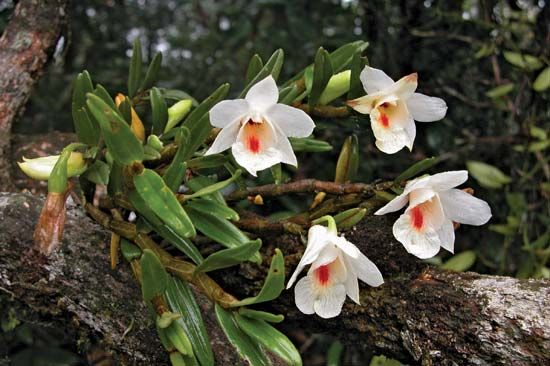
An epiphyte is any plant that grows on another plant or object solely for physical support. It is important to clarify that epiphytes are not parasitic; they do not derive nutrients from their host, but rather use the host to reach sunlight in dense, shaded environments.
How Epiphytes Grow
Epiphytes thrive by exploiting resources available high in the canopy, away from the ground:
- Nutrient Acquisition: They obtain minerals and nutrients from organic debris, such as decaying leaves, that accumulates on the supporting plant.
- Water Absorption: Most species absorb water from rain and atmospheric water vapor using their roots, though many also utilize specialized leaves to capture moisture.
- Reproduction: Because they occupy specific, elevated niches, many epiphytes rely on wind to disperse their dustlike or feathery seeds. Others produce edible fruits that are dispersed by birds and other animals.
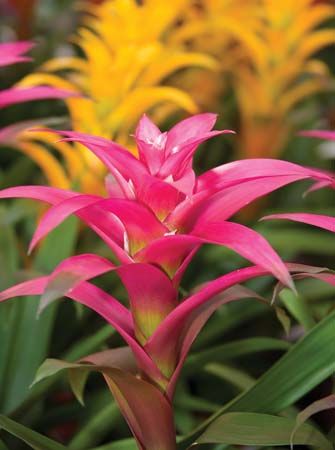
Common examples include orchids, ferns, mosses, and members of the Bromeliaceae family.
Why do some flowers evolve to smell like decaying matter?
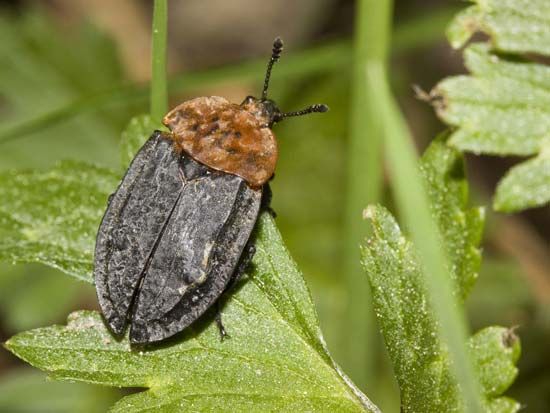
Some flowers have evolved to emit odors resembling decaying matter—such as rotting flesh or dung—as a specialized strategy to attract specific pollinators, primarily carrion beetles and flesh flies. These insects typically seek out decomposing organic material as sites for egg deposition, and these plants exploit that behavior through mimicry.456
Known as sapromyiophilous plants, these species often share specific characteristics designed to enhance this deception:
- Visual Cues: They frequently feature red or brown coloration, which mimics the appearance of raw or decaying meat.5
- Structural Design: Many have open floral structures that facilitate the landing and movement of these insects.5
- Thermal Regulation: Some species, such as the cuckoopint, can elevate their temperature to increase the vaporization rate of their scent, allowing the odor to travel over a wider area.45
In some cases, the deception is so effective that insects are tricked into attempting to lay their eggs on the flower, ensuring they come into contact with the plant’s reproductive structures and successfully transfer pollen.46
What are the main differences between orchids and other flowering plants?
Orchids are distinguished from other flowering plants primarily by a unique combination of morphological characteristics centered on their floral structure. While individual traits—such as the fusion of reproductive parts or the absence of endosperm in seeds—can be found in other plant groups, the specific way these features are combined defines the Orchidaceae family.9
Key Morphological Differences
- Floral Symmetry and Structure: Orchid flowers are typically bilaterally symmetrical. Their sexual organs—the stamens and pistil—are fused into a single structure called the column. Additionally, one petal is specialized into a landing platform known as the lip or labellum.910
- Pollen Organization: Unlike many plants with loose pollen, orchids often package their pollen into cohesive masses called pollinia, which are designed to adhere to pollinators.910
- Seed Development: Orchid seeds are extremely small and dustlike, lacking endosperm, the nutrient-rich tissue that typically nourishes a developing embryo in other angiosperms. Because of this, all orchids rely on a symbiotic relationship with fungi to provide the necessary nutrients for germination.1112
While these traits set them apart, orchids share the same fundamental life cycle as other flowering plants.11
Sources
- Bulbophyllum — Encyclopædia Britannica
- bulbophyllum — Merriam-Webster
- epiphyte — Encyclopædia Britannica
- mimicry - Carrion flowers , stinkhorn mushrooms, and mosses — Encyclopædia Britannica
- major types of pollinators - Beetles and flies — Encyclopædia Britannica
- mimicry - Mimicry to effect pollination and dispersal — Encyclopædia Britannica
- mimicry - Defensive egg dummies — Encyclopædia Britannica
- Chemoreception - Attraction — Encyclopædia Britannica
- orchid - Structural diversity — Encyclopædia Britannica
- orchid - Natural history — Encyclopædia Britannica
- orchid - Floral structure — Encyclopædia Britannica
- mycoheterotroph — Encyclopædia Britannica
Published on · 3 min read