Bunting
Bunting birds are a diverse group of seed-eating birds found across various regions of the globe, with their habitats depending on the specific species.
Where are bunting birds typically found, and what are their habitats like?
Bunting birds are a diverse group of seed-eating birds found across various regions of the globe, with their habitats depending on the specific species.1
- Old World Buntings: These species are primarily located throughout Europe, Asia, and Africa. Their habitats are varied, ranging from marshes, where birds like the reed bunting are common, to the widespread regions of Siberia and northeastern Europe.1
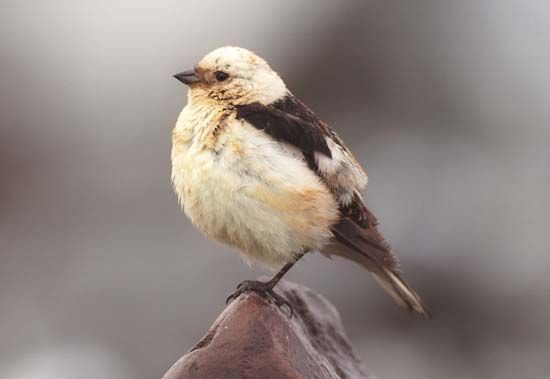
- Arctic Buntings: Members of the genus Plectrophenax, such as the snow bunting, are hardy songbirds adapted to Arctic environments. Some species, like McKay’s bunting, nest in remote locations such as the Bering Sea islands.1
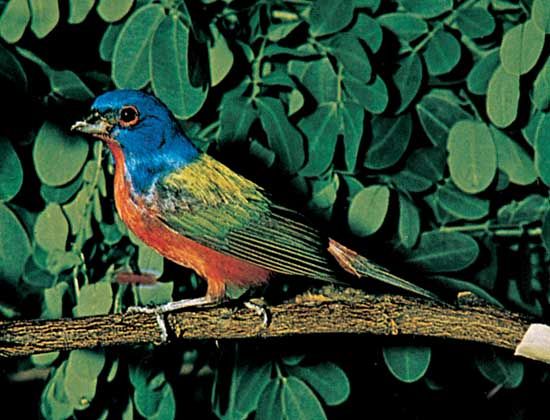
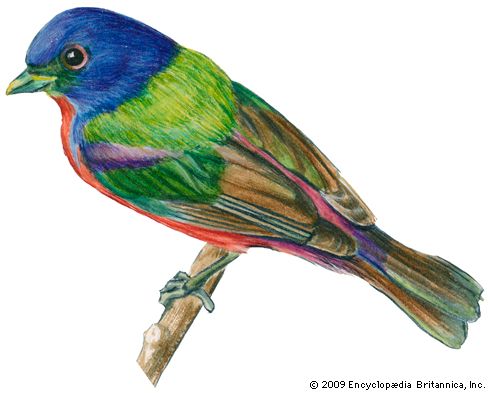
- New World Buntings: Found in the Americas, these birds typically inhabit areas of dense bush and thickets. For example, the indigo bunting is often seen along roadsides in the eastern United States, while the painted bunting is native to the American Southeast.1
How many species of buntings are there, and which are the most common?
There are approximately 50 species of buntings, which are seed-eating birds belonging to the families Emberizidae and Cardinalidae.1
These birds are categorized into several groups based on their geography and genus:
- Old World Buntings: This group consists of about 40 species found across Europe, Asia, and Africa within the genus Emberiza. Common examples include the yellow-breasted bunting (Emberiza aureola), which is widespread across Siberia and northeastern Europe, and the reed bunting (E. schoeniclus), a chunky bird frequently found in marshes.12
- Arctic Buntings: These hardy songbirds belong to the genus Plectrophenax. The snow bunting (P. nivalis) is a well-known species that breeds in Arctic regions and is sometimes referred to as a “snowflake” due to the way its flocks swirl through the air.13
- New World Buntings: These species belong to the genus Passerina within the family Cardinalidae. They are noted for their vibrant coloration. The indigo bunting (P. cyanea) is a common, conspicuous bird often seen along roadsides in the eastern United States, while the painted bunting (P. ciris), native to the American Southeast, is highly regarded for its striking, multicolored plumage.1
How do buntings build their nests, and what are their breeding habits like?
Buntings, which are members of the families Emberizidae and Cardinalidae, exhibit nesting and breeding behaviors typical of many finches. While specific details can vary by species, their general reproductive patterns are as follows:
- Nest Construction: Females of most species are responsible for building cup-shaped nests. These structures are typically crafted from a combination of twigs, grasses, and roots. Nests are usually situated on the ground or within bushes, providing a secure location for the eggs.1
- Egg Laying and Incubation: A typical clutch consists of four or five eggs. In some species, such as the indigo bunting, the drab-colored female performs the incubation alone while hidden among thickets, while the brightly colored male remains in the open to sing territorial songs.61
- Raising the Young: While the female often handles incubation, the male typically assists in raising the young. Because nestlings are unable to crack seeds, parents supplement their diet by feeding them insects. Depending on the species and environmental conditions, pairs may raise two or three broods in a single season.1
What are the distinguishing characteristics of bunting birds?
Bunting birds are a diverse group of approximately 50 species of seed-eating songbirds belonging to the families Emberizidae and Cardinalidae. Their distinguishing characteristics include:15
- Physical Build: Buntings are generally characterized by their stout, conical, and pointed bills, which are well-adapted for cracking seeds. While they vary in size, they typically range from 10 to 27 cm (4 to 11 inches) in length.18
- Plumage and Coloration: Many species exhibit sexual dimorphism, where males are often brightly colored compared to the more drab, camouflaged females. For instance, the male indigo bunting is a striking bright blue, while the painted bunting is famous for its multicolored plumage of indigo, scarlet, and lemon.1
- Behavioral Traits: These birds are often found in areas of dense bush or scrubland, though they are frequently seen perching in the open when males sing their musical, territorial songs. They are primarily terrestrial or arboreal seed-eaters, though their diet can also include insects and other vegetable matter.18
- Habitat Diversity: Buntings are found in various environments across the globe. Old World species (genus Emberiza) inhabit Europe, Asia, and Africa, while hardy species like the snow bunting are adapted to the Arctic. New World species (genus Passerina) are primarily found in the Americas.1
Sources
- Bunting — Encyclopædia Britannica
- Emberizidae — Encyclopædia Britannica
- snow bunting — Merriam-Webster
- yellow-breasted bunting — Merriam-Webster
- Passeriform - Annotated classification — Encyclopædia Britannica
- Coraciiform - Life history — Encyclopædia Britannica
- Finch — Encyclopædia Britannica
- varied bunting — Merriam-Webster
- bunting — Merriam-Webster
Published on · 3 min read