Burbot
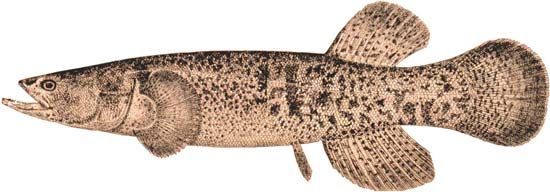
The burbot (Lota lota) is an elongated fish belonging to the family Lotidae, though its classification is sometimes debated, with some experts placing it…
What is burbot?
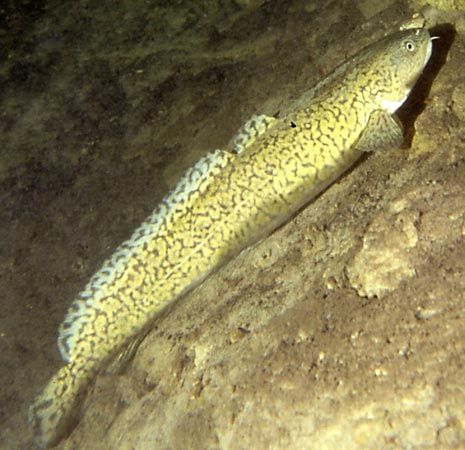
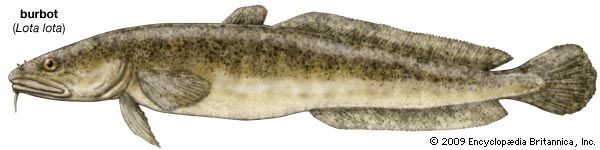
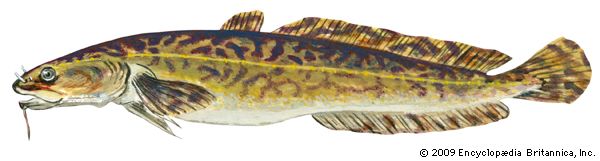
The burbot (Lota lota) is an elongated fish belonging to the family Lotidae, though its classification is sometimes debated, with some experts placing it within the cod family, Gadidae.12
This Holarctic species inhabits cold rivers and lakes across Europe, Asia, and North America. As a bottom-dwelling fish, it can be found in fresh and brackish waters at depths of up to 700 meters. Physically, the burbot is characterized by its mottled greenish or brown coloration, very small embedded scales, a long anal fin, two dorsal fins, and a distinctive barbel on its chin. It can grow to lengths of up to 1.5 meters and is considered a source of food in certain regions.12
Why is the burbot considered the only freshwater member of the cod family?
The premise that the burbot is the only freshwater member of the cod family is a common simplification, though the classification of the burbot (Lota lota) remains a subject of scientific debate.1
While many members of the family Gadidae are marine, the burbot is uniquely adapted to cold rivers and lakes throughout the Northern Hemisphere. Because of its distinct habitat, some taxonomists place the burbot in its own family, Lotidae, while others classify it within the subfamily Lotinae of the cod family, Gadidae.13
The confusion regarding its status often stems from the fact that the vast majority of other well-known gadids—such as the Atlantic cod, Pacific cod, and Alaska pollock—are primarily marine, bottom-dwelling fishes found in oceanic environments. The burbot’s ability to thrive in freshwater distinguishes it from these marine relatives, making it a notable exception within the broader group of Paracanthopterygii.214
What does it mean for a fish to be a bottom dweller?
A bottom-dwelling fish, often referred to as a benthic or demersal fish, is a species that lives near, rests upon, or is associated with the substrate of a body of water, such as the ocean floor, riverbeds, or lake bottoms.567
These fishes have evolved specific physical and behavioral modifications to thrive in this environment:
- Locomotion: Unlike open-water swimmers that are often streamlined for speed, bottom dwellers are typically slower swimmers. Many move by undulating their bodies or fins, while others dart between resting periods on the substrate.5
- Physical Adaptations: Many benthic species possess smaller eyes and down-turned mouths, which are well-suited for feeding near the bottom. Some, such as clingfishes, have developed powerful adhesive disks to remain anchored against strong currents or wave action.57
- Habitat: They frequently inhabit mud holes, rocky crevices, or the seafloor. While some venture out, others remain closely tied to these protective structures.5
- Specialized Forms: Examples include rays, flounders, gobies, and various deep-sea species like grenadiers.57
How do fish like the burbot survive in freezing cold water?
As ectotherms, fish like the burbot have body temperatures that are largely determined by their surrounding environment. To survive in freezing cold water, these animals rely on a combination of behavioral and biochemical strategies.1
Behavioral Adaptations
When water temperatures drop, many fish avoid extreme cold by seeking shelter in deeper, more stable areas of a body of water, such as near the bottom, where temperatures are often less volatile than at the surface.1
Biochemical Strategies
To prevent the formation of ice crystals within their cells and tissues—which can be fatal—many cold-adapted species utilize internal “antifreeze” mechanisms:19
- Cryoprotectants: Fish can manufacture and release compounds into their bloodstream and tissues that act as cryoprotectants. These include sugars, sugar alcohols (such as glycerol), and salts, which effectively lower the freezing point of their body fluids.110
- Antifreeze Proteins: Some species produce specialized proteins or glycoproteins that inhibit the growth of ice crystals, preventing them from expanding and damaging cellular structures.1109
These adaptations allow fish to maintain their physiological functions even when the water around them reaches temperatures that would otherwise cause freezing.1
Sources
- burbot — Encyclopædia Britannica
- burbot — Merriam-Webster
- cod — Encyclopædia Britannica
- fish - Actinopterygii: ray-finned fishes — Encyclopædia Britannica
- fish - Locomotion — Encyclopædia Britannica
- pelagic zone — Encyclopædia Britannica
- demersal — Merriam-Webster
- deep-sea fish — Encyclopædia Britannica
- Ectotherm — Encyclopædia Britannica
- antifreeze — Encyclopædia Britannica
- Thermoreception - Fish — Encyclopædia Britannica
- antifreeze — Merriam-Webster
Published on · 3 min read