Burrowing Asp
The burrowing asp (genus Atractaspis) is an oviparous snake, meaning it reproduces by laying eggs. Females typically lay clutches ranging from 2 to 11 eggs.
How do burrowing asps reproduce and what is known about their life cycle?
The burrowing asp (genus Atractaspis) is an oviparous snake, meaning it reproduces by laying eggs. Females typically lay clutches ranging from 2 to 11 eggs.12
Beyond this, relatively little is documented regarding their specific life cycle stages or reproductive behaviors. Because these snakes are highly secretive and spend much of their time underground in burrows or tunnels—an environment that has influenced their unique ability to bite with a nearly closed mouth—they are rarely observed in the wild. Most sightings occur only after heavy rains, which may trigger them to emerge to the surface.2
Where are burrowing asps typically found, and what types of habitats do they prefer?
Burrowing asps (genus Atractaspis) are found throughout tropical Africa and the Middle East.1
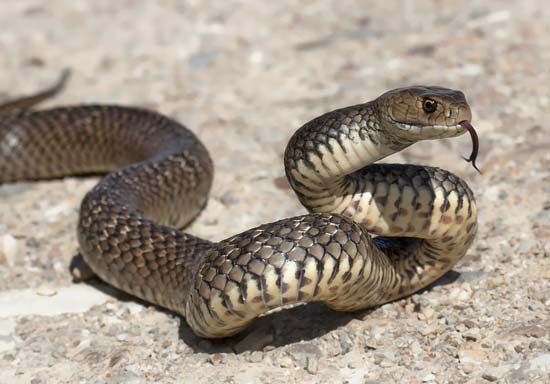
As their name suggests, these snakes are highly specialized for a fossorial (underground) lifestyle. They prefer habitats that allow them to live and hunt within animal burrows or tunnels. Because they spend the vast majority of their lives beneath the surface, they are rarely encountered in the open; sightings typically occur only after heavy rains, which may force them to emerge. Their physical structure—a thin, cylindrical body with smooth, shiny scales and a pointed head—is well-adapted for navigating these subterranean environments.1
What is the scientific classification of burrowing asps within the reptile family?
The burrowing asp (genus Atractaspis) is scientifically classified within the family Atractaspididae.14
This family is distinct from other groups of snakes, such as vipers and elapids. While they are sometimes colloquially referred to as mole vipers or stiletto snakes, they represent a unique taxonomic group characterized by specialized physiological traits, including their distinct venom composition and highly modified fangs.1
What role do burrowing asps play in their ecosystem?
Burrowing asps (genus Atractaspis) function primarily as specialized predators within their subterranean environments. By inhabiting animal burrows and tunnels, they occupy a niche as part of the soil megafauna, a group of animals that contributes to the maintenance of soil structure, aeration, and drainage through their movement and activity.15
As predators, burrowing asps help regulate the populations of other small animals that share their underground habitat. Their diet consists of:
Their unique hunting strategy—which involves striking sideways or backwards with long, specialized fangs while their mouths remain nearly closed—is an evolutionary adaptation to the confined spaces of tunnels where traditional striking is impossible. While they are predators, they also serve as a component of the food web, as they may be preyed upon by other opportunistic predators that hunt within or near these subterranean systems.16
Sources
- burrowing asp — Encyclopædia Britannica
- Atractaspis — Merriam-Webster
- snake - Skull and sense organs — Encyclopædia Britannica
- List of snakes — Encyclopædia Britannica
- soil megafauna — Encyclopædia Britannica
- scorpion - Food and feeding — Encyclopædia Britannica
Published on · 2 min read