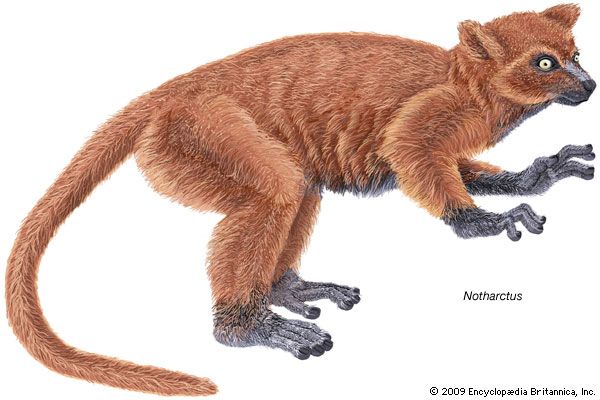
Bush Baby
Bush babies, also known as galagos, are nocturnal primates with a varied diet that typically includes fruits, insects, flowers, leaves, and occasionally…
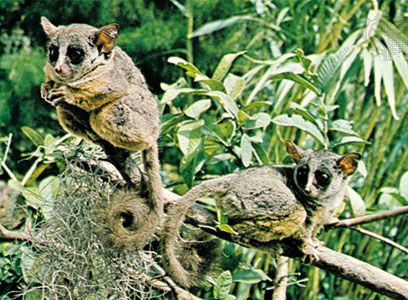
What is the diet of bush babies, and how do they hunt or forage for food?
Bush babies, also known as galagos, are nocturnal primates with a varied diet that typically includes fruits, insects, flowers, leaves, and occasionally small birds.1
For many species, a primary food source is tree gum (exudate). To access this, they use specialized dental structures called toothcombs—formed by their forward-tilted lower incisors and canines—to gouge holes into trees and scrape the bark.1
Foraging strategies vary by species and habitat:
- Needle-clawed bush babies cling upside-down to bark, using sharp, clawlike nails to anchor themselves while stabbing the bark with specialized teeth to release gum.1
- Rainforest species, such as Allen’s bush baby, forage for fallen fruits and the insects found within them.1
- Generalists actively hunt insects and gather plant materials while leaping agilely through the trees.1
What are the different species of bush babies, and how do they differ from each other?
There are more than 20 recognized species of bush babies (family Galagidae), which are categorized into several distinct genera based on their physical characteristics, habitat, and behavior.1
Major Genera and Species
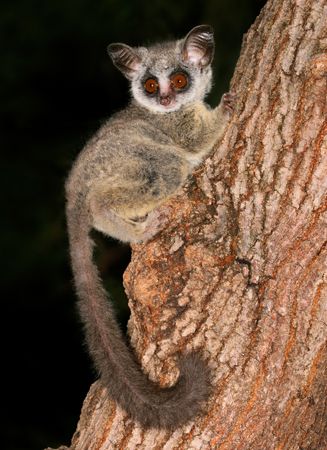
- Lesser Bush Babies (Galago): These agile, active primates weigh 150–200 grams and inhabit thornbushes and tree savannahs across sub-Saharan Africa. The group includes the lesser bush baby and the rainforest-dwelling dusky bush baby.1
- Dwarf Bush Babies (Galagoides and Paragalago): Characterized by long, slender snouts, these include the Zanzibar bush baby, Grant’s bush baby, and the tiny Prince Demidoff’s bush baby. The Rondo bush baby, weighing only 60 grams, is one of the smallest.1
- Needle-clawed Bush Babies (Euoticus): These two species live in west-central African rainforests. They are uniquely adapted to feed on tree gum by clinging upside-down to bark using sharp, clawlike nails.1
- Greater Galagos (Otolemur): This genus contains the largest species, such as the brown greater galago, which can weigh up to 1.8 kg.1
- Allen’s Bush Babies (Sciurocheirus): These larger primates inhabit west-central African rainforests, feeding primarily on fallen fruits and associated insects.1
What are the distinguishing physical characteristics of bush babies?
Bush babies, also known as galagos, are small, arboreal primates that possess several distinct physical characteristics adapted for their nocturnal, tree-dwelling lifestyle:
- General Appearance: They are covered in soft, woolly fur that ranges in color from gray and brown to reddish or yellowish brown. They have long tails and large eyes and ears, the latter of which they have the ability to fold.1
- Locomotion: They are characterized by long hind legs and a long upper portion of the foot (tarsus), which allows them to leap agilely among trees. When on the ground, they sit upright and move by jumping with their hind legs.1
- Dental Structure: A defining feature is the “toothcomb,” a specialized structure formed by the forward-tilted lower incisors and canine teeth. This structure is used for grooming, piercing fruit, and scraping tree gum (exudate) from bark.12
- Specialized Adaptations: Some species, such as the needle-clawed bush baby, possess sharp, clawlike nails that allow them to cling to tree bark, while others, like the dwarf bush babies, are distinguished by their long, slender snouts.1
Where are bush babies primarily found in the wild?
Bush babies, also known as galagos, are native to sub-Saharan Africa. They occupy a wide variety of habitats across the continent, ranging from dense rainforests to open woodlands and thornbushes.
Their distribution is broad, with specific species adapted to different regions:
- West and Central Africa: Species such as the needle-clawed bush babies and Allen’s bush babies inhabit the rainforests of west-central Africa. Prince Demidoff’s bush baby is also widespread in rainforests stretching from Sierra Leone to Uganda.
- East Africa: Various species, including the Zanzibar and Grant’s bush babies, are found in coastal forests from Kenya to Mozambique and Malawi, as well as on the islands of Zanzibar and Pemba.
- Southern and Savannah Regions: The lesser bush baby and its relatives are found in thornbushes and tree savannahs ranging from Senegal in the west to Somalia in the east, extending southward to South Africa. The brown greater galago is primarily found in the coastal forests and woodlands of southeastern Africa.4
Sources
- bush baby — Encyclopædia Britannica
- Galapagos penguin — Encyclopædia Britannica
- primate - Teeth — Encyclopædia Britannica
- Did you know? — Merriam-Webster
Published on · 3 min read