Bushtit
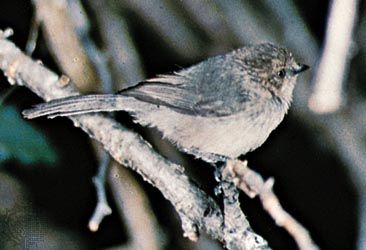
The bushtit (Psaltriparus minimus) is a small, active songbird that typically forages in busy, social bands.
What do bushtits eat and how do they forage for food?
The bushtit (Psaltriparus minimus) is a small, active songbird that typically forages in busy, social bands.
These birds primarily feed on tiny insects, with a particular preference for aphids, leafhoppers, and scale insects. In addition to these insect sources, their diet also includes seeds and berries. They are commonly found searching for food within dryland scrub, woodlands, and even suburban parks and gardens.1
What are the physical characteristics of bushtits?
The bushtit (Psaltriparus minimus) is a very small, long-tailed songbird belonging to the family Aegithalidae1.1
Key physical characteristics include:
- Size: These birds are approximately 11 cm (4.5 inches) in length.2
- Coloration: They are generally described as drab, with plumage ranging from pale gray to pale brown.21
- Distinguishing Features: Some individuals, historically classified as a separate species, feature a “black-eared” appearance and are now recognized as a subspecies.2
- Classification: They are closely related to chickadees and titmice.1
How do bushtits build their nests and what are they made of?
Bushtits construct distinctive, pouchlike nests that serve as a secure environment for their offspring. These nests are meticulously crafted from a variety of natural materials, including spiderwebs, mosses, lichens, and rootlets. To ensure the comfort and protection of the young, the birds line the interior of the pouch with soft materials such as animal hair, plant down, and feathers.1
Both parents participate in the construction of the nest and cooperate in raising their broods, which typically consist of five to seven young. These birds are known to produce two broods per year, and it is common for both parents to sleep inside the nest at night during the rearing process.1
What role do bushtits play in their ecosystem?
Bushtits play an active role in their ecosystems as diligent foragers and members of the food web in western North America. By moving through oak scrub, chaparral, and juniper woodlands in busy bands, they help regulate populations of small insects, specifically feeding on leafhoppers, aphids, and scale insects.1
In addition to their insectivorous diet, they consume seeds and berries, contributing to the dispersal of plant materials within their habitats. As small, social songbirds, they also serve as a prey source for various predators, and their vocalizations—including specific alarm calls—can alert other species to the presence of potential threats in their environment. Their complex, pouchlike nests, constructed from spiderwebs and plant fibers, demonstrate their interaction with and utilization of diverse natural resources.14
Sources
- Bushtit — Encyclopædia Britannica
- bushtit — Merriam-Webster
- Gruiform - Nesting — Encyclopædia Britannica
- 10 Bird Names that Sound Like Insults (and Sometimes Are) | 'Bushtit' — Merriam-Webster
Published on · 2 min read