Buzzard
Buzzards, which include members of the genus Buteo, are generally considered beneficial to humans because they feed on pests. Despite this, they face…
Are there any conservation concerns related to buzzards, and if so, what efforts are being made to protect them?
Buzzards, which include members of the genus Buteo, are generally considered beneficial to humans because they feed on pests. Despite this, they face significant conservation challenges primarily due to human activity.12
Historically, these birds have suffered from indiscriminate killing based on unreasoning prejudice and the exaggerated belief that they threaten domestic stock or game. Conservation efforts are essential to protect raptors in inhabited areas, where they face threats from active persecution—including shooting, trapping, and poisoning—as well as the illegal collection of eggs and specimens.2
Furthermore, habitat destruction and the widespread use of persistent agricultural and industrial chemicals pose severe risks. Because these toxins have subtle, long-lasting effects on the environment, experts emphasize the need for developing less-toxic alternatives and fostering a deeper understanding of how chemical pollutants impact entire ecosystems. Protecting these birds requires a commitment to ending unnecessary persecution and mitigating the environmental damage caused by human industrial and agricultural practices.2
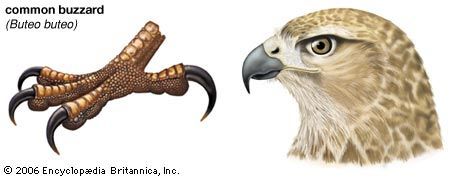
Where are buzzards typically found, and what are their preferred habitats?
The term “buzzard” is applied to different birds depending on the region, which can lead to confusion regarding their distribution and habitat. In Europe, the term refers to members of the genus Buteo, while in North America, it is often used to describe New World vultures, such as the turkey vulture. In Australia, the name is used for the black-breasted buzzard (Hamirostra).13
Regarding their range and habitat:
- Geographic Range: These birds are widely distributed across the globe, with species found throughout North America, Eurasia, Africa, and the New World. For example, the common buzzard is found from Scandinavia south to the Mediterranean.13
- Preferred Habitats: While specific preferences vary by species, these birds typically nest in trees or on cliffs, constructing substantial nests made of sticks lined with softer materials.13
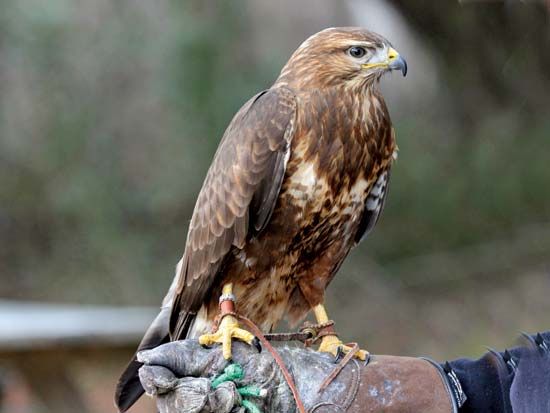
What are the main characteristics that distinguish buzzards from other birds of prey?
“True” buzzards, which belong to the genus Buteo, are distinguished from other birds of prey by several key physical and behavioral characteristics:
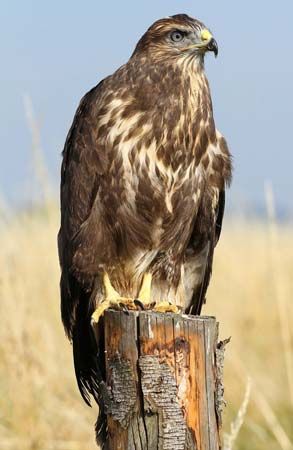
- Flight Profile: When in flight, buzzards are easily identified by their broad wings and expansive, rounded tails. They typically soar gracefully and fly with slow, heavy wing beats.1
- Appearance: Most species feature dark brown plumage on their upper bodies, while their undersides are generally white or mottled brown. Their tails and the undersides of their wings are typically marked with bars, though pigmentation can vary significantly even among individuals of the same species.1
- Dietary Habits: Buzzards customarily prey on insects and small mammals, such as rodents, and only occasionally attack other birds.14
- Nesting: They build substantial nests out of sticks, which are lined with softer materials and placed in trees or on cliffs.1
It is important to note that the term “buzzard” is often used inconsistently. In North America, the name is frequently applied to New World vultures, such as the turkey vulture, which are scavengers and are only distantly related to the true Buteo buzzards.15
What are some common species of buzzards found around the world?
Because the term “buzzard” refers to different birds depending on the region, several distinct species are commonly identified by this name across the globe:
- Common Buzzard (Buteo buteo): Found throughout Eurasia, this species ranges from Scandinavia south to the Mediterranean and parts of northern Africa.3
- Turkey Vulture (Cathartes aura): In North America, the term is frequently applied to this New World vulture, which is a scavenger rather than a member of the Buteo genus.13
- Red-tailed Hawk (Buteo jamaicensis): Often referred to as a “buzzard hawk” in North America, this is the most common Buteo species in the region, typically measuring about 2 feet (60 cm) in length.13
- Black-breasted Buzzard (Hamirostra melanosternon): This large hawk is the species identified as a “buzzard” in Australia.13
Sources
- Buzzard — Encyclopædia Britannica
- Falconiform - Importance to humans — Encyclopædia Britannica
- Did you know? — Merriam-Webster
- Hawk — Encyclopædia Britannica
- Vulture — Encyclopædia Britannica
- Falconiform - Behaviour — Encyclopædia Britannica
Published on · 3 min read