Catbird
The term catbird refers to several distinct bird species named for their characteristic mewing calls, which they produce alongside their songs.
What is Catbird?
The term catbird refers to several distinct bird species named for their characteristic mewing calls, which they produce alongside their songs.1
These birds are categorized into two primary groups:
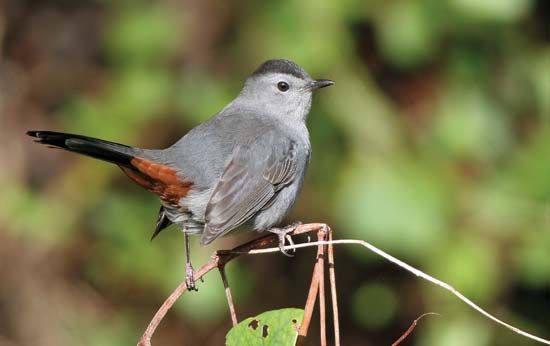
- Mimidae Family: The North American catbird (Dumetella carolinensis) is a gray bird with a black cap that typically inhabits gardens and thickets. Another species, the black catbird (Melanoptila glabrirostris), is native to the coastal regions of the Yucatán.1
- Bowerbird Family: Three species within the genus Ailuroedus are also known as catbirds. These are green birds found in New Guinea, Australia, and surrounding islands. Unlike many other members of the bowerbird family, these males do not construct bowers; instead, they defend their forest territories through loud singing.1
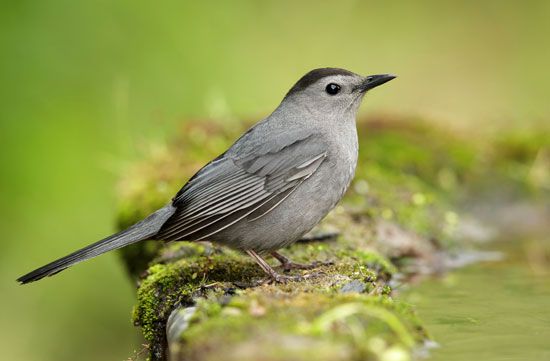
What are the main characteristics of the Mimidae family?
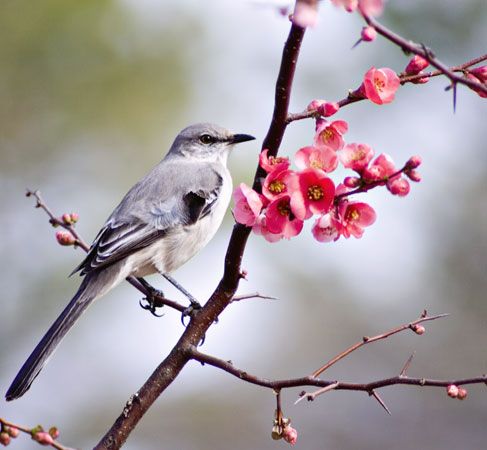
The Mimidae family, commonly known as mimic thrushes or mimids, is a group of Western Hemisphere songbirds within the order Passeriformes. This family includes approximately 35 species, such as mockingbirds, catbirds, and thrashers.2
Physical Characteristics
- Size: They range from 20 to 30 cm (8 to 12 inches) in length.2
- Appearance: They typically feature grayish to brownish plumage, resembling wrens. Key features include strong feet, short rounded wings, long tails, and slender, strong bills that are often curved downward.2
Behavior and Ecology
- Vocalization: Mimids are renowned as excellent songsters and mimics of other birdsong, utilizing a complex syrinx to produce their vocalizations.23
- Activity: They are active, aggressive birds that forage for insects and fruit in woodland litter.2
The family is closely related to the Troglodytidae (wrens), and some classifications even consider them a subfamily within that group.24
How do bowerbirds differ from other bird species?
Bowerbirds (family Ptilonorhynchidae) are distinguished from most other bird species by their unique and elaborate courtship behaviors, which center on the construction of structures known as bowers. While many passerines are monogamous and build nests for both courtship and raising young, male bowerbirds establish specialized display territories—or leks—where they attract females through song, posturing, and the manipulation of objects.567
Key characteristics that set them apart include:
- Bower Construction: Males build intricate structures to woo mates, which are categorized into three types: “mats” (platforms of plant material), “maypoles” (towers of twigs around saplings), and “avenues” (parallel walls of sticks).5
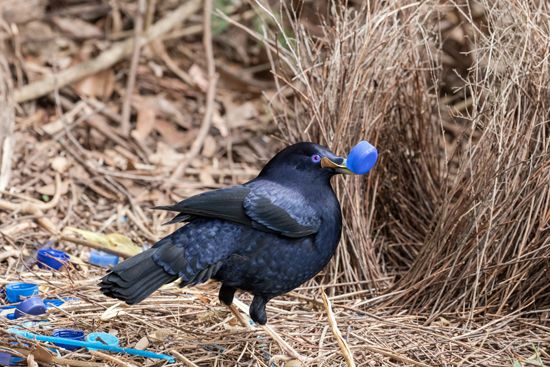
- Decoration and Tool Use: Bowers are often embellished with flowers, berries, and shiny objects. Some species, such as the satin bowerbird, even create a “paint” from vegetable pulp, charcoal, and saliva to decorate their walls—a rare instance of tool use among birds.5
- Independent Parenting: Unlike species that share nesting duties, female bowerbirds build their own nests at a distance from the male’s bower and raise their young without assistance from the male.57
What other birds are known for mimicking sounds?
Beyond the mimic thrushes of the Mimidae family, several other bird groups are renowned for their vocal mimicry:
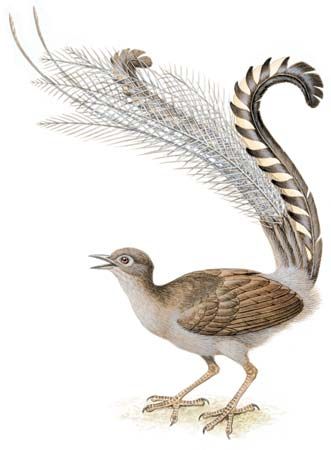
- Lyrebirds: Native to Australia, these ground-dwelling birds are considered master mimics. During courtship, males perform elaborate displays while integrating perfect imitations of other bird species and even mechanical sounds into their songs.9
- Parrots: Many species in the family Psittacidae are highly social and capable of mimicking human speech and other environmental sounds. The African gray parrot is particularly famous for its accuracy, while Amazon parrots, macaws, and budgerigars also exhibit significant vocal skills.10
- Common Ravens: These highly intelligent members of the Corvidae family can mimic the calls of other birds and, when in captivity, are capable of replicating human speech.11
- Hill Mynahs: Found in southern Asia, these passeriform birds are well-known for their vigorous and proficient vocal faculties.10
- Parasitic Weaverbirds: Certain species, such as the whydah, learn the songs of their host species as a means of species isolation, ensuring they attract mates reared by the same foster species.12
Sources
- Catbird — Encyclopædia Britannica
- Mimidae — Encyclopædia Britannica
- Mimidae — Merriam-Webster
- Passeriform - Sound production — Encyclopædia Britannica
- Bowerbird — Encyclopædia Britannica
- Animal social behavior - Social interactions involving sex — Encyclopædia Britannica
- Did you know? — Merriam-Webster
- Passeriform - Territoriality and courtship — Encyclopædia Britannica
- Which parrots are most likely to talk? — Encyclopædia Britannica
- Lyrebird — Encyclopædia Britannica
- Mockingbird — Encyclopædia Britannica
- Common raven — Encyclopædia Britannica
- mimicry - Parasitic weaverbirds — Encyclopædia Britannica
Published on · 3 min read