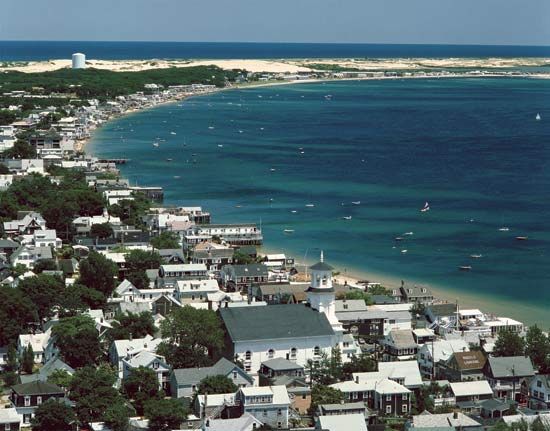
Buzzards Bay
Buzzards Bay is an inlet of the Atlantic Ocean located in southeastern Massachusetts, situated to the west of the Cape Cod peninsula.
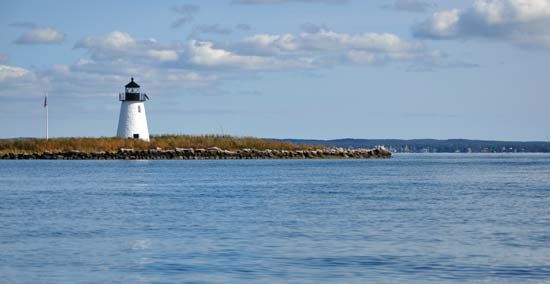
Where is Buzzards Bay located and what are its geographical features?
Buzzards Bay is an inlet of the Atlantic Ocean located in southeastern Massachusetts, situated to the west of the Cape Cod peninsula.12
The bay spans approximately 30 miles (48 km) in length and ranges from 5 to 10 miles (8 to 16 km) in width. Its geography is defined by a jagged coastline and is bounded on the southeast by the Elizabeth Islands. To the northeast, the bay connects to Cape Cod Bay via the Cape Cod Canal. The area is characterized by numerous fishing villages, summer resorts, and yacht clubs, with major population centers including New Bedford and Fairhaven. Additionally, the region is known for its marine research facilities, such as those in Woods Hole, and several historic lighthouses.1
What are the main recreational activities and attractions around Buzzards Bay?
The area surrounding Buzzards Bay offers a variety of recreational opportunities centered on its coastal geography and maritime heritage.
- Boating and Sailing: The bay’s jagged coastline is home to numerous yacht clubs, making it a popular destination for sailing and recreational boating.
- Fishing: The region is well-known for its fishing villages, which provide access to both commercial and recreational angling opportunities along the inlet.
- Tourism and Resorts: The bay is dotted with various summer resorts, attracting visitors who enjoy the coastal atmosphere and scenic environment.
- Maritime Sightseeing: Visitors can explore the area’s rich maritime history by visiting several 19th-century lighthouses, including those at Ned Point, Wing Neck, and Cleveland.
- Educational Exploration: The village of Woods Hole serves as a prominent center for marine research, offering a unique look into the scientific study of the ocean.
What is the historical significance of Buzzards Bay in Massachusetts?
The historical significance of Buzzards Bay is deeply intertwined with the maritime and economic development of southeastern Massachusetts.
- Maritime Commerce and Whaling: The bay served as a critical hub for the 19th-century whaling industry. New Bedford, located at the mouth of the Acushnet River on the bay, became one of the world’s leading whaling ports, immortalized in Herman Melville’s Moby Dick.1
- Revolutionary Era: During the American Revolution, the bay’s deepwater harbors were utilized by American privateers. This strategic importance led to the British attack and burning of New Bedford in 1778. Additionally, the Dartmouth, a ship launched from the area in 1767, was one of the vessels involved in the Boston Tea Party.1
- The Cape Cod Canal: The construction of the Cape Cod Canal (1909–14) transformed the bay into a vital link in the Atlantic Intracoastal Waterway. By connecting Buzzards Bay to Cape Cod Bay, the canal eliminated the dangerous voyage around the cape and significantly shortened the shipping route between New York City and Boston.34
- Colonial Roots: The region features early colonial history, such as the Aptucxet Trading Post in Bourne, a replica of a 1626 structure built by Plymouth colonists.4
How does the Cape Cod Canal connect to Buzzards Bay?
The Cape Cod Canal serves as a vital artificial waterway that connects Cape Cod Bay in the northeast to the waters of Buzzards Bay in the southwest.4
Spanning 17.5 miles (28 km) across the narrow isthmus of Cape Cod, the canal functions as a key segment of the Atlantic Intracoastal Waterway. Unlike many other major canals, it operates without locks, though it experiences significant tidal movements due to the connection between the two bays. By providing this direct route, the canal allows vessels to bypass the treacherous waters around the tip of Cape Cod, significantly shortening the maritime distance between New York City and Boston.46
Sources
- Buzzards Bay — Encyclopædia Britannica
- Buzzards Bay — Merriam-Webster
- New Bedford — Encyclopædia Britannica
- Cape Cod Canal — Encyclopædia Britannica
- Bourne — Encyclopædia Britannica
- Cape Cod Canal — Merriam-Webster
Published on · 3 min read