Cape Cod
Cape Cod’s economy is significantly bolstered by a thriving tourist industry, which transforms its coastal towns and villages into densely populated resorts…
How does tourism impact Cape Cod’s economy and environment?
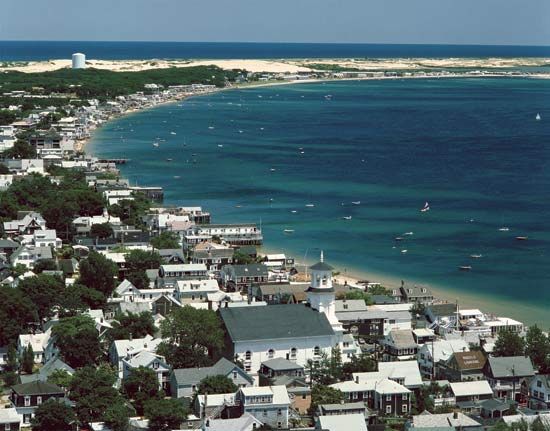
Cape Cod’s economy is significantly bolstered by a thriving tourist industry, which transforms its coastal towns and villages into densely populated resorts during the summer months. The region’s appeal as a premier vacation destination is driven by its scenic beauty, moderate climate, and proximity to major urban centers along the Eastern Seaboard.12
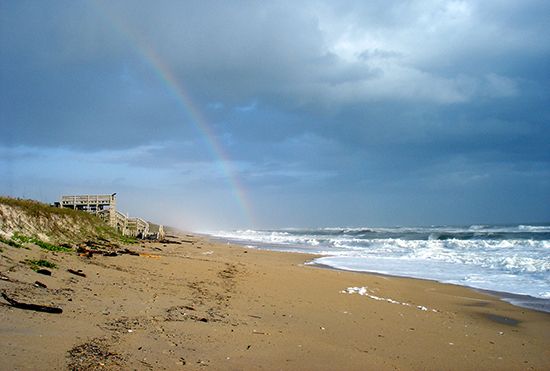
Regarding the environment, the peninsula features a diverse landscape of beach grasses, heath, and various tree species, alongside abundant populations of shorebirds and seabirds. To preserve these natural assets, significant portions of the region have been protected, most notably through the designation of the Cape Cod National Seashore in 1961. Additionally, the Monomoy National Wildlife Refuge serves as a critical habitat for wildlife on the islands off the cape’s southeastern tip. While tourism is a primary economic driver, the region also maintains a balance between development and conservation through these protected areas and the presence of scientific institutions like the Woods Hole Oceanographic Institution.12
How has Cape Cod’s history influenced its culture and economy?
Cape Cod’s history has profoundly shaped its modern identity, blending maritime heritage with a transition toward a tourism-based economy. Early European exploration, notably by Bartholomew Gosnold in 1602 and the arrival of the Pilgrims in 1620, established the region’s long-standing connection to the sea.1
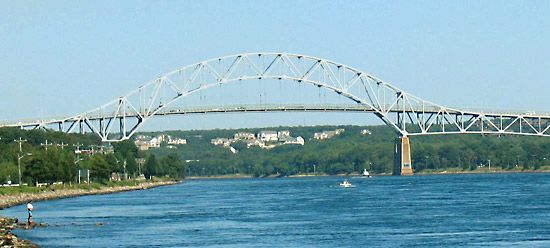
Historically, the economy relied heavily on whaling and fishing, industries that defined the culture of coastal towns. While these sectors eventually declined due to overfishing and competition, they left a lasting cultural legacy preserved at sites like the Old Harbor Life-Saving Station and the Captain Edward Penniman House. The construction of the Cape Cod Canal in 1914 further transformed the region by improving maritime safety and trade efficiency, eventually shifting the canal’s role toward recreational use.1345
Today, the region’s history is integrated into its economy through the Cape Cod National Seashore, which protects both natural habitats and historic structures. Agriculture also remains a historical holdover, with the region’s bogs producing a significant portion of the U.S. cranberry supply.413
Where is Cape Cod located and what is its geographical significance?
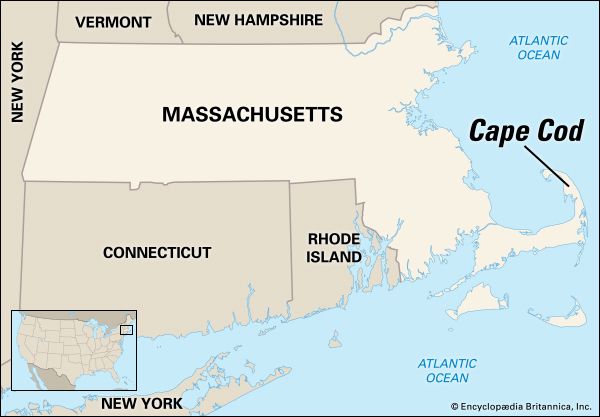
Cape Cod is a hooked, glacial peninsula located in southeastern Massachusetts, extending 65 miles (105 km) into the Atlantic Ocean. It encompasses most of Barnstable county and is bounded by Cape Cod Bay, Buzzards Bay, and the Vineyard and Nantucket sounds.1
The region holds significant geographical and historical importance:
- Maritime Connectivity: The 17.5-mile-long Cape Cod Canal separates the peninsula from the mainland, significantly shortening the shipping distance between New York City and Boston by over 75 miles.-City) and Boston by over 75 miles.1
- Climate Moderation: Its position between the Gulf Stream and the Labrador Current creates a moderate climate with warmer winters and cooler summers compared to the mainland.1
- Ecological Preservation: The area features diverse habitats, including the Cape Cod National Seashore and the Monomoy National Wildlife Refuge, which protect unique coastal ecosystems.1
What Native American tribes originally inhabited Cape Cod?
The primary Native American tribes that originally inhabited Cape Cod were the Nauset and the Wampanoag.
The Nauset occupied most of the Cape and were semisedentary, moving between fixed sites to hunt, fish, gather wild foods, and cultivate crops like corn, beans, and squash. They were among the first Indigenous groups to encounter Europeans, including Samuel de Champlain in 1606. While initially hostile to the Plymouth colonists, they later provided essential food supplies to the settlers.7
The Wampanoag, an Algonquian-speaking group, also inhabited the region and surrounding islands. They were organized into villages led by sachems and maintained a similar agricultural lifestyle. Their relationship with the English shifted from early cooperation—facilitated by the grand sachem Massasoit—to conflict over land encroachment, culminating in King Philip’s War. Following the war, many survivors intermarried or assimilated, though descendants of these tribes continue to maintain their cultural heritage today, with the Mashpee Wampanoag Tribe and others receiving federal recognition in the modern era.78
Sources
- Cape Cod — Encyclopædia Britannica
- Barnstable — Encyclopædia Britannica
- Cape Cod Canal — Encyclopædia Britannica
- Cape Cod National Seashore — Encyclopædia Britannica
- Massachusetts - Fishing and agriculture — Encyclopædia Britannica
- Cod, Cape — Merriam-Webster
- Nauset — Encyclopædia Britannica
- Wampanoag — Encyclopædia Britannica
Published on · 3 min read