Cabbage White
A cabbage white refers to any of several species of butterfly belonging to the family Pieridae. These insects are widely recognized as significant…
What is cabbage white?
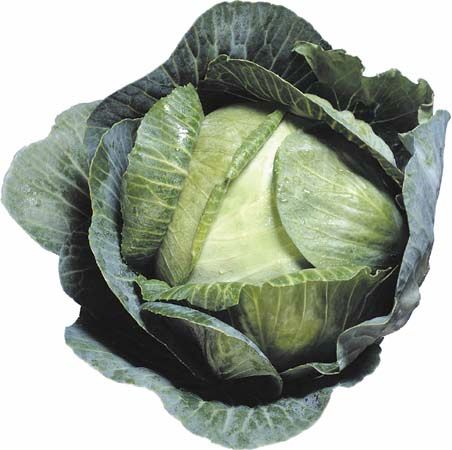
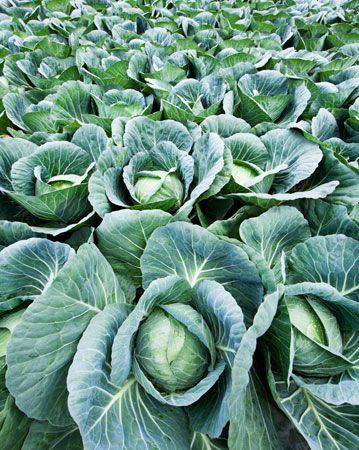
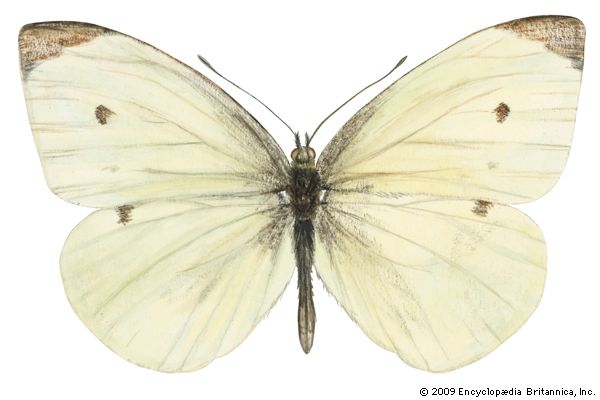
A cabbage white refers to any of several species of butterfly belonging to the family Pieridae. These insects are widely recognized as significant agricultural pests because their larvae—often called cabbage worms—feed on cabbage and other plants within the Brassicaceae family.12
Common species include:
- Small (European) cabbage white (Pieris rapae): A common, cosmopolitan species introduced to North America around 1860, characterized by white or cream-colored wings with small black dots.12
- Large cabbage white (P. brassicae): Found across Europe, Asia, and North Africa, this species features a black band on the wing tips and lays eggs in clusters.1
- Indian cabbage white (P. canidia): Native to south and southeast Asia, this butterfly has white to cream wings with black-tipped forewings.1
While insecticides are typically used to manage these pests, their increasing resistance to chemicals remains a challenge for crop protection.1
What are the stages of a butterfly’s life cycle?
Butterflies undergo a process of complete metamorphosis, which consists of four distinct life stages:34
- Egg: The life cycle begins when a female butterfly lays eggs, typically on or near a specific host plant that will serve as food for the emerging larva.45
- Larva (Caterpillar): Upon hatching, the insect enters the larval stage. The primary focus of the caterpillar is growth; it feeds voraciously and undergoes a series of molts to accommodate its increasing size.364
- Pupa (Chrysalis): Once the larva reaches sufficient size, it transforms into a pupa. For butterflies, this protective stage is known as a chrysalis. During this inactive, nonfeeding phase, the larval tissues are broken down and reorganized into the structures of an adult.734
- Adult (Imago): The final stage is the adult butterfly. After emerging from the chrysalis and drying its wings, the adult is capable of flight and reproduction, focusing on finding mates and nectar sources to continue the cycle.84
How do farmers protect crops from insect pests?
Farmers protect crops from insect pests using a variety of methods, increasingly favoring integrated pest management (IPM). This approach prioritizes ecological harmony by combining multiple strategies to keep pest populations manageable while minimizing the use of chemical pesticides, which are often reserved as a last resort.1011
Key strategies include:
- Biological Control: This involves using natural enemies to manage pests, such as releasing predators or parasites that target specific species, or utilizing microbial agents like viruses, bacteria, and fungi that are harmless to humans and domestic animals.101211
- Cultural and Mechanical Practices: Farmers use techniques like crop rotation, deep plowing, and the destruction of crop residues to inhibit pest proliferation. Physical methods such as light traps, reflective mulches, and temperature control in storage facilities are also employed.101314
- Genetic Resistance: Breeding and planting crop varieties that are naturally resistant to specific insects is considered an ideal, though long-term, solution.1211
- Reproductive Disruption: Techniques include using pheromones to bait traps and releasing sterilized insects to reduce future populations.101211
- Quarantine: Regulations are enforced to prevent the introduction and spread of exotic pests across regions.1514
What other types of insects belong to the Pieridae family?
The family Pieridae is a large, cosmopolitan group of butterflies comprising approximately 1,100 species. These insects are typically medium-sized and characterized by their white, yellow, or orange coloration, often featuring dark markings along the edges of their wings.1617
Beyond the well-known white butterflies, the family includes several other notable groups:
- Sulfur butterflies: Named for their distinctive yellow or orange wing coloration.1617
- Orange-tip butterflies: A group recognized for the specific color patterns on their wings.16
- Cabbage butterflies: This group includes various species whose larvae are significant agricultural pests, such as the European cabbage butterfly (Pieris rapae), the large cabbage white (P. brassicae), the Indian cabbage white (P. canidia), and the mustard white (P. oleracea).161
Members of this family are distinguished by having three pairs of well-developed legs in both sexes. While many are admired for their appearance, the larvae of several species are considered major economic pests because they feed on crops within the Brassicaceae family. they feed on crops within the Brassicaceae family.17161
Sources
- cabbage white — Encyclopædia Britannica
- cabbage butterfly — Merriam-Webster
- pupa — Encyclopædia Britannica
- Metamorphosis — Encyclopædia Britannica
- caterpillar — Encyclopædia Britannica
- Monarch butterfly - Life cycle — Encyclopædia Britannica
- butterfly — Encyclopædia Britannica
- Lepidoptera - Egg — Encyclopædia Britannica
- insect - Egg — Encyclopædia Britannica
- Integrated pest management — Encyclopædia Britannica
- Pest — Encyclopædia Britannica
- Agricultural technology - Biological controls — Encyclopædia Britannica
- insecticide - Environmental contamination and resistance — Encyclopædia Britannica
- Agricultural technology - Mechanical and cultural controls — Encyclopædia Britannica
- Agricultural technology - Control of plant diseases and nematodes — Encyclopædia Britannica
- white butterfly — Encyclopædia Britannica
- Pieridae — Merriam-Webster
- insect - Critical appraisal — Encyclopædia Britannica
Published on · 3 min read