Cabbage
Cabbage (Brassica oleracea) is a vegetable and fodder plant belonging to the mustard family (Brassicaceae). It is a cool-weather crop characterized by…
What is Cabbage?
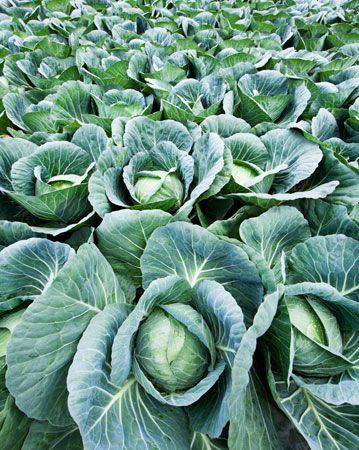
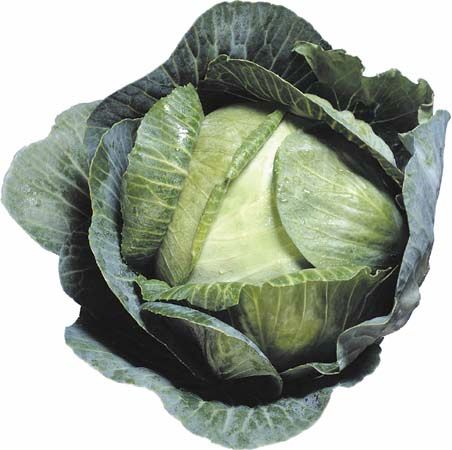
Cabbage (Brassica oleracea) is a vegetable and fodder plant belonging to the mustard family (Brassicaceae). It is a cool-weather crop characterized by succulent, waxy leaves that are often gray-green or blue-green in color.1
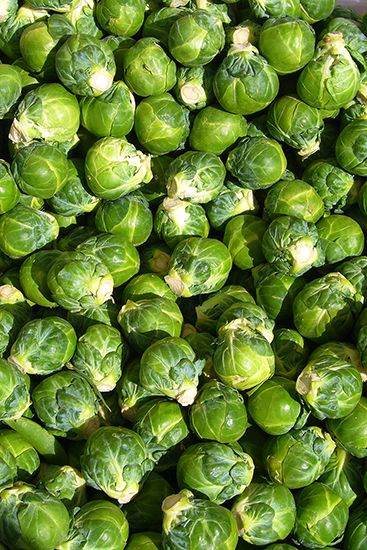
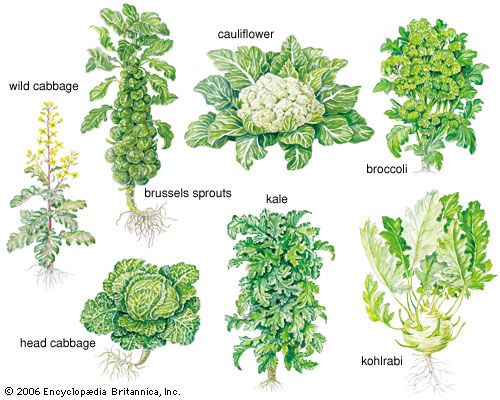
The term “cabbage” encompasses various agricultural forms developed through long cultivation, including kale, broccoli, Brussels sprouts, and kohlrabi. Head cabbage, a major table vegetable, is prized for being low in calories and an excellent source of vitamin C.1
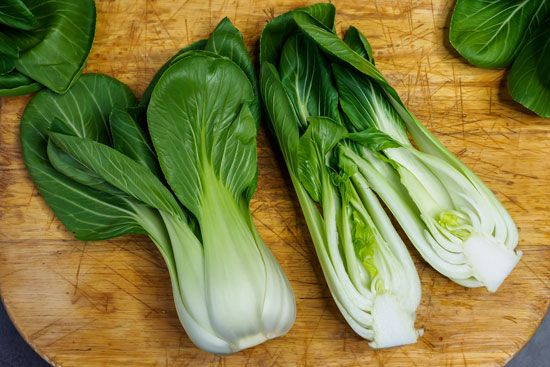
It is important to distinguish common cabbage from Chinese cabbages, such as bok choy and napa cabbage. While they share the same family, these are varieties of a related species, Brassica rapa. Napa cabbage, for instance, is a key ingredient in the traditional Korean dish kimchi, which is valued for its probiotic properties.1234
What other vegetables belong to the mustard family?
The mustard family, known as Brassicaceae, includes a wide variety of economically important vegetables. Many of these belong to the genus Brassica, which has been extensively cultivated by humans.56
Common vegetables in the mustard family include:
- Cruciferous vegetables: Broccoli, Brussels sprouts, cauliflower, kale, collards, and kohlrabi.567
- Root vegetables: Turnip, rutabaga, and radish.56
- Other crops: Horseradish, white mustard, and watercress.51
- Chinese cabbages: Varieties such as bok choy and napa cabbage are also members of the family, though they belong to the related species Brassica rapa.57
These plants are often referred to as “crucifers” because their flowers feature four petals arranged in a cross shape. Their characteristic peppery taste and pungent aroma are derived from sulfur-containing compounds known as glucosinolates.51
How is sauerkraut made from cabbage?
Sauerkraut is a traditional preparation made by fermenting finely shredded white cabbage. The process involves layering the shredded cabbage with salt in a large container, such as a crock or wooden tub. A weighted lid is placed over the mixture to keep the cabbage submerged, allowing it to ferment—ideally at temperatures below 60 °F (15.5 °C)—for at least one month.9
The transformation of the cabbage is driven by lactic-acid bacteria. These bacteria are responsible for the fermentation process, which creates the acidic, pickled environment characteristic of sauerkraut. During this time, flavorings such as caraway seeds, peppercorns, or juniper berries may be added to enhance the final product.910
What are the differences between head cabbage and Chinese cabbage?
Head cabbage and Chinese cabbage are distinct vegetables belonging to different species within the Brassicaceae family.
Head Cabbage (Brassica oleracea)
Head cabbage is a variety of the species Brassica oleracea, which also includes kale, broccoli, and Brussels sprouts. Its leaves are succulent, hairless, and covered in a waxy coating that often gives them a blue-green or gray-green appearance. These plants form compact, terminal heads that range in shape from pointed to globular or flat, with textures varying from soft to very hard. They are a staple in temperate zones and are commonly used for salads, cooking, or the production of sauerkraut.1
Chinese Cabbage (Brassica rapa)
Chinese cabbage refers to varieties of the species Brassica rapa, primarily including:
- Napa cabbage: Forms a tight, cylindrical head of crinkled, light green leaves. It is frequently used in salads and is a primary ingredient in kimchi.3
- Bok choy: Features a loose head with glossy, dark green leaves and thick, crisp white or green stalks. It is widely used in stir-fries and Asian cuisine.3
Sources
- Cabbage — Encyclopædia Britannica
- kimchi: Top Questions — Encyclopædia Britannica
- Chinese cabbage — Encyclopædia Britannica
- napa cabbage — Encyclopædia Britannica
- Brassicaceae — Encyclopædia Britannica
- brassica — Encyclopædia Britannica
- Brassicales - Brassicaceae , Capparaceae, and Cleomaceae — Encyclopædia Britannica
- Cauliflower — Encyclopædia Britannica
- sauerkraut — Encyclopædia Britannica
- Lactic-acid bacterium — Encyclopædia Britannica
Published on · 3 min read