Cairngorm Mountains
The Cairngorm Mountains are located in the Highlands of Scotland, forming part of the Grampian Mountains in the northeast-central region of the country.
Where are the Cairngorm Mountains located within Scotland?
The Cairngorm Mountains are located in the Highlands of Scotland, forming part of the Grampian Mountains in the northeast-central region of the country.12
The massif is situated between the Spey and Dee river valleys and is divided among the Highland, Moray, and Aberdeenshire council areas, with their borders radiating from the range. As the highest mountain massif in the British Isles, it includes Ben Macdui, which stands as the second-highest peak in the British Isles. The area is well-known for its national forest park, Glenmore, which serves as a hub for outdoor recreation near the town of Aviemore.123
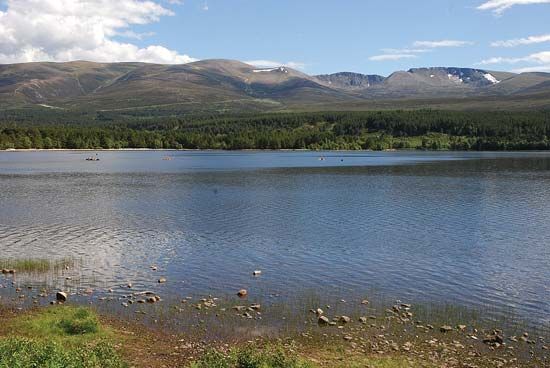
What are some of the notable peaks in the Cairngorm mountain range?
The Cairngorm Mountains feature several prominent summits that define the highest massif in the British Isles. Notable peaks include:
- Ben Macdui: Standing at 4,296 feet (1,309 metres), this is the highest peak within the Cairngorm range and the second-highest mountain in the British Isles, surpassed only by Ben Nevis.142
- Cairn Gorm: Reaching an elevation of 4,084 feet (1,245 metres), this peak serves as the namesake for the entire mountain massif.1
These mountains are a central component of the Grampian Mountains and are renowned for their rugged terrain, which supports a significant winter-sports industry and the Cairngorms National Nature Reserve.14
What recreational activities are popular in the Cairngorm Mountains throughout the year?
The Cairngorm Mountains offer a diverse range of recreational activities that take advantage of the region’s rugged landscape and natural environment. Centered primarily around the town of Aviemore and the Glenmore national forest park, popular activities include:
- Winter Sports: The region is widely recognized for offering some of the best skiing in Britain, with facilities that have expanded significantly since World War II.135
- Climbing and Walking: The mountains are a premier destination for both rock and ice climbing, as well as extensive hill walking.135
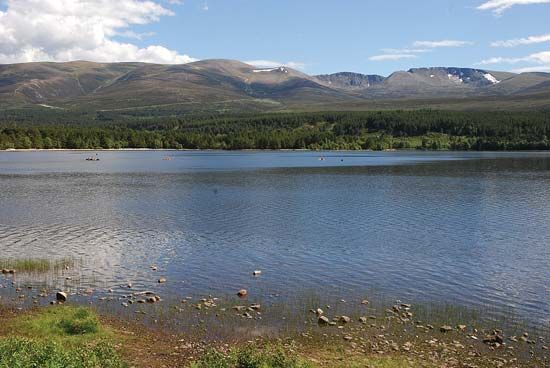
- Water Sports: Visitors can enjoy sailing on Loch Morlich, which is situated 1,000 feet above sea level.3
- Other Outdoor Pursuits: The area also supports activities such as pony trekking and general exploration of the Cairngorms National Nature Reserve, which is noted for its rare flora and fauna.1
How do the Cairngorm Mountains compare to other mountain ranges in the UK in terms of size and elevation?
The Cairngorm Mountains represent the highest mountain massif in the British Isles. While the elevations in the United Kingdom are generally low compared to European equivalents, the Cairngorms stand out as a particularly elevated core of the Grampian Mountains in Scotland, with peaks rising to over 4,000 feet (1,200 metres).16
In comparison to other UK ranges:
- Elevation: The Cairngorms contain Ben Macdui, which at 4,296 feet (1,309 metres) is the second-highest mountain in the British Isles, surpassed only by Ben Nevis (4,406 feet). This is significantly higher than other major UK uplands, such as the Cumbrian Mountains (peaking at 3,210 feet at Scafell Pike), Snowdonia in Wales (peaking at 3,560 feet at Snowdon), or the Southern Uplands, which do not exceed 2,800 feet.16
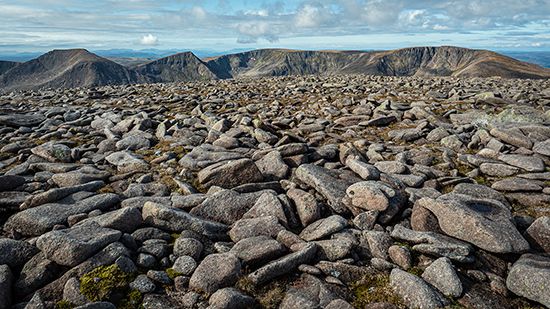
- Topography: Unlike the more subdued relief of the Southern Uplands or the moorland plateaus of the Pennines, the Cairngorms form a majestic, high-altitude massif characterized by its significant elevation and rugged, glacier-scoured landscape.6
Sources
- Cairngorm Mountains — Encyclopædia Britannica
- Cairngorm Mountains — Merriam-Webster
- Glenmore — Encyclopædia Britannica
- Grampian Mountains — Encyclopædia Britannica
- Scotland - Sports and recreation — Encyclopædia Britannica
- United Kingdom - The highland zone — Encyclopædia Britannica
Published on · 3 min read