Caladium
Caladium is a genus comprising approximately 14 species of tuberous, herbaceous plants belonging to the arum family (Araceae). Native to the tropical regions…

What is Caladium?
Caladium is a genus comprising approximately 14 species of tuberous, herbaceous plants belonging to the arum family (Araceae). Native to the tropical regions of the New World, these plants are primarily cultivated for their striking, heart- or arrowhead-shaped leaves, which feature vibrant and variable coloration.12
Because they are nonhardy, caladiums are commonly grown as indoor potted plants or used in summer outdoor displays, provided they are shielded from cold temperatures and drafts. It is important to note that all parts of the plant contain calcium oxalate crystals, rendering them poisonous if ingested.1
What are calcium oxalate crystals?
Calcium oxalate is a crystalline salt with the chemical formula CaC2O4CaC_2O_4. It is a substance that occurs naturally in a variety of biological contexts.3
In the plant kingdom, these crystals are commonly deposited within many plant cells, often serving as a defense mechanism against herbivores. In animals, calcium oxalate can be excreted in urine; however, when it is retained within the body, it can form solid deposits known as urinary calculi, commonly referred to as kidney stones.3
How do you care for Caladiums in different seasons?
To care for Caladiums effectively, it is essential to understand their nature as nonhardy, tropical plants. Because they are sensitive to cold, their care requirements shift significantly between the growing season and the dormant period.
Growing Season (Spring and Summer)
During the warmer months, caladiums thrive in environments that mimic their native tropical habitat. They should be kept in warm, humid conditions and protected from cold temperatures and harsh, wintry drafts. Whether planted outdoors or kept in pots, they require consistent moisture to support their vibrant, heart-shaped foliage.
Dormant Season (Autumn and Winter)
As temperatures drop, caladiums will naturally enter a period of dormancy. During this time, the foliage will typically wither and die back. To ensure the tubers survive until the next season:
- Reduce watering as the leaves begin to yellow and fade.
- Once the foliage has completely died back, the tubers can be lifted from the soil.
- Store the tubers in a cool, dry, and frost-free location until the return of warm weather, at which point they can be replanted.
What other plants belong to the Arum family?
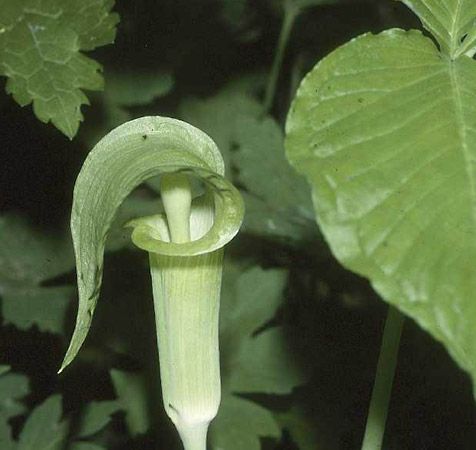
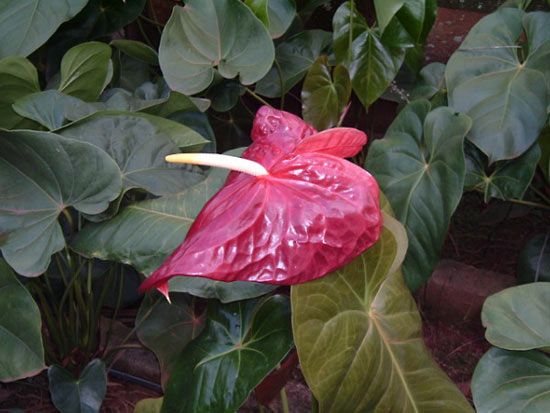
The arum family, known scientifically as Araceae, is a diverse group comprising over 140 genera and approximately 4,000 species of flowering plants. These plants, often referred to as aroids, are characterized by a unique inflorescence consisting of a spadix surrounded by a spathe.41
Beyond Caladiums, many popular houseplants and notable botanical species belong to this family, including:
- Anthurium: Known for their colorful, waxy spathes.51
- Philodendron: A large genus of tropical climbers often kept as houseplants.51
- Monstera: Famous for their large, often perforated leaves, such as the Swiss cheese plant.45
- Dumb cane (Dieffenbachia): Tropical foliage plants known for their variegated leaves.45
- Peace lily (Spathiphyllum): Vigorous herbs that produce white, flowerlike spathes.45
- Pothos (Epipremnum aureum): Popular, durable trailing houseplants.45
- Taro (Colocasia esculenta): An important food crop.41
- Titan arum (Amorphophallus titanum): Renowned for having one of the largest and most foul-smelling inflorescences on Earth.41
- Skunk cabbage: Known for its ability to generate heat.41
- Jack-in-the-pulpit (Arisaema triphyllum): A woodland plant with a distinctive hooded spathe.41
Sources
- caladium — Encyclopædia Britannica
- caladium — Merriam-Webster
- calcium oxalate — Merriam-Webster
- list of plants in the family Araceae — Encyclopædia Britannica
- houseplant - Foliage plants — Encyclopædia Britannica
- Araceae — Encyclopædia Britannica
Published on · 2 min read