Monstera
Monstera is a genus comprising nearly 50 species of flowering plants within the arum family (Araceae), native to tropical America. These plants are typically…
What is Monstera?
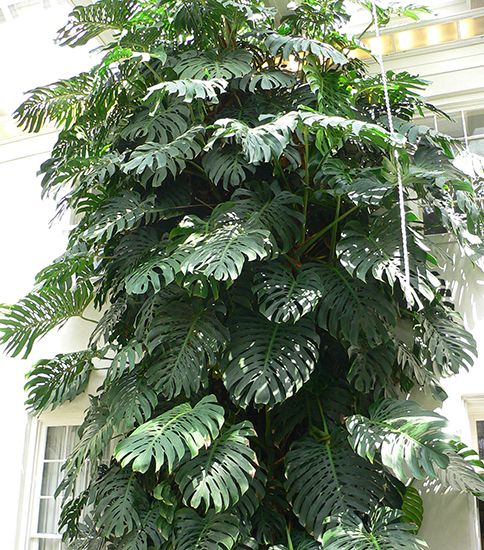
Monstera is a genus comprising nearly 50 species of flowering plants within the arum family (Araceae), native to tropical America. These plants are typically climbers that grow either terrestrially or as epiphytes, characterized by their distinct, leathery leaves that often feature lobes or perforations.1
The most well-known species is Monstera deliciosa, frequently referred to as the Swiss cheese plant or Mexican breadfruit. While it is sometimes called a “split-leaf philodendron,” it is not a true philodendron. This popular houseplant produces a sweet, edible fruit when fully ripe that is said to taste like a blend of pineapple and mango.12
It is important to note that all other parts of the plant, as well as the unripe fruit, contain calcium oxalate and are considered mildly toxic if ingested by humans.1
Why do Monstera leaves develop holes and splits?
The development of holes and splits in Monstera leaves is a natural characteristic of these flowering plants. These openings, known as fenestrations, are a defining feature of species like the Monstera deliciosa, which is commonly referred to as the Swiss cheese plant.1
While the provided search results confirm that these plants naturally grow with leaves that are often cut into lobes or perforated with holes, they do not specify the biological or evolutionary purpose for these structures. In botanical terms, the presence of such openings is referred to as fenestration, a term derived from the Latin word for “window,” describing an opening in a surface.134
What does it mean for a plant to be epiphytic?
An epiphyte is any plant that grows upon another plant or object solely for physical support. Unlike parasitic plants, which derive water or nutrients from a host, epiphytes use their host only as a structure to grow on and do not harm it.56
Because they do not have an attachment to the ground, epiphytes must obtain water and nutrients from other sources. They typically absorb water from rain and water vapor in the air through their roots or specialized leaves. Nutrients are generally acquired from organic debris that collects on the supporting plant.5
Most epiphytes are found in moist tropical regions, where growing high in the tree canopy allows them to access sunlight in dense, shaded forests. Common examples include many species of orchids, ferns, mosses, and members of the pineapple family.57
How can you safely care for a Monstera at home?
To safely care for a Monstera as a houseplant, it is important to understand its natural growth habits and potential risks. As members of the arum family, these plants are typically climbers that can grow either terrestrially or as epiphytes, meaning they appreciate support as they mature.1
When maintaining a Monstera at home, keep the following safety considerations in mind:
- Toxicity Awareness: All parts of the plant, with the exception of the fully ripe fruit of the Monstera deliciosa, contain calcium oxalate. This substance is considered mildly toxic if ingested by humans. Ensure the plant is kept out of reach of small children and pets to prevent accidental ingestion.1
- Handling: Because the plant contains calcium oxalate, it is advisable to wash your hands after pruning or handling the leaves to avoid skin or eye irritation.1
- Growth Support: Since they are climbing plants, providing a moss pole or trellis can help mimic their natural environment and support their leathery, lobed foliage as they grow.1
Sources
- monstera — Encyclopædia Britannica
- split-leaf philodendron — Merriam-Webster
- fenestra — Merriam-Webster
- fenestration — Merriam-Webster
- epiphyte — Encyclopædia Britannica
- Did you know? — Merriam-Webster
- parasitic plant — Encyclopædia Britannica
Published on · 3 min read