Anthurium
Anthurium is a genus of approximately 825 species of herbaceous plants belonging to the arum family (Araceae), native to tropical America. These plants can…
What is Anthurium?
Anthurium is a genus of approximately 825 species of herbaceous plants belonging to the arum family (Araceae), native to tropical America. These plants can grow terrestrially or as epiphytes and are characterized by their leathery leaves and distinct inflorescence.1
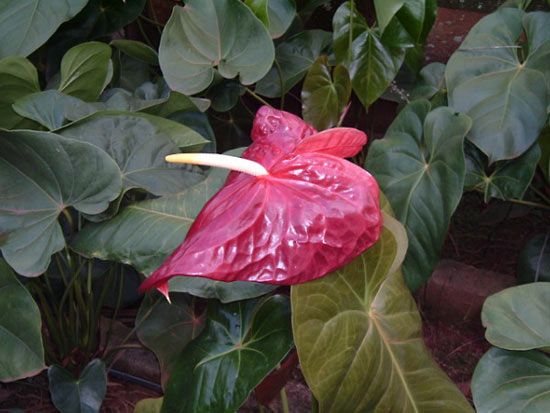
The plant’s showy structure consists of a colorful, leathery spathe that surrounds a central, rodlike spadix, which bears numerous tiny, bisexual flowers. Due to the presence of calcium oxalate crystals, these plants are considered poisonous. Because they require high humidity and warm temperatures, they are typically cultivated in greenhouses. Popular varieties include the flamingo lily, which is widely grown for the florist trade. The name is derived from the Greek words anthos (flower) and oura (tail), referencing the plant’s unique appearance.12

What is an epiphyte?
An epiphyte is any plant that grows upon another plant or object solely for physical support. Unlike parasitic plants, which derive nutrition from a host, epiphytes do not rely on their supporting structures for water or nutrients. They have no attachment to the ground and instead obtain moisture from rain, water vapor, and humidity, often absorbing it through their roots or specialized leaves.34
Most epiphytes are found in moist tropical regions, where growing above the forest floor allows them to access sunlight and collect nutrients from organic debris that accumulates in the tree canopy. Common examples include many species of orchids, ferns, mosses, and members of the pineapple family. While they are less common in arid environments, some species, such as ball moss, have adapted to survive in coastal deserts by utilizing marine fog.35
Why are Anthurium plants considered poisonous?
Anthurium plants are considered poisonous because they contain calcium oxalate crystals. These crystals, which have the chemical formula CaC2O4CaC_2O_4, are deposited within the plant’s cells.16
When the plant tissue is chewed or crushed, these needle-like crystals are released. Upon contact with the delicate tissues of the mouth, throat, and digestive tract, they can cause significant irritation, swelling, and pain. Because of this toxicity, it is important to keep these plants out of reach of children and pets to prevent accidental ingestion.
What are the differences between a spathe and a spadix?
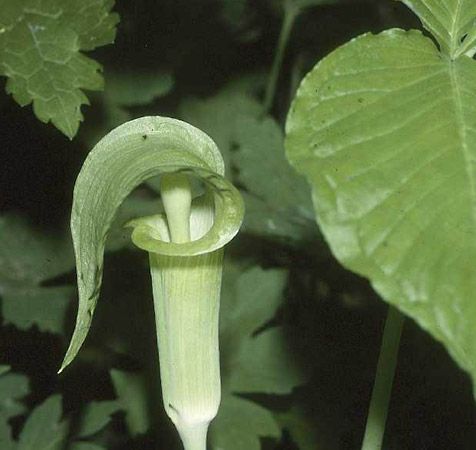
The spadix and spathe are distinct components of a specialized floral structure commonly found in plants of the Araceae family, such as the calla lily and the titan arum.
- Spadix: This is a floral spike characterized by a fleshy or succulent axis. It serves as the central column upon which the plant’s actual, often tiny, flowers are borne.7
- Spathe: This is a modified, leaf-like structure—technically a bract—that acts as a sheath to partially or fully enclose the spadix.78
Together, these parts function as a single unit to facilitate pollination. In many species, the spathe serves to protect the spadix or attract pollinators through its shape, color, and scent, while the spadix provides the platform for the reproductive organs.79
Sources
- anthurium — Encyclopædia Britannica
- anthurium — Merriam-Webster
- epiphyte — Encyclopædia Britannica
- Did you know? — Merriam-Webster
- parasitic plant — Encyclopædia Britannica
- calcium oxalate — Merriam-Webster
- 'Pistil,' 'Stamen,' and Other Flower Part Name Origins | Spadix/Spathe — Merriam-Webster
- Botanical Sex: 9 Alluring Adaptations — Encyclopædia Britannica
- spathe — Merriam-Webster
- spathaceous — Merriam-Webster
Published on · 2 min read