Calanthe
Calanthe is a genus comprising approximately 200 species of terrestrial orchids within the family Orchidaceae. These plants are primarily native to tropical…
What is Calanthe?
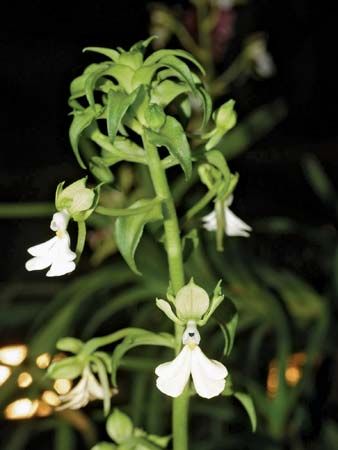
Calanthe is a genus comprising approximately 200 species of terrestrial orchids within the family Orchidaceae. These plants are primarily native to tropical and subtropical regions of Asia and South Africa, though some species are found in Australia, Central America, and the West Indies.1
Characterized by their showy flowers—which appear in shades of white, rose, or yellow—these orchids often feature broad leaves folded lengthwise. While many species lack pseudobulbs, those that possess them typically have large stems and leaves. Several species are drought deciduous, shedding their foliage during the dry season, and they produce numerous flowers on erect or slightly arched spikes. Due to environmental pressures, several species are currently listed as endangered by the IUCN Red List of Threatened Species.21
What makes terrestrial orchids different from other types of orchids?
Terrestrial orchids are distinguished from other types of orchids—primarily epiphytes—by their growth habits and environmental distribution. While the majority of tropical orchid species are epiphytes, nearly all orchids found in temperate zones are terrestrial.3
Key differences include:
- Growth Environment: Terrestrial orchids grow in soil, often inhabiting diverse environments such as bogs, prairies, grasslands, and hardwood forests/grassland), and hardwood forests. In contrast, epiphytic orchids typically grow on other plants, such as trees or even cacti, to access light in dense habitats like cloud forests.4
- Morphological Features: Many primitive terrestrial orchids exhibit a standard monocot appearance, featuring a short rhizome and annual, non-thickened stems. While both groups may have thickened stem bases, specialized pseudobulbs consisting of a single internode are restricted to primarily epiphytic groups.3
- Adaptation: Terrestrial orchids have adapted to a wide range of ecological conditions, from the Arctic Circle to roadside ditches, whereas epiphytes are more commonly associated with the specific microclimates of tropical tree canopies.4
Why do some Calanthe species lose their leaves during the dry season?
Some Calanthe species are drought deciduous, meaning they shed their leaves during the dry season as a survival strategy.1
This process is a form of self-protection that allows the plant to enter a state of dormancy when environmental conditions are unfavorable for growth. By dropping their leaves, these plants prevent the loss of water through transpiration and avoid the risk of cellular damage that can occur when water is scarce.46
The shedding is a controlled biological process involving the formation of an abscission layer at the base of the leaf stalk. This layer allows the plant to detach the leaf without leaving an open wound, effectively sealing the area and helping the plant conserve its energy until more favorable conditions return in the spring.46
What are pseudobulbs and how do they help plants survive?
A pseudobulb is a solid, bulbous enlargement of the stem found in many orchid species, particularly those that are epiphytic. These structures are highly diverse in form and can consist of several internodes or, in some specialized groups, a single internode.83
Pseudobulbs serve as vital storage organs that help plants survive in environments where water and nutrients may be periodically unavailable. By thickening their stems, these orchids create a reservoir that allows them to store water and essential resources, providing a buffer against drought or inconsistent environmental conditions. This adaptation is especially critical for epiphytes, which grow on other plants rather than in the ground and therefore lack direct access to soil-based water sources.39
Beyond their role in storage, these structures are integral to the plant’s overall growth habit, often supporting the development of inflorescences, as seen in the bucket orchid.9
Sources
- Calanthe — Encyclopædia Britannica
- calanthe — Merriam-Webster
- orchid - Growth forms — Encyclopædia Britannica
- orchid - Ecology — Encyclopædia Britannica
- orchid - Structural diversity — Encyclopædia Britannica
- Why Do Leaves Fall in Autumn? — Encyclopædia Britannica
- leaf — Encyclopædia Britannica
- pseudobulb — Merriam-Webster
- bucket orchid — Encyclopædia Britannica
Published on · 3 min read