Calidris
Calidris is a genus of birds within the family Scolopacidae. This group includes various shorebirds commonly known as sandpipers, as well as the dunlin…
What is Calidris?
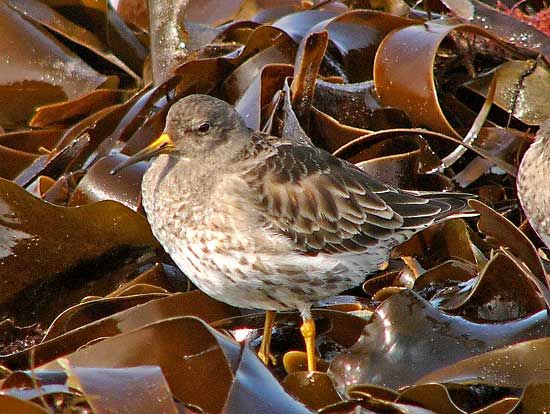
Calidris is a genus of birds within the family Scolopacidae. This group includes various shorebirds commonly known as sandpipers, as well as the dunlin, knot, and sanderling.12
Many small sandpipers—often referred to as peeps, stints, or oxeyes—that were previously classified under different genera are now grouped within the broad Calidris genus. These birds are typically found on sea beaches and inland mud flats, where they forage for insects, crustaceans, and worms. Many species within this genus are migratory, often nesting in Arctic and sub-Arctic regions before traveling long distances to wintering grounds. Because many Calidris species share similar physical characteristics, such as “dead-grass” patterned plumage, they can be notoriously difficult to identify in the field.2
What are the primary differences between sandpipers and other shorebirds?
Sandpipers are a specific group of shorebirds belonging to the family Scolopacidae, which also includes woodcocks and snipes. While they share the general “shorebird” classification—a diverse suborder (Charadrii) of birds that frequent beaches and mudflats—they are distinguished from other related groups, such as plovers, by specific anatomical traits.3245
The primary differences include:
- Bill Structure: The most notable distinction between sandpipers and plovers is the bill; sandpipers possess a longer, soft-tipped bill, whereas plovers typically have shorter, harder bills.5
- Feeding Behavior: While both groups inhabit similar environments, sandpipers are characterized by their habit of running along the water’s edge, using their sensitive, soft-tipped bills to probe for food like insects, crustaceans, and worms in the sand or mud.3
- Physical Appearance: Sandpipers generally feature long, narrow wings, moderately long legs, and fairly short tails. Their plumage often displays a complex “dead-grass” pattern of browns, buffs, and blacks, which provides camouflage in their open habitats.3
Why do many Calidris species migrate such long distances?
Many Calidris species, such as the white-rumped sandpiper, undertake long-distance migrations primarily to balance the high risks of their journey against the reproductive benefits of breeding in the Arctic tundra. While these migrations expose the birds to significant mortality from exhaustion and severe weather, the Arctic environment offers a crucial advantage: it supports lower densities of predators compared to regions farther south, which allows a greater number of newly hatched young to survive to adulthood.8
To prepare for these demanding flights, Calidris species undergo fundamental physiological changes. Under the control of the pituitary gland, they accumulate fat in their body tissues and experience shifts in metabolism to provide the necessary energy for travel. Once they depart, they often travel in large, cohesive flocks, utilizing broad airways and adjusting their flight paths based on meteorological conditions like wind direction.92
What does the term ‘peep’ mean in the context of small sandpipers?
In the context of sandpipers, the term “peep” refers to any of about a dozen species of small sandpipers. These birds, which are also sometimes referred to as stints or oxeyes, are among the smallest members of the family Scolopacidae.142
Most of these species are now classified within the broad genus Calidris. They are noted for being notoriously difficult to identify due to their similar appearances, often featuring a “dead-grass” pattern of browns, buffs, and blacks. The name is descriptive of their group, as these birds are known to utter thin, piping cries while in flight or while running along the sand and mud flats.2
Sources
- Calidris — Encyclopædia Britannica
- Sandpiper — Encyclopædia Britannica
- Charadriiform - General features — Encyclopædia Britannica
- Shorebird — Encyclopædia Britannica
- sandpiper — Merriam-Webster
- Godwit — Encyclopædia Britannica
- Sanderling — Encyclopædia Britannica
- Migration - In coastal and pelagic regions — Encyclopædia Britannica
- Animal learning - Navigation — Encyclopædia Britannica
- Migration - Physiological stimulus of migration — Encyclopædia Britannica
- Migration - Modes of migration — Encyclopædia Britannica
- Migration - In Europe — Encyclopædia Britannica
- Charadriiform - Shorebirds (suborder Charadrii) — Encyclopædia Britannica
- Peep — Encyclopædia Britannica
- peep — Merriam-Webster
- peeping — Merriam-Webster
Published on · 2 min read