Remizidae
The family Remizidae, which includes the penduline tit and the verdin, consists of approximately 12 species of small passerine birds.
What is the conservation status of Remizidae species, and are any of them considered threatened or endangered?
The family Remizidae, which includes the penduline tit and the verdin, consists of approximately 12 species of small passerine birds.
Regarding your query about their conservation status, the provided information does not specify the current population trends or extinction risk for these species. Consequently, I cannot confirm whether any members of the Remizidae family are currently classified as threatened or endangered based on the available data.
How do Remizidae birds differ from other small passerine birds, such as tits or chickadees?
The family Remizidae consists of approximately 12 species, including the penduline tit and the verdin. While some authorities classify these birds as a subfamily of the Paridae (the family containing tits and chickadees), they possess distinct physical and behavioral characteristics that set them apart from other small passerines.1
Key Differences
- Physical Morphology: Compared to the long-tailed tits (Aegithalidae), Remizids are distinguished by their shorter tails and thinner bills.1
- Habitat Preferences: Unlike many other small passerines, Remizids are typically found in close proximity to water, particularly in river scrub and marsh environments.1
- Nesting Behavior: A defining trait of the family is their complex nest construction. The penduline tit, for example, builds a unique two-chambered, felted bag nest suspended from branch tips. Similarly, the verdin constructs a large, globular nest made of thorny twigs, which differs significantly from the cavity-nesting habits common to many members of the Paridae family.1
Where are Remizidae birds typically found, and what habitats do they prefer?
Remizidae birds are found in diverse environments, though they are generally associated with specific types of vegetation near water sources. Their distribution and habitat preferences vary by species:
- Penduline Tits: These birds are irregularly distributed across Eurasia. They typically inhabit river scrub and marshes, where they often utilize reeds for nesting.
- Verdins: Unlike their Eurasian counterparts, the verdin is found in the dry brushlands of southwestern North America.
While some members of the family are noted for being found near water, the family as a whole occupies a range of environments from wetlands to arid scrublands.1
How many species are included in the Remizidae family, and what are some notable examples?
The Remizidae family comprises approximately 12 species of small passerine birds. While some ornithological authorities classify these birds as a subfamily within the titmouse family, they are distinct in their morphology and nesting habits.1
Notable examples include:
- Penduline tit (Remiz pendulinus): An 11-cm-long bird characterized by a brownish body and a black mask on a whitish head. It is widely recognized for its unique, two-chambered nest, which is constructed by the male from felted plant down or wool and suspended from the tips of branches or reeds.1
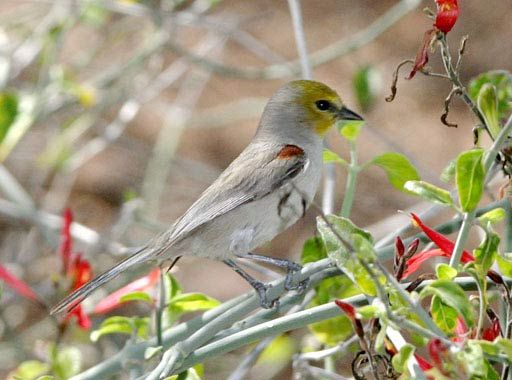
- Verdin (Auriparus flaviceps): A 10-cm-long grayish songbird with a distinctive yellowish head. Unlike the penduline tit, this species inhabits the dry brushlands of southwestern North America and constructs a large, globular nest made of thorny twigs.12
Sources
- Remizidae — Encyclopædia Britannica
- verdin — Merriam-Webster
Published on · 2 min read