Archaeocyathid
Archaeocyathids were an extinct group of marine organisms that flourished during the Early Cambrian Period, serving as the primary builders of the world's…
Why did archaeocyathids become extinct and what replaced them?
Archaeocyathids were an extinct group of marine organisms that flourished during the Early Cambrian Period, serving as the primary builders of the world’s first carbonate reefs. While the specific reasons for their extinction are not detailed in the provided records, they were part of a broader trend in which many taxonomic groups that dominated the Cambrian period eventually died out.12
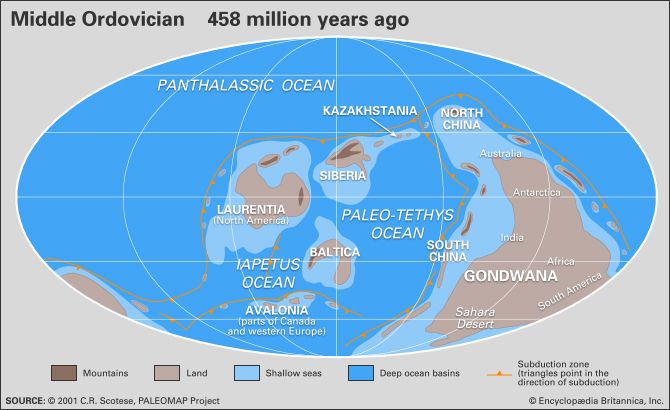
These organisms occupied shallow marine environments, filling an ecological role similar to that of modern corals. Following the Cambrian, the Ordovician Period saw the development of “classic” Paleozoic marine faunas, which included a variety of new reef-building and suspension-feeding organisms such as bryozoans, brachiopods, crinoids, and corals, which effectively replaced the ecological niche previously held by the archaeocyathids.12
How do archaeocyathids contribute to our understanding of early animal evolution?
Archaeocyathids provide significant insights into early animal evolution, particularly regarding the development of complex ecosystems and the emergence of hard body parts during the Cambrian Period. Their contribution to our understanding is highlighted by several key factors:12
- Pioneering Reef Builders: Archaeocyathids were responsible for the evolution of the first carbonate reefs, marking a major transition in marine environments. By forming large, reeflike masses in shallow, warm waters, they demonstrated that early aquatic ecosystems were already well-developed and capable of supporting complex, structured habitats.41
- Evolution of Hard Skeletons: The appearance of archaeocyathids coincides with the widespread evolution of hard body parts, such as calcium carbonate skeletons. This development is a hallmark of the Cambrian explosion, as it allowed for better preservation in the fossil record and provided a structural template for future reef-building organisms.412
- Ecological Modeling: Because they occupied shallow marine environments and functioned as suspension feeders—drawing in water to extract food—archaeocyathids serve as an early model for the ecological roles later filled by calcareous sponges and true corals. Their existence helps scientists map the early radiation of animal life and the subsequent diversification of marine faunas.41
What exactly are archaeocyathids and when did they exist?
Archaeocyathids are an extinct group of marine organisms known primarily from their calcareous, porous, conical or tubular supporting structures found in marine limestones. While their exact biological classification remains uncertain, they are thought to most closely resemble calcareous sponges and likely fed by filtering water for food particles, much like modern sponges do.1
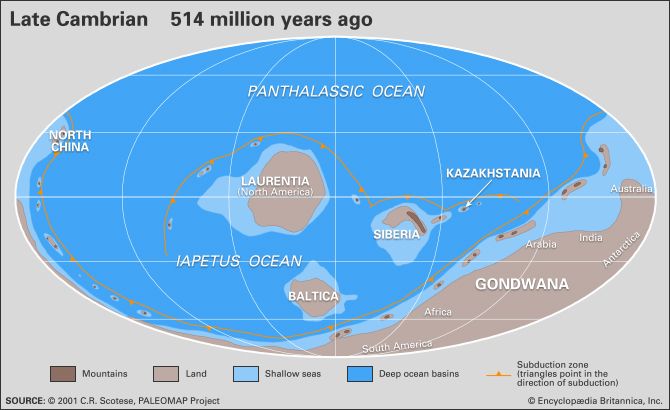
These organisms existed during the Late Precambrian and Early Cambrian periods. They were significant for inhabiting warm, shallow marine environments where they formed large, reeflike masses, effectively serving as the builders of the world’s first carbonate reefs. Their fossils have been discovered globally, including in regions such as Australia, Antarctica, Siberia, and parts of North America.12
How were archaeocyathids first discovered and classified by scientists?
Archaeocyathids were first identified through their distinctive calcareous, porous, conical or tubular fossilized structures found in marine limestones dating to the Late Precambrian and Early Cambrian periods. Because these fossils represent only the mineralized supporting structure of the organism, scientists have faced significant challenges in determining their exact biological classification.1
Historically, their systematic placement has been a subject of debate. While they were once considered by some to be a type of calcareous algae, this theory is now largely dismissed. Most researchers currently classify them as an extinct group that most closely resembles calcareous sponges, though they are often treated as a separate, distinct phylum due to their unique, aberrant characteristics.16
Scientists differentiate various forms of archaeocyathids by analyzing variations in their wall structures, the arrangement and number of their pores, and their overall shape. Because they lived in warm, shallow marine environments and functioned as suspension feeders, they are often compared to later corals, serving as the builders of the world’s first carbonate reefs.17
Sources
- archaeocyathid — Encyclopædia Britannica
- Cambrian explosion — Encyclopædia Britannica
- coral reef - Corals and other reef-building organisms — Encyclopædia Britannica
- Animal - Appearance of animals — Encyclopædia Britannica
- Archaeocyatha — Merriam-Webster
- sponge - Evolution and paleontology — Encyclopædia Britannica
- Cambrian Period - Fauna — Encyclopædia Britannica
- Archaeocyathus — Merriam-Webster
- bivalve - Critical appraisal — Encyclopædia Britannica
Published on · 3 min read