Campanulaceae
The Campanulaceae family, commonly known as the bellflower family, holds significant cultural and limited economic importance, primarily centered on…

What economic or cultural importance do plants from the Campanulaceae family have?
The Campanulaceae family, commonly known as the bellflower family, holds significant cultural and limited economic importance, primarily centered on horticulture and traditional uses.12
Cultural and Ornamental Importance
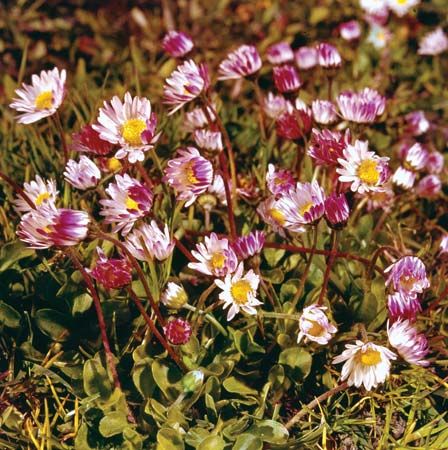
The primary cultural value of the family lies in its aesthetic appeal. Many of the approximately 2,400 species are prized as garden ornamentals due to their showy, often bell-shaped flowers. Popular cultivated species include:12
- Bellflowers (Campanula): Widely grown for their blue, white, or violet blooms, including varieties like the tussock bellflower and Canterbury bell.31
- Lobelioids: Species such as the cardinal flower are cultivated for their brilliant colors.2
- Specialized forms: Genera like Cyananthus (trailing bellflower) and Edraianthus (grassy bellflower) are valued for their unique growth habits in rock gardens.12
Economic and Practical Uses
While not a major commercial crop family, some members have specific economic or historical applications:
- Edible plants: The rampion (Campanula rapunculus) is cultivated for its turniplike roots and leaves, which are consumed in salads.3
- Medicinal potential: Lobelia inflata, or Indian tobacco, was historically used as an emetic. It produces the alkaloid lobeline, which has been studied for its utility in treating nicotine addiction.2

How many genera and species are included in the Campanulaceae family?
The Campanulaceae family, also known as the bellflower family, comprises approximately 84 genera and about 2,400 species of plants.3

How has the classification of Campanulaceae changed over time in botanical taxonomy?
The classification of the Campanulaceae family has evolved significantly as botanical taxonomy has shifted from traditional morphological groupings to systems informed by molecular data.15
Historically, many plants now placed within the Campanulaceae were categorized into separate families, most notably the Lobeliaceae. In older taxonomic arrangements, these groups were often organized under the order Campanulales, which served as a broad grouping for dicotyledonous plants sharing specific floral traits, such as a tubular five-lobed corolla and connivent anthers.6
Modern botanical classification, particularly within the Angiosperm Phylogeny Group framework, has reclassified these plants into the order Asterales. A major change in this modern system is the inclusion of the former Lobeliaceae as a subfamily (Lobelioideae) within the Campanulaceae. This integration reflects a deeper understanding of their shared evolutionary lineage, despite the distinct morphological differences—such as the strongly monosymmetric flowers and joined anthers characteristic of lobelioids compared to the typically radially symmetrical flowers of traditional bellflowers. Furthermore, ongoing molecular studies continue to refine the internal classification of large, complex genera like Lobelia, which may be further subdivided as researchers gain more precise data on their evolutionary relationships.451
In what regions of the world are Campanulaceae plants commonly found?
Plants in the Campanulaceae family are found worldwide, though they are primarily native to cool, temperate regions and mountainous areas within the tropics.32
Their distribution across specific regions includes:
- Europe and Asia: Many genera, such as Campanula, Adenophora, and Symphyandra, are widespread across Eurasian meadows and woodlands. The Himalayas are home to unique genera like Cyananthus, while the Balkans host the grassy bellflower, Edraianthus.
- The Americas: North America features species such as the American bellflower (Campanula americana). In the New World tropics, particularly the Andes, there is a high concentration of hummingbird-pollinated genera such as Siphocampylus, Centropogon, and Burmeistera.32
- Africa and Islands: The family is represented in Africa and the Canary Islands by genera like Canarina. Additionally, Hawaii is noted for a significant evolutionary radiation of lobelioid species, including the genus Cyanea.3
- Southern Hemisphere: The genus Wahlenbergia is widely distributed, extending from western Europe into the Southern Hemisphere.2
Sources
- Campanulaceae — Merriam-Webster
- bellflower — Encyclopædia Britannica
- Campanulaceae — Encyclopædia Britannica
- Asterales - Campanulaceae — Encyclopædia Britannica
- angiosperm - Annotated classification — Encyclopædia Britannica
- Campanulales — Merriam-Webster
Published on · 3 min read