Campephagidae
Campephagidae is a family of songbirds within the order Passeriformes, comprising nearly 90 species known as cuckoo-shrikes and minivets. These birds are…
What is Campephagidae?
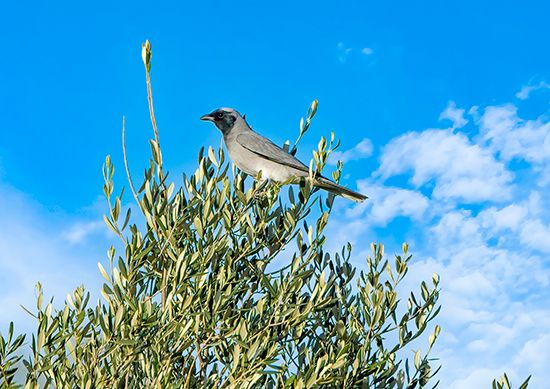
Campephagidae is a family of songbirds within the order Passeriformes, comprising nearly 90 species known as cuckoo-shrikes and minivets. These birds are native to regions ranging from Africa to the Pacific Islands.12
Typically measuring between 13 and 35 cm (5 to 14 inches), these birds are characterized by slightly hooked bills, long tails, and fluffy plumage featuring stiff feathers on the back and rump. Their name is derived from the Greek kampē (caterpillar) and the suffix -phaga, reflecting their diet, which consists largely of caterpillars and fruit. They are often found in forests and gardens, moving in noisy, follow-the-leader flocks. While they share some behavioral similarities with flycatchers, they are distinguished from true shrikes by their undulating flight pattern, which resembles that of a cuckoo.123
What are the main differences between cuckoo-shrikes and true shrikes?
While cuckoo-shrikes were historically grouped with true shrikes in the family Laniidae, they are now classified in their own family, Campephagidae. The primary differences between these groups include:
- Flight Pattern: The most notable distinction is the flight style of the cuckoo-shrike, which is undulating and resembles that of a cuckoo, whereas true shrikes exhibit different flight characteristics associated with their predatory behavior.2
- Taxonomy: Cuckoo-shrikes are members of the order Passeriformes and are distinct from the true shrikes, which belong to a separate family.24
- Habits: Cuckoo-shrikes are often compared to flycatchers in their general habits, whereas true shrikes are well-known for their predatory nature, often impaling prey on thorns or barbed wire.2
While some cuckoo-shrikes may display a mask similar to that of a shrike, their behavioral and flight patterns remain the key identifiers for distinguishing the two groups.24
Why do many birds in the Campephagidae family have specialized diets involving caterpillars?
Many birds in the Campephagidae family, which includes cuckoo-shrikes and minivets, have specialized diets involving caterpillars primarily because these larvae serve as a vital, high-protein food source for songbirds throughout the animal kingdom. In fact, more than 95 percent of terrestrial songbirds rely on caterpillars to feed their developing nestlings.15
The evolutionary development of these feeding habits is driven by the survival value of selecting food sources for which a species can successfully compete. For many birds, caterpillars are an abundant and nutritious resource that supports the high energy demands of growth and reproduction. While the specific dietary focus of the Campephagidae family contributes to their resemblance to cuckoos—a similarity reinforced by their gray, barred plumage—their reliance on caterpillars is part of a broader ecological strategy shared by many insectivorous birds that have evolved specialized mechanisms to procure food from their environments.6517
How does the behavior of minivets compare to other birds in the Campephagidae family?
Minivets, which comprise the genus Pericrocotus, share many fundamental traits with other members of the Campephagidae family, yet they exhibit distinct characteristics in appearance and social behavior.
- Appearance: While many other campephagids are characterized by gray, barred plumage that mimics the appearance of a cuckoo, minivets are notably more colorful. Males of most minivet species display striking black and red coloration, while females are typically yellowish and gray.91
- Social and Foraging Habits: Like other members of the family, minivets are social birds that inhabit forests and move in flocks. They share the family’s tendency to be noisy, though minivets are specifically noted for their constant, loud, and sweet-toned chattering as they forage for insects in the treetops.91
- Shared Traits: Minivets align with the broader family in their general morphology—possessing slightly hooked bills and long tails—and their habit of flitting between trees in a follow-the-leader fashion.1
Sources
- Campephagidae — Encyclopædia Britannica
- cuckoo shrike — Merriam-Webster
- Campephagidae — Merriam-Webster
- Cuckoo-shrike — Encyclopædia Britannica
- Bird - Feeding habits — Encyclopædia Britannica
- Feeding behaviour - Types of food procurement — Encyclopædia Britannica
- caterpillar — Encyclopædia Britannica
- piciform - Form and function — Encyclopædia Britannica
- Minivet — Encyclopædia Britannica
Published on · 3 min read