Canadian Shield
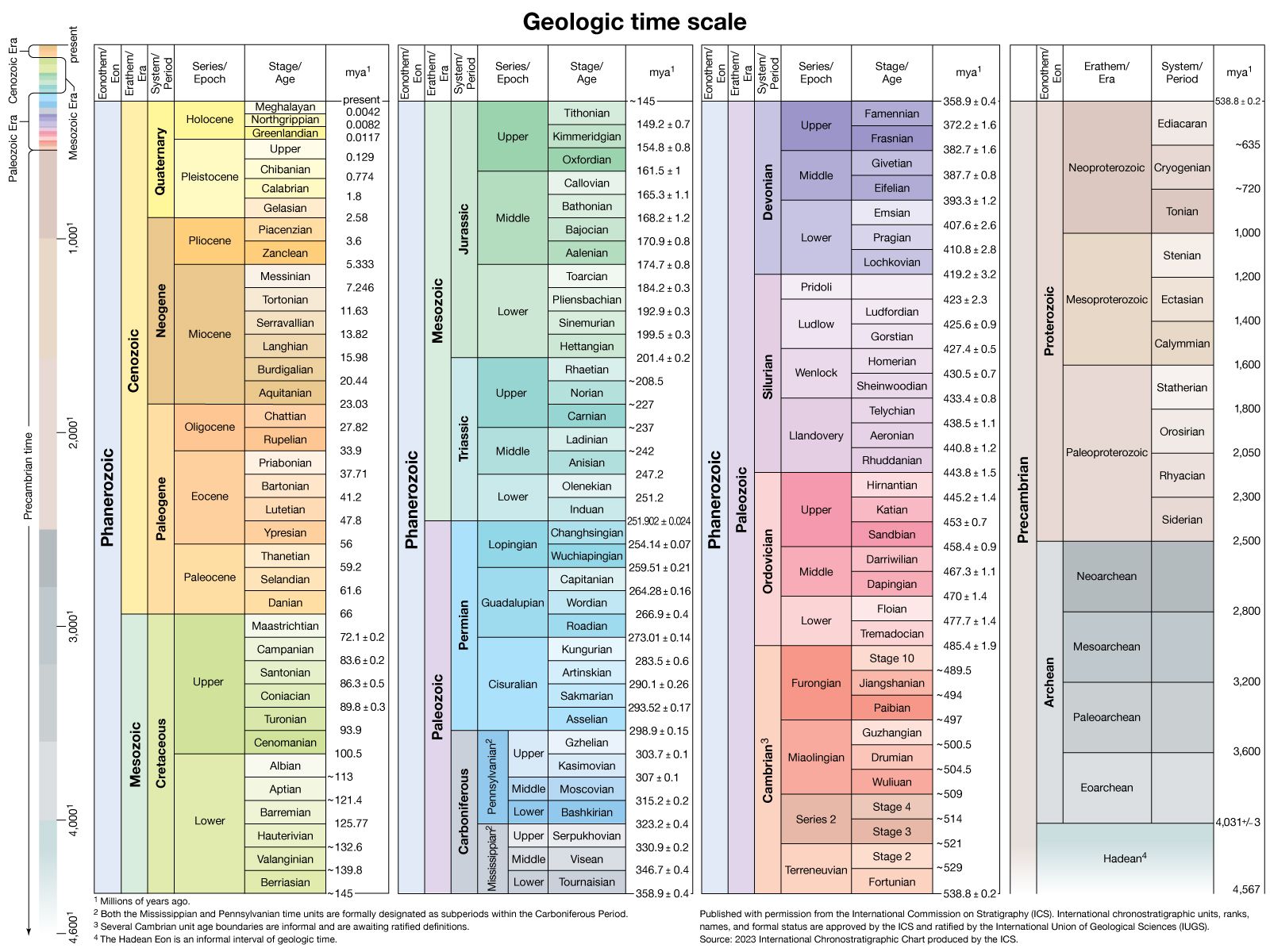
The Canadian Shield is composed of some of the oldest crystalline rocks on Earth, dating back to the Precambrian era.
How was the Canadian Shield formed and how old is it?
The Canadian Shield is composed of some of the oldest crystalline rocks on Earth, dating back to the Precambrian era.123
Its formation is the result of a complex, long-term geological history involving:
- Orogeny: Repeated cycles of mountain building, folding, and faulting that compressed and warped the crust.123
- Uplift and Erosion: Extensive periods of tectonic uplift followed by prolonged erosion, which eventually reduced the region to a relatively low-lying plain.123
- Glaciation: During the Pleistocene Epoch, massive continental glaciers scoured the surface, stripping away weathered rock and creating the modern landscape of rocky hills, basins, and numerous lakes.23
Today, the shield serves as the craton—or stable continental interior—of North America, covering approximately half of Canada’s landmass.13
How does the Canadian Shield compare to other ancient continental shields around the world?
The Canadian Shield is one of several continental shields found globally, which serve as the stable, ancient nuclei of Earth’s continents. Like other shields, it is composed of Precambrian crystalline rocks—typically older than 540 million years—that have been subjected to extensive orogeny (mountain building), uplift, and erosion over billions of years.145
While all shields share these fundamental characteristics, they differ in their current exposure and geographic context:
- Scale and Exposure: The Canadian Shield is the largest mass of exposed Precambrian rock on Earth. In contrast, other shields may be partially buried by younger sedimentary layers, forming what are known as platforms.546
- Global Distribution: Similar ancient blocks exist on every continent, including the Amazonian, Guiana, and Platian shields in South America; the Baltic (Fennoscandian) Shield in Europe; the African (Ethiopian) Shield; and the Indian, Australian, Antarctic, and Angaran shields.17
- Tectonic History: Many shields, including the Canadian Shield, are aggregates of smaller cratons that fused together through ancient tectonic collisions.8
What is the Canadian Shield and where is it located in North America?
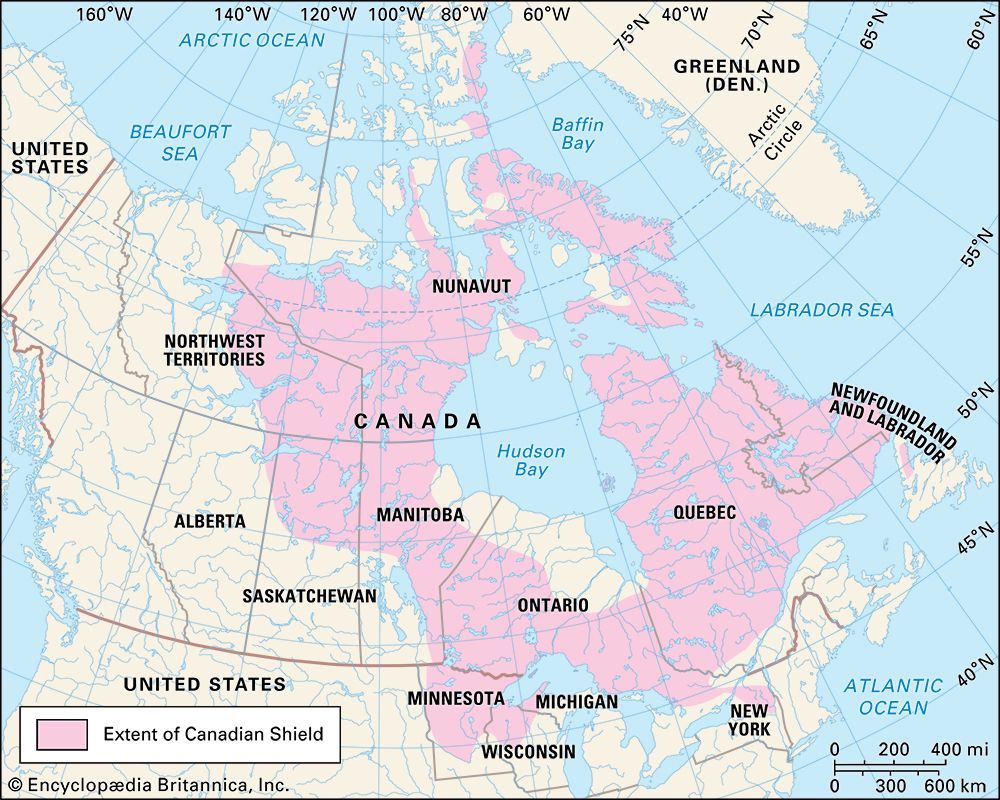
The Canadian Shield is the vast, stable continental interior—or craton—of North America. It is the largest mass of exposed Precambrian rock on Earth, composed of ancient crystalline rocks that have been shaped by billions of years of mountain building, uplift, and erosion.13
Location
Centered on Hudson Bay, the shield covers approximately half of Canada’s landmass. It extends across:2
- Canada: From the Great Lakes, Quebec, and Labrador to the Canadian Arctic.3
- Greenland: It includes significant portions of the island.39
- United States: Small extensions reach into northern Minnesota, Wisconsin, Michigan, and New York.3
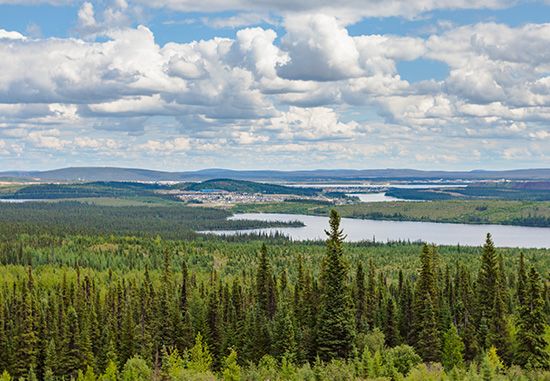
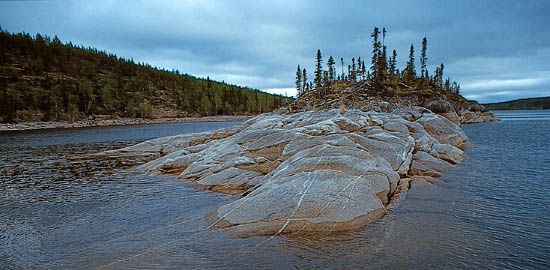
The landscape is characterized by rocky, ice-smoothed hills and an immense network of lakes and rivers, largely resulting from the scouring action of continental glaciers during the Pleistocene Epoch.23
How has glaciation during the Ice Age affected the landscape of the Canadian Shield?
During the Pleistocene Epoch, the Canadian Shield served as a primary center for the accumulation and dispersion of massive continental glaciers, which fundamentally reshaped its landscape.12
The primary effects of this glaciation include:
- Scouring and Erosion: As glaciers moved southward, they scraped the land bare of its mantle of weathered rock, leaving behind smooth, exposed bedrock surfaces.12
- Topographic Alteration: The process created a landscape of ice-smoothed hills and irregular basins. In higher elevations, glaciers carved deep valleys, while elsewhere they plucked out basins and deposited landforms such as eskers and drumlins.1012
- Hydrological Transformation: As the climate warmed and glaciers retreated, large deposits of remnant ice remained in the depressions and scars left by the ice sheets. When these melted, they formed a vast, complex network of hundreds of thousands of lakes and swamps interconnected by rivers and streams.101
- Crustal Rebound: Following the melting of the ice, the removal of its immense weight caused portions of the shield to rise, creating former beach lines along the coasts.2
Sources
- Canadian Shield: Top Questions — Encyclopædia Britannica
- Canadian Shield — Encyclopædia Britannica
- Canada - The Canadian Shield — Encyclopædia Britannica
- continental shield — Encyclopædia Britannica
- Arctic - Geology — Encyclopædia Britannica
- craton — Encyclopædia Britannica
- North America - The Canadian Shield — Encyclopædia Britannica
- craton — Merriam-Webster
- North America - 4.6 to 3.0 billion years ago — Encyclopædia Britannica
- North America - The central shield — Encyclopædia Britannica
Published on · 3 min read