Canastra Mountains
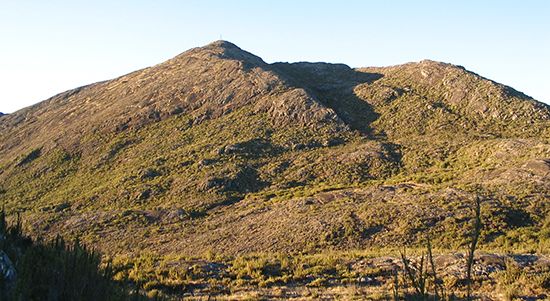
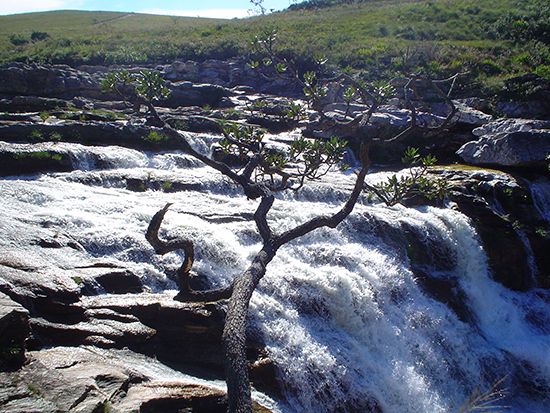
The Canastra Mountains are a mountain range located on the Planalto Central in the state of Minas Gerais, southeastern Brazil.
What is Canastra Mountains?
The Canastra Mountains are a mountain range located on the Planalto Central in the state of Minas Gerais, southeastern Brazil.1
Stretching 150 miles (240 km) between the border of Goiás and the upper Grande River, the range reaches an average elevation of 6,000 feet (1,800 m). These mountains serve as the source of the São Francisco River and form the eastern boundary of the Triângulo Mineiro grassland region.1
Geologically, the area is rich in natural resources, containing significant deposits of diamonds, iron, zinc, lead, thorium, and calcium. The region is also served by key infrastructure, including a federal highway connecting Brasília to Belo Horizonte, and a cross-mountain route linking Uberaba with Montes Claros.1
What is the significance of the São Francisco River to Brazil?
The São Francisco River is a vital waterway in eastern South America and the largest river system located entirely within Brazil. Often referred to as the “river of national unity,” it has historically served as a crucial communication link between Brazil’s maritime and western regions, as well as between the northeast and the south.2
Its significance to the country is defined by several key roles:
- Hydroelectric Power: The river is a major source of energy for eastern and northeastern Brazil. Large-scale hydroelectric installations, such as those at Paulo Afonso Falls and the Três Marias Reservoir, provide essential power to coastal cities like Salvador, Aracaju, and Recife.2
- Irrigation and Agriculture: As the river flows through some of the driest regions of Brazil, it is indispensable for irrigation. Major infrastructure, including the Sobradinho Reservoir, supports agricultural production in the basin, where crops such as cotton, corn, beans, and sugarcane are cultivated.2
- Transportation: While navigation is limited by rapids and falls, the river remains an important transport link. Shallow-draft riverboats connect the mining districts of Minas Gerais to road networks radiating from Juazeiro.223
What kind of wildlife lives in the Serra da Canastra National Park?
The provided search results do not contain specific information regarding the wildlife found within the Serra da Canastra National Park. While the results discuss general wildlife in the Brazilian savannas and the Pantanal, they do not provide a list of species native to the Serra da Canastra region.
How are diamonds and other minerals mined in this region?
Mining practices in Brazil vary significantly depending on the scale of the operation and the type of mineral being extracted.
Industrial-Scale Mining
Large-scale operations, such as those found in the Serra dos Carajás or the iron-rich regions of Minas Gerais, utilize heavy machinery and advanced engineering. In areas where iron ore deposits are near the surface, companies employ mechanical shovels for extraction. These large-scale sites often require significant infrastructure, including rail lines for transport and massive settling ponds to manage effluents from processes like bauxite mining.
Artisanal Mining
In contrast, artisanal mining—often carried out by independent miners known as garimpeiros—has historically relied on more manual methods. During gold rushes, such as the one at Serra Pelada, miners used simple tools like picks, shovels, and sluice boxes to search for minerals in alluvial deposits. On rivers like the Madeira, miners operate from rafts, using pumps to bring auriferous sediments up from the riverbed for processing.
Environmental Impact
These methods carry distinct environmental risks. Artisanal gold mining has frequently involved the use of mercury to extract gold, which can contaminate local water sources and fish populations. Similarly, large-scale industrial projects have faced criticism for the clearing of forests to produce charcoal for smelting and the ecological consequences associated with large-scale dam construction for energy.
Sources
- Canastra Mountains — Encyclopædia Britannica
- Brazil - Rivers of Brazil — Encyclopædia Britannica
- São Francisco River — Encyclopædia Britannica
- Brazil - Shipping of Brazil — Encyclopædia Britannica
- Brazil - Highlands, coastal regions, and the Pantanal — Encyclopædia Britannica
- Australian Capital Territory - Plant and animal life — Encyclopædia Britannica
- Brazil - Mining and quarrying — Encyclopædia Britannica
- Minas Gerais — Encyclopædia Britannica
- Amazon River - Mining and energy — Encyclopædia Britannica
Published on · 3 min read