Caledonian Orogenic Belt
The Caledonian orogenic belt formed during the early to mid-Paleozoic Era. Its development spanned from the beginning of the Cambrian Period (approximately…
How old is the Caledonian orogenic belt and during which geological period did it form?
The Caledonian orogenic belt formed during the early to mid-Paleozoic Era. Its development spanned from the beginning of the Cambrian Period (approximately 542 million years ago) through the end of the Silurian Period (about 416 million years ago).1
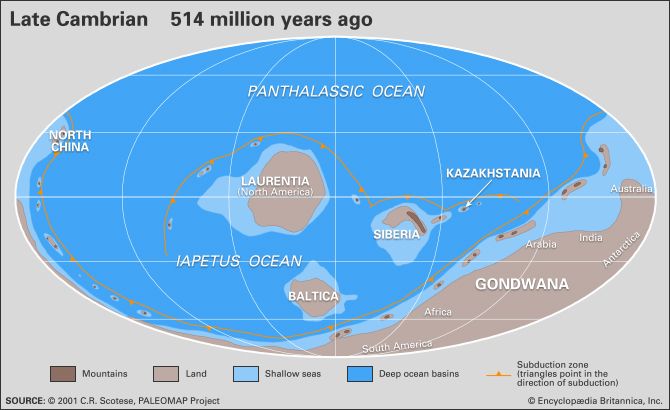
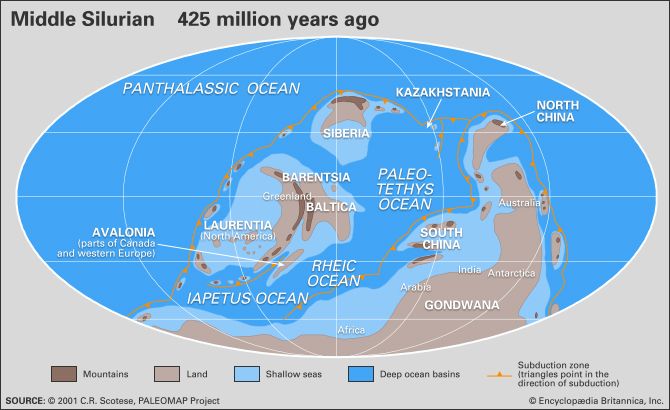
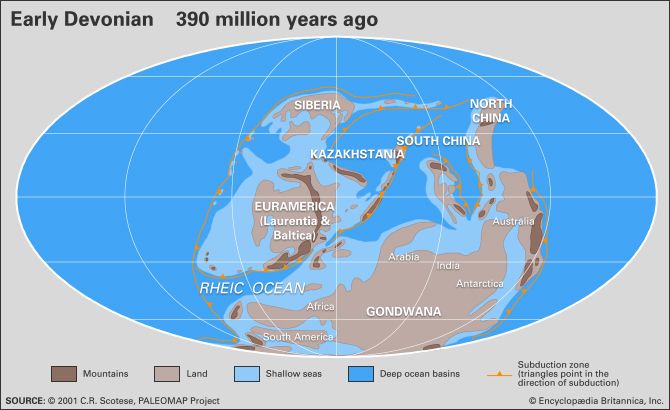
The orogeny was driven by the opening and subsequent closure of the Iapetus Ocean, which culminated in the collision of continental blocks, including Laurentia and Baltica, during the Silurian Period. Following this primary mountain-building phase, the thickened crust underwent uplift, erosion, and extensional collapse during the Devonian Period. Additionally, some regions, such as the northern continental interior, experienced crustal shortening associated with the Caledonian age between approximately 420 and 400 million years ago.123
What role did the closure of the Iapetus Ocean play in the formation of the Caledonian orogenic belt?
The closure of the Iapetus Ocean was the fundamental tectonic process that drove the formation of the Caledonian orogenic belt. This process is a classic example of the Wilson cycle, which describes the opening and subsequent destruction of an ocean basin.
The role of this closure in mountain building included several key stages:
- Subduction: During the Ordovician Period, the ocean floor was consumed by subduction, leading to the foundering of continental shelves and the creation of volcanic arcs.1
- Continental Collision: The process culminated in the Silurian Period when the closing of the ocean brought major continental blocks—specifically Laurentia and Baltica—into direct collision.34
- Crustal Deformation: This collision resulted in intense folding, faulting, and the thickening of the Earth’s crust, which uplifted the mountain range.31
- Suture Formation: The boundary where these continents joined, known as the main suture zone, remains a defining feature of the belt, separating regions with distinct geological histories, fossils, and rock types.3
We could dive deeper into how the discovery of ophiolites provided the physical evidence needed to confirm that this ancient ocean once existed.
What evidence of ancient life can be found in the rocks of the Caledonian orogenic belt?
The rocks of the Caledonian orogenic belt contain a rich record of ancient marine life, which has been instrumental in reconstructing the tectonic history of the region.
Marine Invertebrates
During the Cambrian Period, the widening of the Iapetus Ocean created extensive shelf seas that supported a remarkable diversity of marine invertebrates. The most prominent fossils found in these strata are trilobites, which are extinct arthropods that serve as essential guide fossils for biostratigraphic zonation.245
The distribution of these fossils provides direct evidence of the ocean’s existence. For example, distinct assemblages of trilobites and graptolites found in northern Scotland differ significantly from those in central England and southern Norway. This faunal separation indicates that these regions were located on opposite sides of the Iapetus Ocean, effectively acting as separate biogeographical provinces.26
Other Fossil Evidence
Beyond trilobites, the sedimentary rocks of the belt contain various other organisms:
- Sponges and Brachiopods: Archaeocyathan sponges and brachiopods are present, though their use in correlation is sometimes limited by their tendency to be endemic to specific regions.4
- Trace Fossils: Trace fossils, such as complex burrow patterns like T. pedum, provide evidence of the locomotion and feeding behaviors of bottom-dwelling marine animals during the transition from the Precambrian to the Cambrian.4
- Early Land Life: As the Iapetus Ocean closed during the Silurian Period, the environmental landscape shifted. By the late Silurian, the fossil record begins to show the appearance of early land plants and the first freshwater fish in lakes formed on the belt.2
What were the major tectonic events that led to the formation of the Caledonian orogenic belt?
The formation of the Caledonian orogenic belt was driven by a sequence of tectonic events known as the Wilson cycle, spanning from the early Cambrian Period to the end of the Silurian Period.
The major tectonic stages included:
- Opening of the Iapetus Ocean: Beginning approximately 542 million years ago, the Iapetus Ocean widened, creating extensive shelf seas on the margins of bordering continents where thick sequences of marine sediments accumulated.14
- Subduction: During the Ordovician Period, the ocean began to close through subduction. This process led to the foundering of continental shelves and the development of volcanic arcs, which are evidenced by magmatic rocks and ophiolites found today in regions like Scotland and Norway.24
- Continental Collision: In the Silurian Period, the final closure of the ocean brought the continental blocks of Laurentia and Baltica into direct collision. This event caused intense crustal deformation, metamorphism, and the uplift of the mountain range.143
- Post-Orogenic Collapse: Following the collision, the thickened crust underwent extensional collapse and erosion during the Devonian Period, leading to the formation of sedimentary basins and the deposition of vast amounts of sandstone and conglomerate.14
Sources
- Caledonian orogenic belt — Encyclopædia Britannica
- Europe - Caledonian orogenic belt — Encyclopædia Britannica
- North America - 600 to 250 million years ago — Encyclopædia Britannica
- plate tectonics - Wilson cycle — Encyclopædia Britannica
- Cambrian Period - Correlation of Cambrian strata — Encyclopædia Britannica
- trilobite — Encyclopædia Britannica
- Earth sciences - Micropaleontology — Encyclopædia Britannica
- Silurian Period - Baltica — Encyclopædia Britannica
- Cambrian Period - Paleogeography — Encyclopædia Britannica
Published on · 4 min read