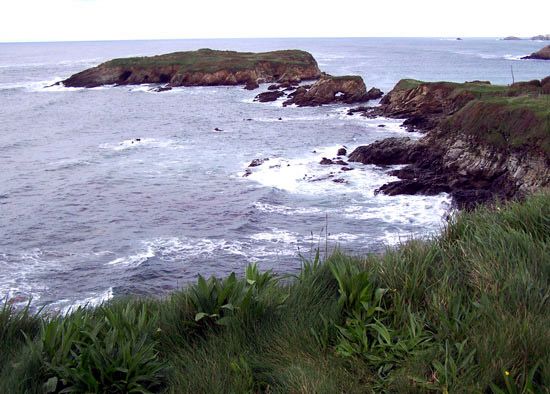
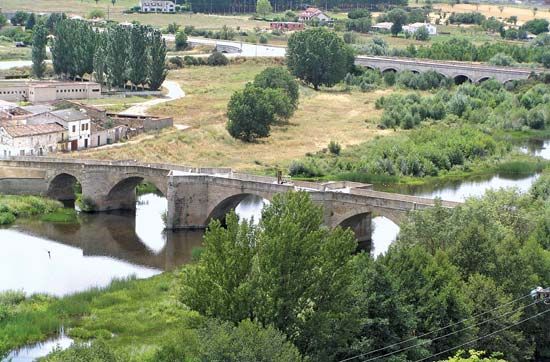
Cantabrian Mountains
The Cantabrian Mountains are a significant mountain chain in northern Spain that share a geologically similar origin with the Pyrenees, though they are…
What is the geological history of the Cantabrian Mountains?
The Cantabrian Mountains are a significant mountain chain in northern Spain that share a geologically similar origin with the Pyrenees, though they are classified as a distinct formation.1
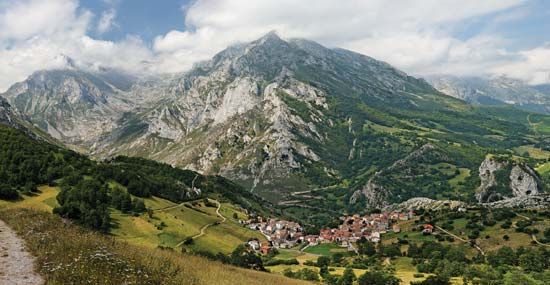
The region is characterized by complex geological structures. While the western portion of the Iberian Peninsula is largely composed of ancient Hercynian (or Variscan) rocks—forming a stable platform known as the Meseta Central—the Cantabrian Mountains themselves feature dramatic relief, including massive limestone formations like the Europa Peaks. The range is sharply demarcated from the surrounding plateau and coastal lands by significant faulting and fractures.12
The broader geological context of the region involves the Variscan orogenic belt, which developed between 370 and 290 million years ago due to continental collisions. Subsequent earth movements, particularly those associated with the Alpine orogeny during the Cenozoic Era, further shaped the tectonic landscape of the Iberian Peninsula, influencing the uplift and structural development of the mountain ranges bordering the Meseta.324
Where are the Cantabrian Mountains located in Spain?
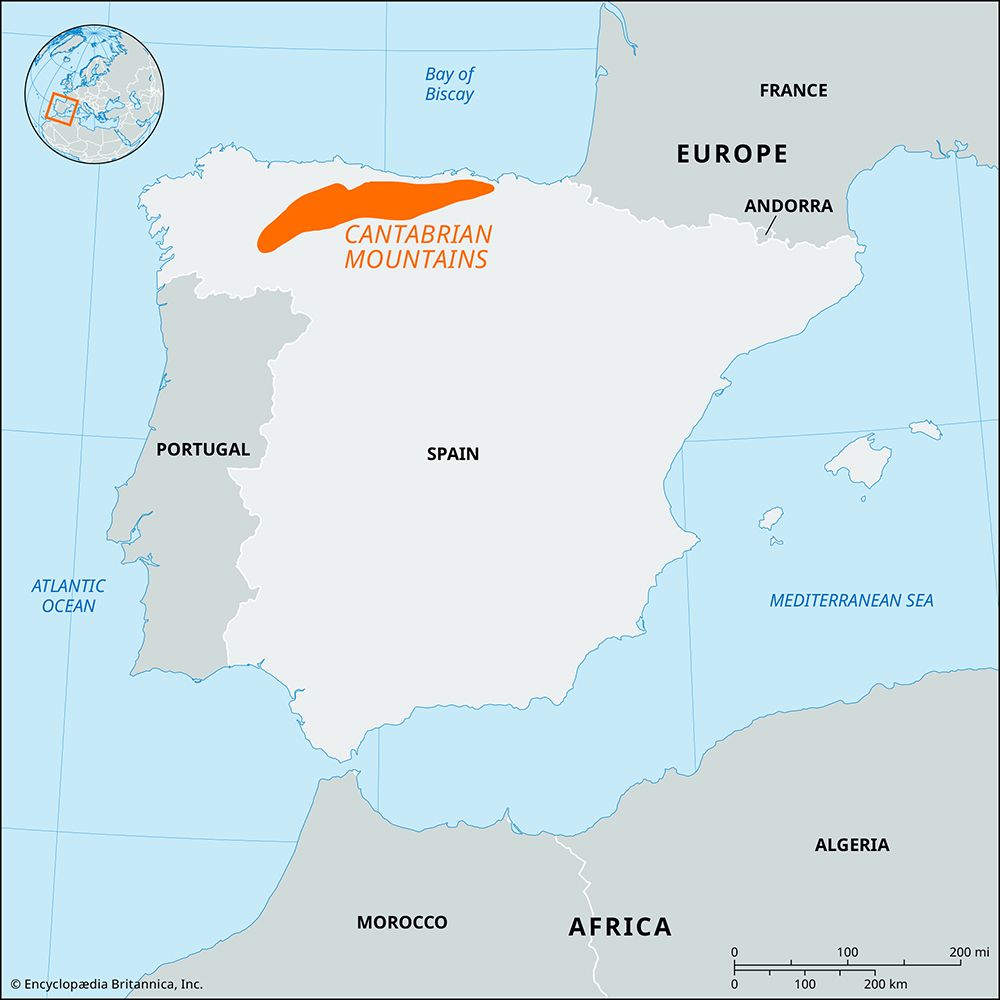
The Cantabrian Mountains are a mountain chain extending approximately 180 miles (300 km) along the northern coast of Spain.
The range rises inland from Torrelavega in the provinces of Cantabria and Palencia, stretching east-to-west across Asturias and northern León toward Galicia. The mountains serve as a natural barrier, sharply demarcated by fractures from the Meseta Central (the Castilian plateau) to the south and the coastal lands along the Bay of Biscay to the north. While the eastern and western boundaries of the range are somewhat indistinct, the mountains feature significant peaks, including the Europa Peaks in the east, and transition into various sierras, such as the Sierra de Ancares and the Sierra del Caurel, as they move toward the northwest.17
Are there any significant natural resources found in the Cantabrian Mountains?
The Cantabrian Mountains are a region of significant economic importance due to their diverse mineral wealth and natural energy potential. The area has historically served as a vital hub for mining and industrial activity in northern Spain.
Key natural resources found in the region include:
- Coal: The mountains, particularly within the Nalón Basin, contain extensive coalfields that have made the region a primary mining and metallurgical center.18
- Metallic Ores: The range is rich in deposits of iron, lead, and zinc. Mining operations for these minerals, along with pyrites and graphite, are concentrated in areas such as Reocín and around industrial centers like Torrelavega.176
- Hydroelectric Power: The steep terrain and heavy river currents flowing from the mountains provide a significant source of hydroelectric power, which supports the energy needs of the coastal regions.1
While these extractive industries have shaped the local economy, cattle raising remains a dominant traditional activity throughout the mountain landscape.17
How do the Cantabrian Mountains affect the climate of northern Spain?
The Cantabrian Mountains play a critical role in shaping the climate of northern Spain by acting as a significant physical barrier that influences regional weather patterns.91
Along with the Pyrenees, these mountains help hold warm, dry subtropical airstreams over the peninsula during the summer months. Because the range rises abruptly from the coast, it effectively separates the temperate, humid maritime climate of the northern coastal strip from the more continental climate of the interior Meseta Central.9110
The mountains also contribute to local aridity by creating “rain shadows” on their leeward (southern) sides. As moisture-laden westerly winds from the Atlantic Ocean encounter the range, they are forced upward, resulting in high rainfall on the northern slopes and coastal regions, while leaving the interior plateau significantly drier. This topographic influence is a primary factor in the climatic diversity of the region, distinguishing the lush, temperate north from the drier, more extreme temperatures found in the Spanish interior.9
Sources
- Cantabrian Mountains — Encyclopædia Britannica
- Variscan orogenic belt — Encyclopædia Britannica
- Spain - Relief — Encyclopædia Britannica
- Cantabrian Mountains — Merriam-Webster
- Europe - Mesozoic and Cenozoic eras — Encyclopædia Britannica
- Cantabria — Encyclopædia Britannica
- Cantabria — Encyclopædia Britannica
- Asturias — Encyclopædia Britannica
- Spain - Climate of Spain — Encyclopædia Britannica
- Meseta Central — Encyclopædia Britannica
Published on · 3 min read