Canellales
The order Canellales includes fascinating plants that offer a glimpse into the early evolution of flowering plants. Middle school students may find the…
What are some interesting examples of Canellales species that middle school students might find fascinating?
The order Canellales includes fascinating plants that offer a glimpse into the early evolution of flowering plants. Middle school students may find the following examples particularly interesting:
- Drimys winteri: Also known as Winter’s bark, this tree has a rich history. In 1578, Captain John Winter collected its bark during Sir Francis Drake’s circumnavigation of the globe, and it was famously used by sailors as a tonic to prevent scurvy.12
- Pseudowintera: Found in New Zealand, these plants have evolved a clever defense mechanism. Their leaves have a distinct peppery taste that makes them unpalatable to browsing animals, such as introduced deer, which has helped them thrive in native forests.12
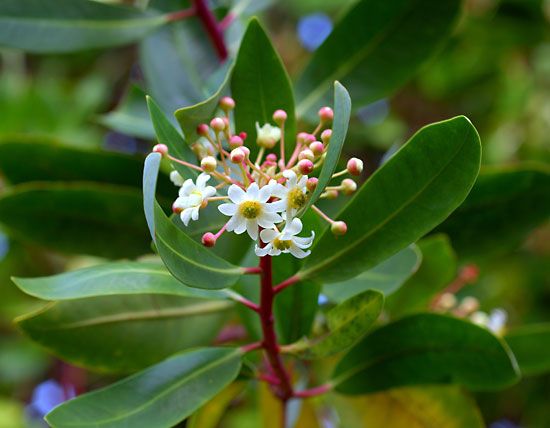
- Canella alba: Often called “wild cinnamon,” this Caribbean species is prized for its reddish-purple flowers and bright red berries. Interestingly, its bark has been used for various purposes, ranging from a food condiment to a traditional fish poison.1
- Primitive Features: Many members of the Winteraceae family are considered “living fossils” because they possess primitive characteristics, such as wood that lacks the specialized water-conducting cells found in most modern trees.12
Are there any endangered species within the Canellales order?
The provided search results do not explicitly list specific species within the Canellales order as currently classified as endangered. However, the order is part of the magnoliid clade, a group that faces significant conservation challenges.
While the provided text does not name a specific endangered species within Canellales, it notes that many magnoliids are native to tropical regions where rapid deforestation and habitat loss pose a severe threat of extinction for many members of the group. Furthermore, the genus Takhtajania, which contains the single species T. perrieri, is described as a distinctive and unusual member of the Winteraceae family endemic to Madagascar, a region where biodiversity is frequently under pressure.16
Protecting these rare and primitive plants is an ethical imperative, as they represent ancient lineages that provide critical insights into the evolution of flowering plants.
How are Canellales plants used by humans, if at all?
While plants in the order Canellales are generally of limited economic importance, several species have been utilized by humans for medicinal, culinary, and ornamental purposes.
Medicinal and Culinary Uses
- Drimys winteri: Historically, the bark of this tree, known as Winter’s bark, was used by sailors as a tonic and a preventative for scurvy. It continues to be used today for its properties as an astringent and a stimulant.13
- Canella alba: Often referred to as “wild cinnamon,” the leaves and bark of this Caribbean species are used as a condiment and for medicinal purposes. Additionally, the bark has been used to flavor tobacco and as a traditional fish poison.1
Other Uses
- Ornamental Cultivation: Drimys winteri variety chilensis is grown globally in gardens and arboretums for its attractive white flowers. Similarly, Canella alba is cultivated in southern Florida as an ornamental plant, valued for its reddish-purple flowers and red berries.1
- Timber: The wood of Canella alba is known as Bahama whitewood, while the wood of Drimys winteri is a light, soft, straight-grained brown timber used similarly to basswood.13
Which plant families are included in the Canellales order?
The Canellales order of flowering plants consists of two families:
- Canellaceae
- Winteraceae
Together with the Laurales, Magnoliales, and Piperales orders, Canellales forms the magnoliids clade, which represents an early branch in the evolution of angiosperms.17
Sources
- Canellales — Encyclopædia Britannica
- magnoliid clade - Reproductive structures — Encyclopædia Britannica
- winter's bark — Merriam-Webster
- Winteraceae — Encyclopædia Britannica
- false Winter's bark — Merriam-Webster
- magnoliid clade - Ecology and habitats — Encyclopædia Britannica
- angiosperm - Annotated classification — Encyclopædia Britannica
Published on · 3 min read