Cantala
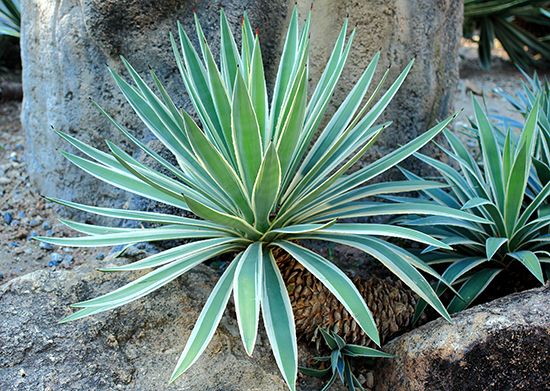
The cantala (Agave cantala) is an evergreen tropical plant belonging to the Asparagaceae family. Its physical characteristics include:
What are the distinctive features of the cantala plant, including its leaves, flowers, and overall appearance?
The cantala (Agave cantala) is an evergreen tropical plant belonging to the Asparagaceae family. Its physical characteristics include:
- Overall Appearance: It is a monocarpic plant, meaning it dies after flowering. It grows as a dense rosette of leaves emerging from a central stalk.1
- Leaves: The plant features thick, gray-green, lance-shaped leaves that can reach approximately 2 metres (6.6 feet) in length. These leaves are distinctive for being edged with sharp teeth and possessing a terminal spine.1
- Flowers: The flowers are produced on a large, tall stalk that can exceed 8 metres (26 feet) in height.1
Beyond its physical form, the plant is notable for its leaf fibre, which is softer and more pliant than that of related species like sisal or henequen. It reproduces both sexually through flowering and asexually via clonal “pups” that grow at the base of the rosette.1
How is the fiber extracted from the cantala plant?
The fiber of the cantala plant is extracted from its leaves using two primary methods:
- Mechanical Decortication: This is a scraping or peeling operation used to remove the pulp from the fiber strands.1
- Retting: Commonly practiced in the Philippines, this process involves the use of salt water to break down the leaf tissue. It is important to note that this specific method often results in fiber that is relatively weak and stained compared to other extraction techniques.1
Once extracted, the resulting white fiber strands typically range from 75 to 150 cm (approximately 30 to 60 inches) in length. The final product is characterized by its fine texture and moisture-absorbent properties, making it suitable for local use in woven fabrics and the production of coarse twines.1
What is cantala and where does it naturally grow?
Cantala (Agave cantala) is an evergreen tropical plant belonging to the Asparagaceae family. It is primarily valued for its leaf fibre, which is used to produce coarse twines and woven fabrics. While it is softer and more pliant than the fibers of related plants like sisal and henequen, it shares similar structural characteristics as a monocarpic, rosette-forming species.1
Regarding its origins and distribution, the plant is likely native to Mexico. It was introduced to the Philippines in 1783 and had spread to Indonesia and India by the early 1800s. Today, it is mainly cultivated across the Indian subcontinent, Indonesia, and the Philippines.1
How is cantala cultivated and what are the ideal growing conditions for this plant?
Commercial cultivation of cantala (Agave cantala) primarily relies on asexual reproduction. Growers utilize clonal “pups”—small offsets that develop at the base of the parent plant’s rosette—to establish new plantations.1
While specific soil and climate requirements for cantala are not detailed in the provided search results, the plant is a member of the agave genus, which is native to arid and semiarid regions. As an adaptation to these environments, agaves utilize a specialized photosynthetic pathway known as crassulacean acid metabolism (CAM). This process allows the plants to fix carbon dioxide at night, significantly limiting water loss through their leaf stomata and enabling them to thrive in dry conditions.2
The plant is an evergreen tropical species that forms a dense rosette of thick, gray-green leaves. Because it is monocarpic, the plant dies after its single flowering event, during which it produces a large stalk that can exceed 8 meters (26 feet) in height.1
Sources
- cantala — Encyclopædia Britannica
- agave — Encyclopædia Britannica
- henequen — Encyclopædia Britannica
Published on · 3 min read