Cape Breton Island
Cape Breton Island is renowned for its vibrant Celtic music traditions, which experienced a significant revival in the late 20th century. Fiddling is a…
What are some traditional music and dance forms associated with Cape Breton Island?
Cape Breton Island is renowned for its vibrant Celtic music traditions, which experienced a significant revival in the late 20th century. Fiddling is a particularly prominent musical form, with many local musicians gaining national and international acclaim for their skill.1
The island’s cultural heritage is actively preserved and taught at the Gaelic College in St. Ann’s, which offers instruction in several traditional arts, including:
- Celtic piping: A staple of the region’s Scottish-influenced musical landscape.1
- Traditional singing: Often showcased during community gatherings and festivals.1
- Dancing: Highland-style dance forms are a key component of the local cultural curriculum.1
These traditions are celebrated annually at the Gaelic Mod, a festival dedicated to Highland folk arts held in St. Ann’s. Beyond these Scottish roots, the island’s cultural tapestry is further enriched by Acadian and Mi’kmaq traditions, which remain vital parts of the regional identity.1
What natural attractions and landmarks can be found on Cape Breton Island?
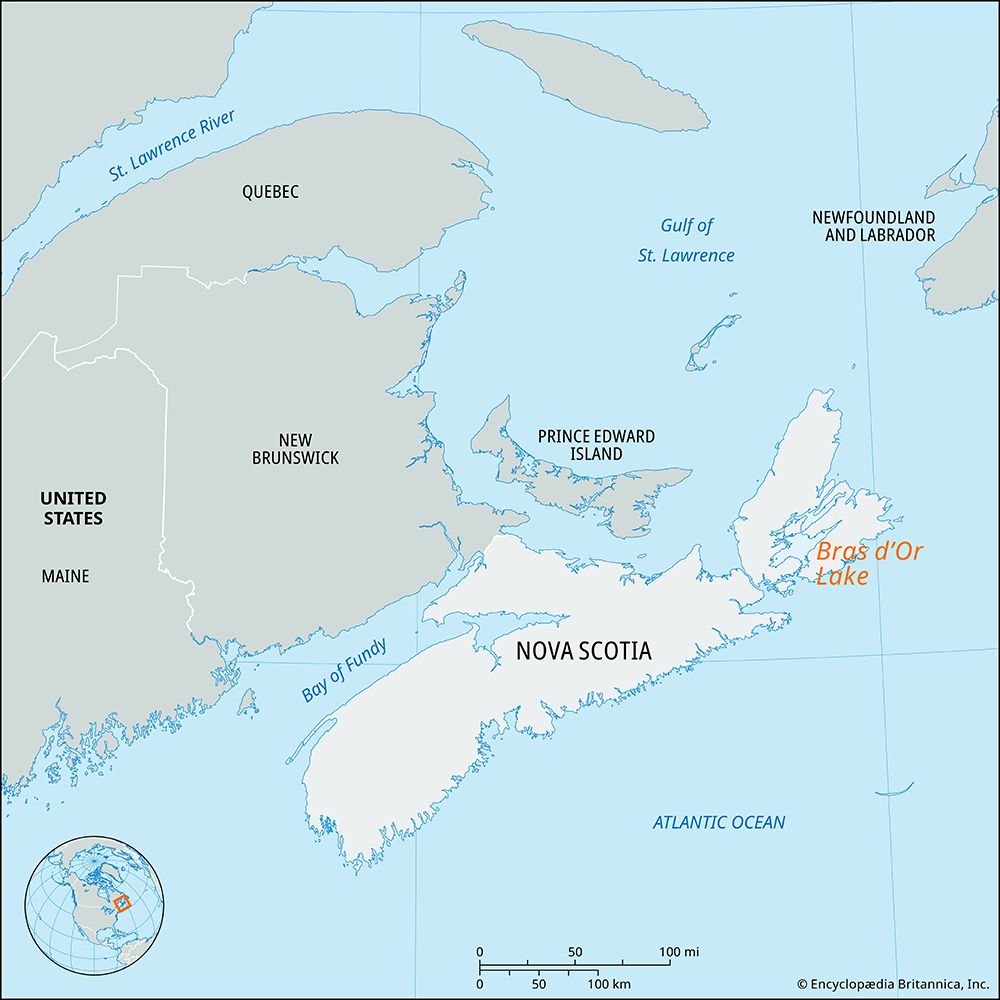
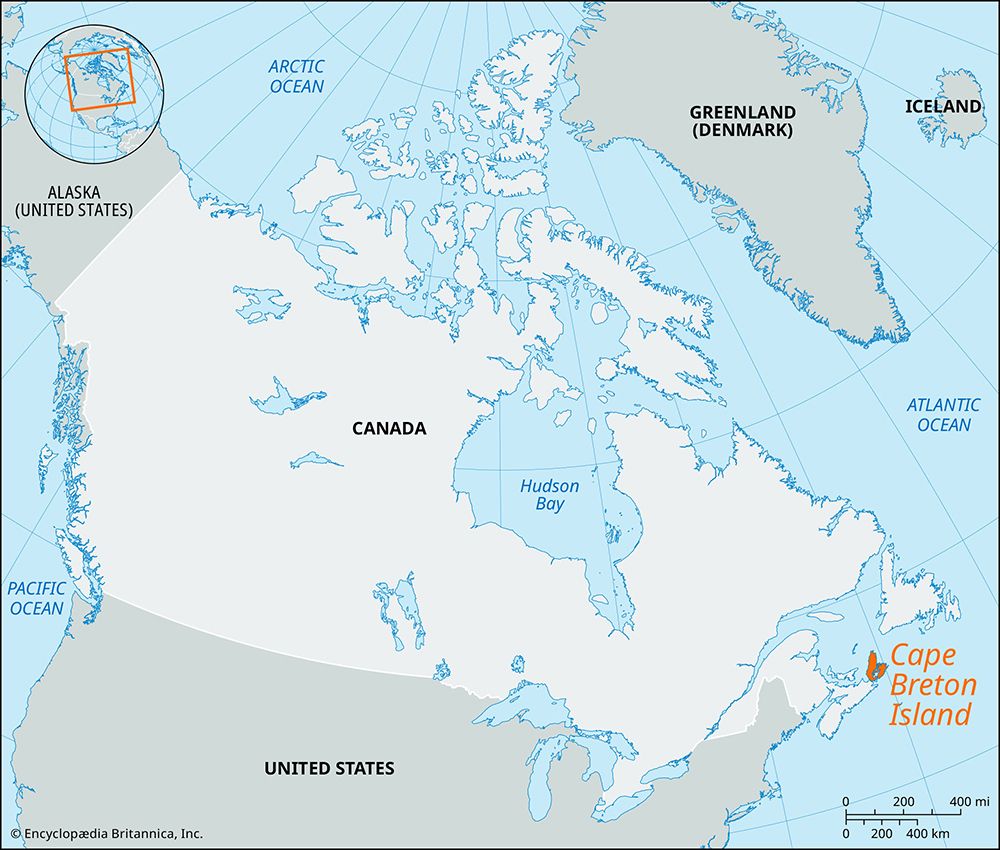
Cape Breton Island, located in northeastern Nova Scotia, is home to several prominent natural landmarks and recreational areas:
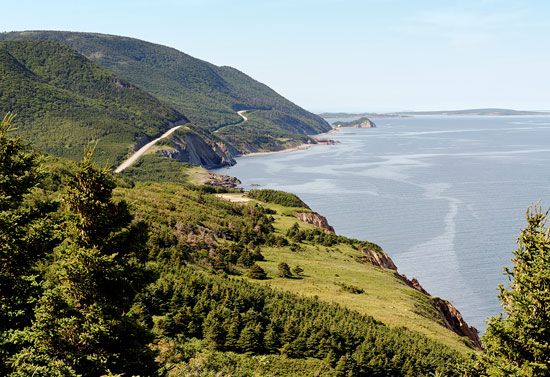
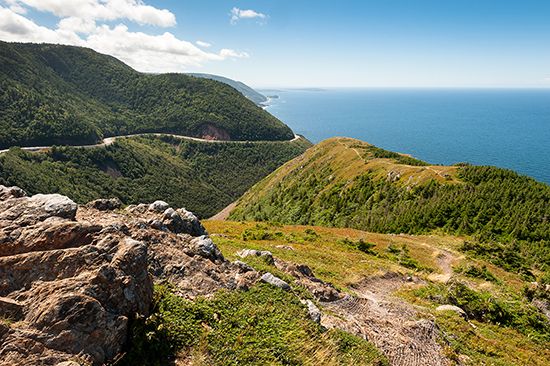
- Cape Breton Highlands: This forested upland is the island’s most significant physical feature. It forms an undulating plateau that rises abruptly from the coast, reaching a maximum elevation of 1,745 feet (532 meters), the highest point in the province.23
- Cape Breton Highlands National Park: Established in 1936, this park protects a large portion of the northern highlands. The landscape features a mix of forests, muskeg, lakes, and heath, supporting diverse wildlife including various mammals and seabirds.42
- Cabot Trail: This famous 185-mile (298-km) scenic highway encircles much of the northern region, providing access to the highlands and the national park.42
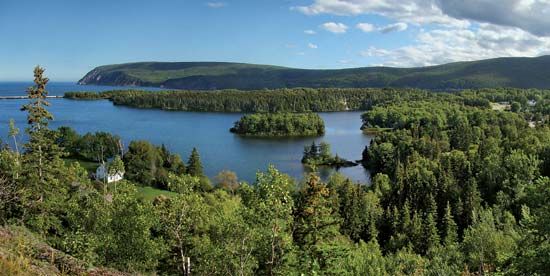
- Bras d’Or Lake: Located in the center of the island, this 360-square-mile (932-square-km) tidal saltwater lake is a major recreational destination.3
What role did Cape Breton Island play in early European exploration and settlement of North America?
Cape Breton Island played a pivotal role in the early European exploration and colonial history of North America. Its significance began with the voyages of John Cabot, who is believed by many historians to have made his first North American landfall on the island in 1497 while sailing for England. The island’s name itself is thought to have been bestowed shortly thereafter by Basque fishermen from Cap Breton, France.67
During the colonial era, the island—then known as Île Royale—became a strategic French stronghold. In 1713, French settlers established the town of Louisbourg, which developed into a vital center for fishing, shipbuilding, and military defense. Its heavily fortified position made it a focal point of imperial conflict between France and Britain.37
Following its capture by British forces in 1758 and formal cession in 1763, the island’s administrative status shifted several times, eventually becoming a separate British crown colony in 1784 before being permanently rejoined to Nova Scotia in 1820.7
What are some of the major industries and economic activities on Cape Breton Island?
The economy of Cape Breton Island is characterized by a mix of traditional resource-based industries and a growing service sector. Key economic activities include:
- Resource Extraction: Historically, coal mining served as a cornerstone of the island’s economy, though the industry has seen significant decline in recent decades. Other traditional activities include lumbering and fishing, which remain part of the regional economic landscape.9
- Tourism: Summer tourism is a vital component of the island’s economy. Visitors are drawn to the region’s natural beauty, including the Cape Breton Highlands and the recreational opportunities centered around Bras d’Or Lake.95
- Service Industries: Similar to the broader economy of Nova Scotia, service-oriented roles have become increasingly significant. This includes employment in public and private services, as well as knowledge-based sectors such as education and technology.1011
- Cultural Economy: The island’s rich heritage, particularly its vibrant Celtic music scene and traditional folk arts, supports a unique cultural economy that attracts both national and international interest.5
Sources
- Nova Scotia - Cultural life — Encyclopædia Britannica
- Cape Breton Highlands National Park — Encyclopædia Britannica
- John Cabot — Encyclopædia Britannica
- Cape Breton Highlands — Encyclopædia Britannica
- Cape Breton Island — Encyclopædia Britannica
- Louisbourg — Encyclopædia Britannica
- Newfoundland and Labrador - History — Encyclopædia Britannica
- Nova Scotia — Encyclopædia Britannica
- Nova Scotia - Economy — Encyclopædia Britannica
- Nova Scotia - Resources and power — Encyclopædia Britannica
- Nova Scotia - Manufacturing, services, labour, and taxation — Encyclopædia Britannica
- Cabo Verde - Services — Encyclopædia Britannica
Published on · 3 min read