Bonavista Bay
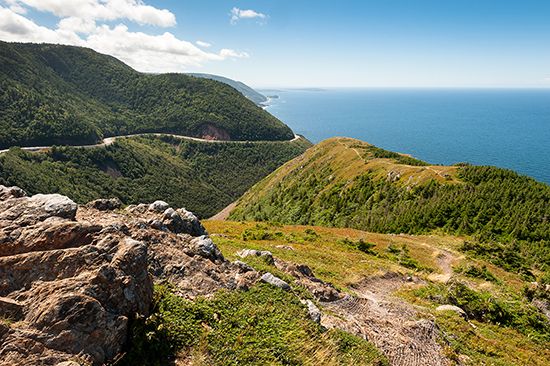
Bonavista Bay is an inlet of the Atlantic Ocean located on the eastern coast of Newfoundland, Canada. Stretching approximately 40 miles (64 km) in width, the…
What is Bonavista Bay?
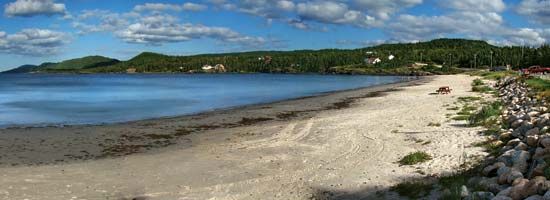
Bonavista Bay is an inlet of the Atlantic Ocean located on the eastern coast of Newfoundland, Canada. Stretching approximately 40 miles (64 km) in width, the bay is situated between Cape Freels to the northwest and Cape Bonavista to the southeast.1
The bay’s coastline is deeply indented and serves as home to several fishing communities, with the town of Bonavista being the largest. The region is historically significant for its cod and salmon fishing industries. Additionally, the southern shores of the bay are bordered by Terra Nova National Park, which offers protected natural landscapes in the area.12
Who was the explorer John Cabot?
John Cabot (born c. 1450; died c. 1499) was an Italian navigator and explorer who played a pivotal role in establishing early British claims to Canada.34
After moving to England, Cabot received letters patent from King Henry VII in 1496 to search for unknown lands. On June 24, 1497, sailing aboard the Matthew, he reached North America—likely Newfoundland, Labrador, or Cape Breton Island—believing he had arrived at the coast of Asia.32
Cabot claimed the land for the English crown and reported abundant fishing resources, which encouraged international interest in the region. While the exact location of his landing remains a subject of historical debate, some suggest it may have been near Cape Bonavista. Cabot disappeared during a second expedition in 1498 and was presumed dead by 1499.2345
What wildlife can be found in Terra Nova National Park?
Terra Nova National Park is home to a diverse array of wildlife characteristic of the Newfoundland landscape. Large mammals frequently observed in the region include moose, which are the most plentiful large wild mammals on the island, as well as woodland caribou, black bears, lynx, and beavers.6
The park’s coastal and forest environments also support a variety of other species:
- Marine Life: Coastal waters are frequented by whales during the summer months, and various seal species migrate along the nearby coasts.6
- Birds of Prey: Predators such as the bald eagle and osprey are common throughout the area.6
- Waterfowl and Seabirds: The region hosts breeding populations of Canada geese and black ducks, while the surrounding headlands and islands provide habitats for seabirds like Atlantic puffins, murres, and northern gannets.6
- Small Mammals: The forests support various small fur-bearing animals, including red foxes.6
We could dive deeper into the conservation efforts protecting these species or explore the specific forest ecosystems that sustain them.
How did the cod fishing industry shape Newfoundland’s history?
For over 500 years, the cod fishery served as the economic and cultural backbone of Newfoundland and Labrador. Historically, the industry centered on the production of dried salt cod for international markets, but by the mid-20th century, it transitioned into a capital-intensive industry focused on frozen goods for North American consumers.78
The industry’s trajectory shifted dramatically due to overfishing enabled by industrial trawlers and technological advancements like sonar. This exploitation, coupled with government mismanagement and flawed population models, led to a catastrophic collapse of the cod population. In 1992, the Canadian government imposed a moratorium on commercial cod fishing, resulting in the largest industrial closure in the country’s history.7
The collapse was devastating, causing the loss of nearly 40,000 direct and indirect jobs and triggering a 10 percent population decline as families left the province. While the fishery has since diversified into shellfish and aquaculture, the industry’s role in the provincial economy has diminished significantly.978
Sources
- Bonavista Bay — Encyclopædia Britannica
- Bonavista — Encyclopædia Britannica
- John Cabot: Top Questions — Encyclopædia Britannica
- John Cabot — Encyclopædia Britannica
- Newfoundland and Labrador - History — Encyclopædia Britannica
- Newfoundland and Labrador - Plant and animal life — Encyclopædia Britannica
- cod fishery collapse of 1992: Top Questions — Encyclopædia Britannica
- cod fishery collapse of 1992 — Encyclopædia Britannica
- Grand Banks — Encyclopædia Britannica
- Newfoundland and Labrador - Agriculture, forestry, and fishing — Encyclopædia Britannica
Published on · 3 min read