Cape Buffalo
The Cape buffalo (Syncerus caffer caffer) is a widespread bovid found across sub-Saharan Africa. Its geographic range spans from southern Ethiopia and South…
Where are Cape buffaloes found in Africa, and what is their habitat like?
The Cape buffalo (Syncerus caffer caffer) is a widespread bovid found across sub-Saharan Africa. Its geographic range spans from southern Ethiopia and South Sudan down to South Africaan) down to South Africa.1
These animals are highly adaptable and thrive in virtually all types of grassland habitats, provided they remain within commuting distance of water—typically up to 20 km (12 miles). Their preferred environments include:
- Diverse Landscapes: Ranging from dry savanna and lowland floodplains to montane mixed forest and glades.1
- Shelter: They utilize woodlands, thickets, or reeds for protection against heat and predators.1
- Resource Access: They frequent areas with medium to tall grass, wallows, and mineral licks. The largest populations are often found in well-watered savannas near rivers and lakes.1
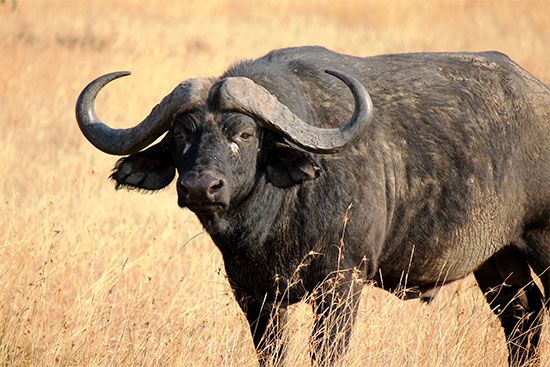
Why are Cape buffaloes considered one of the most dangerous animals in Africa?
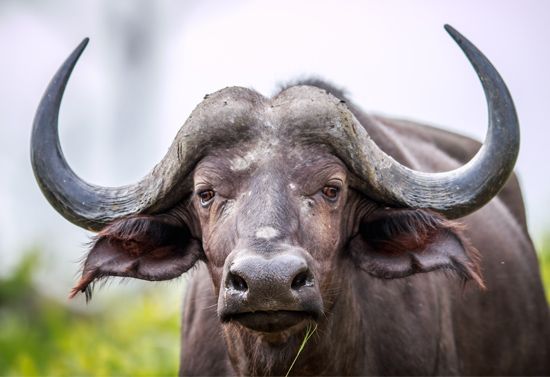
The Cape buffalo (Syncerus caffer caffer) is widely regarded as one of Africa’s most formidable animals due to its massive size, aggressive defensive nature, and physical power. Standing up to 150 cm (59 inches) tall and weighing as much as 870 kg (1,910 pounds), these bovids possess thick, heavy horns that form a broad shield across the forehead, making them physically imposing opponents.2
Their reputation for danger is largely rooted in their highly developed cooperative defense mechanisms. Unlike many other species that flee from threats, Cape buffalo herds are known to stand their ground when aroused by distress calls. They have been observed putting to flight and even killing lions when acting in defense of their members. This collective aggression, combined with their ability to charge with significant force, makes them a challenging and dangerous encounter for both predators and humans in their geographic range.2
What role do Cape buffaloes play in their ecosystem?
Cape buffaloes play a significant role in their ecosystem as highly successful ruminants that shape the landscape through their feeding habits. By consuming large quantities of coarse, tall grass that other herbivores may find difficult to digest, they help manage vegetation growth in savannas, floodplains, and forests.1
Their presence also influences the health and dynamics of other species:
- Predator-Prey Dynamics: As a major prey species, they are a critical food source for large carnivores, such as lions. Their defensive behavior—where herds cooperatively protect members—creates a complex interaction with these predators.1
- Habitat Modification: Their movement patterns and reliance on water sources, wallows, and mineral licks help maintain specific environmental features within their geographic range.1
- Disease Ecology: While they are immune to some diseases like bovine sleeping sickness, they can act as reservoirs for other cattle-borne illnesses, which impacts both wildlife and domestic livestock populations.12
How do Cape buffaloes interact with other African wildlife species?
Cape buffaloes interact with a variety of African wildlife through complex ecological relationships, ranging from predator-prey dynamics to mutualistic associations.
- Predator-Prey Interactions: Cape buffaloes are a significant prey species for large carnivores, most notably lions. While lions hunt them, the buffalo’s defensive behavior is highly effective; herds often stand their ground and have been known to put lions to flight or even kill them when responding to distress calls.12
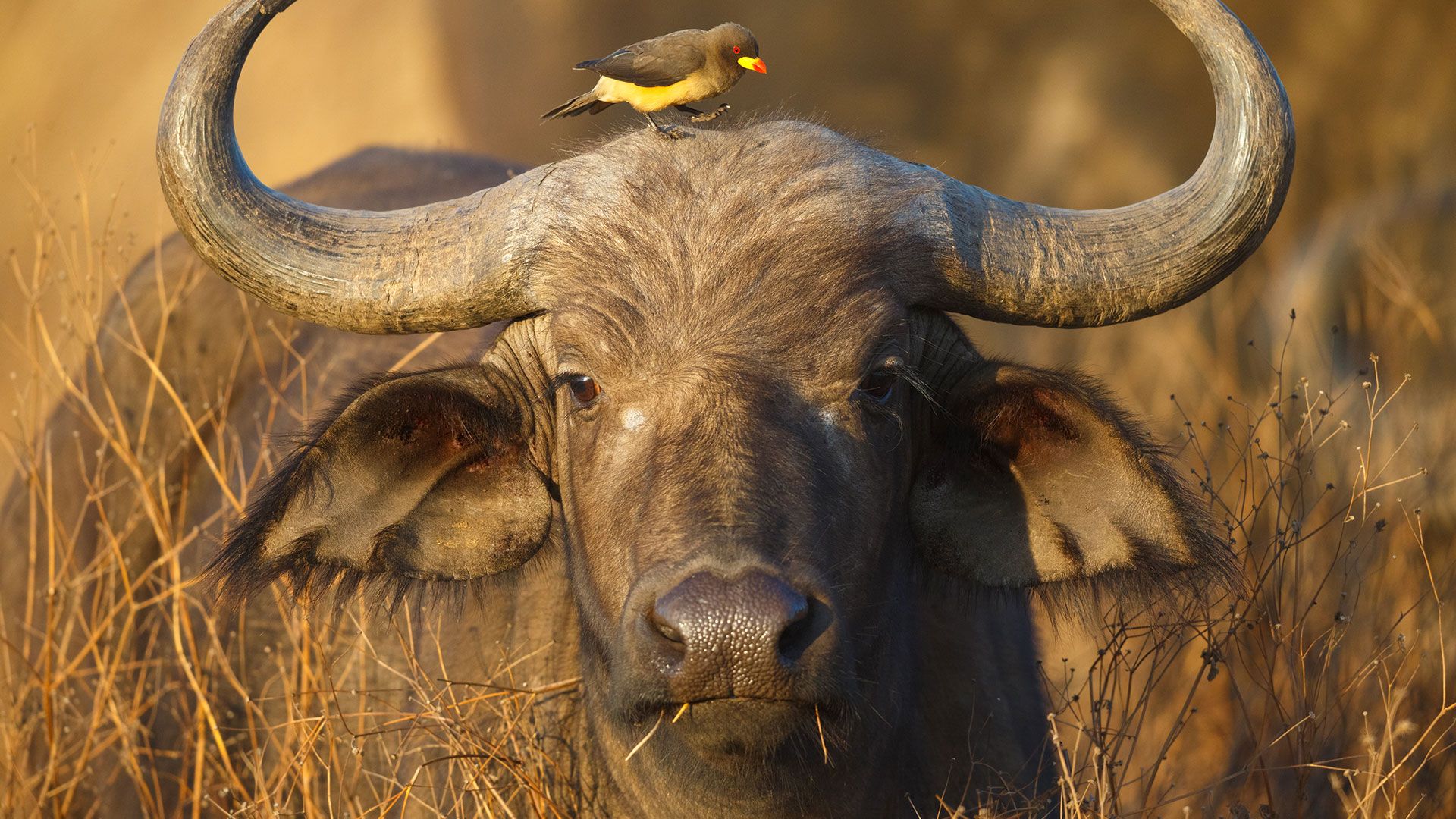
- Mutualistic Relationships: Cape buffaloes maintain a mutualistic association with oxpeckers. These birds perch on the buffaloes to remove and consume ticks, flies, and maggots from their hides. In return, the birds often hiss when alarmed, serving as an early warning system for the buffaloes regarding potential danger.3
- Competition: Cape buffaloes face competition for resources with other ungulates and domestic cattle. Because they share similar feeding niches, the expansion of cattle grazing and human agricultural development has led to increased competition for food and habitat.14
- Disease Transmission: They share susceptibility to certain cattle-borne diseases, such as rinderpest and foot-and-mouth disease, which can impact both wild buffalo populations and domestic livestock.14
Sources
- Cape buffalo — Encyclopædia Britannica
- Cape buffalo: Top Questions — Encyclopædia Britannica
- Oxpecker — Encyclopædia Britannica
- lion - Hunting — Encyclopædia Britannica
Published on · 3 min read