Cape Tulip
The term "Cape tulip" can refer to two distinct types of plants, which is a common source of confusion.
What is Cape tulip?
The term “Cape tulip” can refer to two distinct types of plants, which is a common source of confusion.
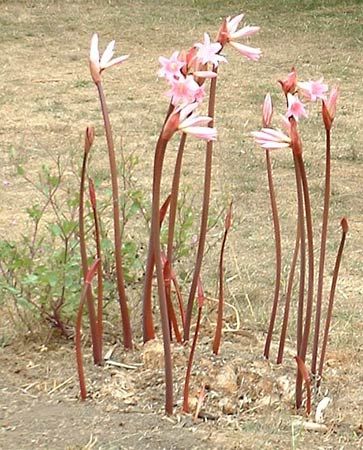
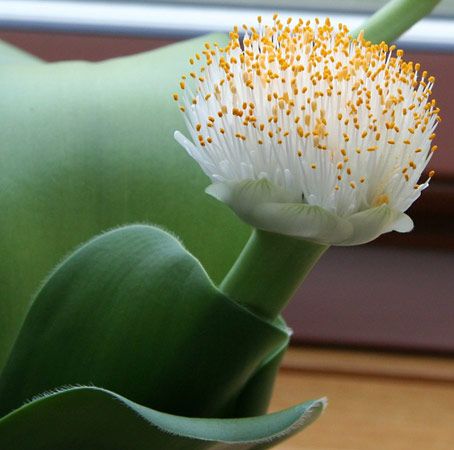
It is most accurately identified as any plant belonging to the genus Haemanthus within the Amaryllidaceae family. These South African herbs are known for their dense clusters of red flowers and broad, blunt leaves, though some species produce white flowers. They are also referred to by names such as African bloodlily, Catherine wheel, and giant paintbrush.1
Additionally, the term has been used to describe plants of the genus Homeria, which are sometimes associated with the name “blood lily”.2
Why are some Cape tulip species considered invasive?
The premise that Haemanthus species (commonly called Cape tulip) are invasive is not supported by the provided information. The Cape tulip is defined as a genus of ornamental South African herbs, and there is no evidence in the provided text linking this specific genus to invasive behavior.
In general, invasive species become problematic when they are introduced to new environments where they possess a competitive advantage over indigenous species. This often occurs because the new habitat lacks natural predators to keep their populations in check, allowing them to disrupt ecosystems, reduce biodiversity, and outcompete native plants for essential resources like food and living space. While some nonnative species can cause significant ecological and economic harm, not all introduced plants exhibit these invasive characteristics.
What are the main differences between the Amaryllidaceae and Iridaceae plant families?
The Amaryllidaceae and Iridaceae families are both members of the order Asparagales, but they exhibit distinct structural and reproductive differences.
Underground Storage Organs
While both families utilize specialized underground structures for survival and propagation, their primary forms differ:
- Amaryllidaceae: Characteristically feature bulbs or underground stems, where fleshy leaf bases or protective scales make up the bulk of the organ.56
- Iridaceae: Utilize a wider variety of structures, including rhizomes, bulbs, and corms. Corms, which are largely composed of stem tissue rather than leaf bases, are a defining feature for many members of this family.78
Floral Characteristics
- Inflorescence: Amaryllidaceae typically feature an umbel, a cluster where flower stalks arise from a single point. In contrast, the basal condition for Iridaceae is a rhipidium, where flowers are clustered within leafy bracts and emerge sequentially.9
- Structure: Amaryllidaceae flowers often have a corona (a petaloid extension, such as the trumpet of a daffodil). Iridaceae flowers frequently possess three broad, petaloid style branches that hide the anthers, and many species exhibit bilateral symmetry (zygomorphy).97
How do bulbous plants survive in harsh climates?
Bulbous plants survive in harsh climates—such as those with cold winters or dry seasons—by utilizing specialized underground storage organs that allow them to enter a state of dormancy while their aerial parts die back. These structures, which include bulbs, corms, tubers, and rhizomes, serve as vital reservoirs for food and water.91011
By retreating below the soil surface, these plants protect their essential tissues from environmental extremes like frost or drought. The storage organs are often protected by specialized coverings, such as fibrous or woody tunics, which further insulate the plant.1011
The timing of this survival strategy is often regulated by environmental cues like day length and temperature, which trigger the plant to cease growth and form resting buds before unfavorable conditions arrive. When conditions improve, the stored energy within these organs provides the necessary resources for the plant to resume development and bloom. This ability to anticipate and adapt to seasonal changes is a key feature of their survival in diverse climates.1012
Sources
- Cape tulip — Merriam-Webster
- Cape tulip — Encyclopædia Britannica
- moraea — Merriam-Webster
- invasive species — Encyclopædia Britannica
- list of plants in the family Amaryllidaceae — Encyclopædia Britannica
- Amaryllidaceae — Encyclopædia Britannica
- Iridaceae — Encyclopædia Britannica
- Asparagales - Flowers — Encyclopædia Britannica
- Asparagales - Storage organs — Encyclopædia Britannica
- plant reproductive system - Reproduction by special asexual structures — Encyclopædia Britannica
- succulent — Encyclopædia Britannica
- horticulture - Bulb crops — Encyclopædia Britannica
- plant development - Seasonal adaptations — Encyclopædia Britannica
Published on · 3 min read