Cape Verde Basin
The provided search results do not contain information regarding the specific geological formation of the Cape Verde Basin. The available data describes the…
How was the Cape Verde Basin formed geologically?
The provided search results do not contain information regarding the specific geological formation of the Cape Verde Basin. The available data describes the basin as a submarine depression in the Atlantic Ocean characterized by its depth, sediment composition of red clay, and its location relative to the Mid-Atlantic Ridge and the African coast.1
Are there any significant natural resources or economic activities associated with the Cape Verde Basin?
The Cape Verde Basin is a deep-sea submarine depression characterized primarily by red clay deposits rather than the oceanic oozes found in much of the Atlantic Ocean floor.1
Regarding economic activities and natural resources, the basin itself is a deep-water environment with an average depth exceeding 23,600 feet (7,200 meters), which limits direct industrial extraction within the basin floor. However, the broader region is associated with significant economic activity:1
- Fisheries: The Atlantic Ocean, including waters near the Cape Verde islands, is a major global fishing ground. While most commercial fishing occurs on the continental shelf where nutrient-rich upwellings support large fish populations, these activities are vital to the regional economy.34
- Local Economy: On nearby islands such as São Vicente, economic life centers on subsistence agriculture and fishing, with Mindelo serving as a critical port. Additionally, the region has seen infrastructure development, such as the construction of an oil refinery on São Vicente.5
How does the Cape Verde Basin interact with the nearby Mid-Atlantic Ridge?
The Cape Verde Basin is a deep-sea submarine depression that physically rises to meet the Mid-Atlantic Ridge to its west. While the basin and the ridge represent distinct physiographic features of the Atlantic Ocean floor, they are interconnected components of the same tectonic system.16
The Mid-Atlantic Ridge serves as the central axis of the Atlantic basin, where seafloor spreading occurs. At this ridge, molten magma rises from the mantle, cooling to form new crust that is progressively pushed outward toward the basin margins. As the Atlantic basin widens due to this process, the older, deeper regions like the Cape Verde Basin are situated away from the active spreading center. While the ridge is characterized by mountainous terrain, volcanic activity, and rift valleys, the Cape Verde Basin is defined by its relatively deep, sediment-filled floor, where oceanic oozes are notably replaced by red clay.7816
How does the Cape Verde Basin affect ocean currents and marine life in the region?
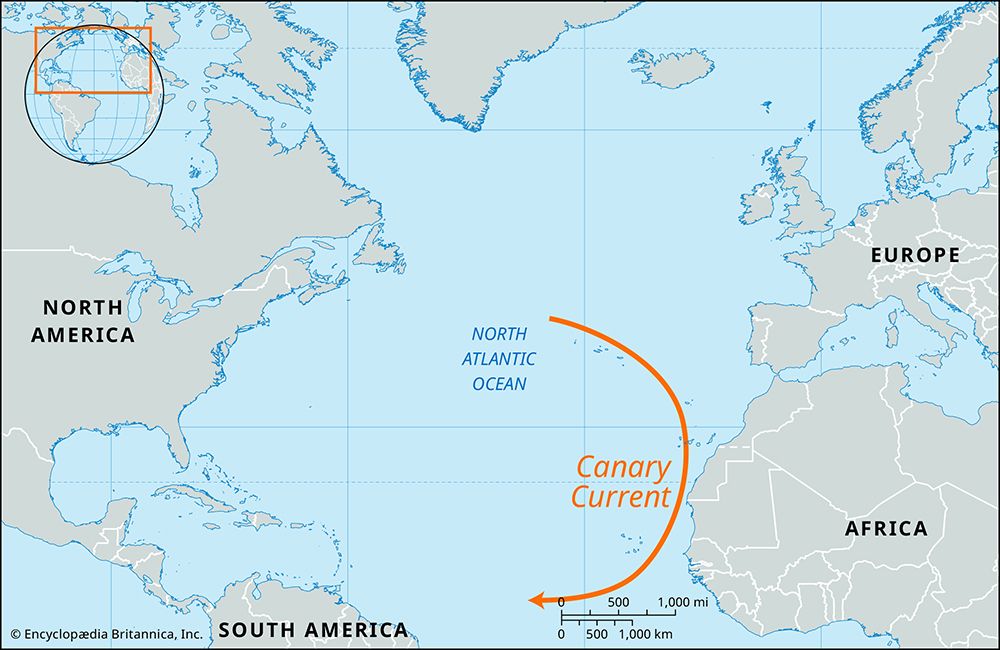
The Cape Verde Basin plays a significant role in regional oceanography by acting as a convergence zone for distinct water masses. The basin is characterized by warmer, saltier waters that interact with cooler currents flowing from the Sierra Leone Basin to the south.1
The circulation patterns within the basin are heavily influenced by the Canary Current, which flows southward into the region. As this current enters the basin, it blends with and is warmed by the Atlantic Equatorial Countercurrent in the west and the Guinea Current to the south. These interactions create a dynamic environment where varying temperatures and salinities meet, which is essential for defining the local marine habitat.1
While the basin’s extreme depth—averaging over 23,600 feet—and its unique floor composition of red clay distinguish it from other parts of the Atlantic, these current systems are fundamental to the movement of nutrients and the distribution of marine life in the surrounding waters.1
Sources
- Cape Verde Basin — Encyclopædia Britannica
- Cabo Verde — Encyclopædia Britannica
- Atlantic Ocean - Fisheries of the Atlantic Ocean — Encyclopædia Britannica
- Atlantic Ocean - Biological resources — Encyclopædia Britannica
- São Vicente Island — Encyclopædia Britannica
- Atlantic Ocean - Relief of the ocean floor — Encyclopædia Britannica
- Mid-Atlantic Ridge — Encyclopædia Britannica
- oceanic ridge - Atlantic Ocean — Encyclopædia Britannica
- Atlantic Ocean - Origin and development — Encyclopædia Britannica
Published on · 2 min read