Canary Current
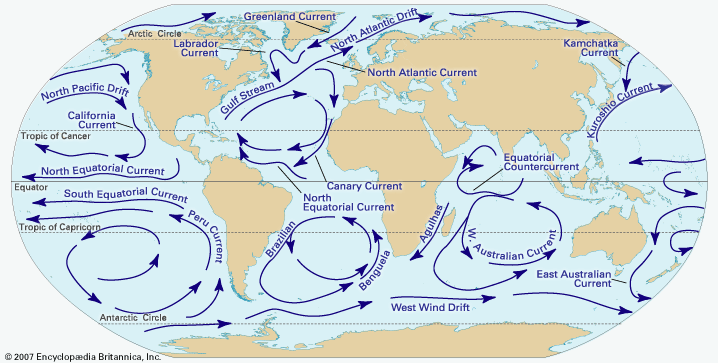
The Canary Current is a significant component of the clockwise-rotating ocean current system in the North Atlantic Ocean. It originates as a branch of the…
What is Canary Current?
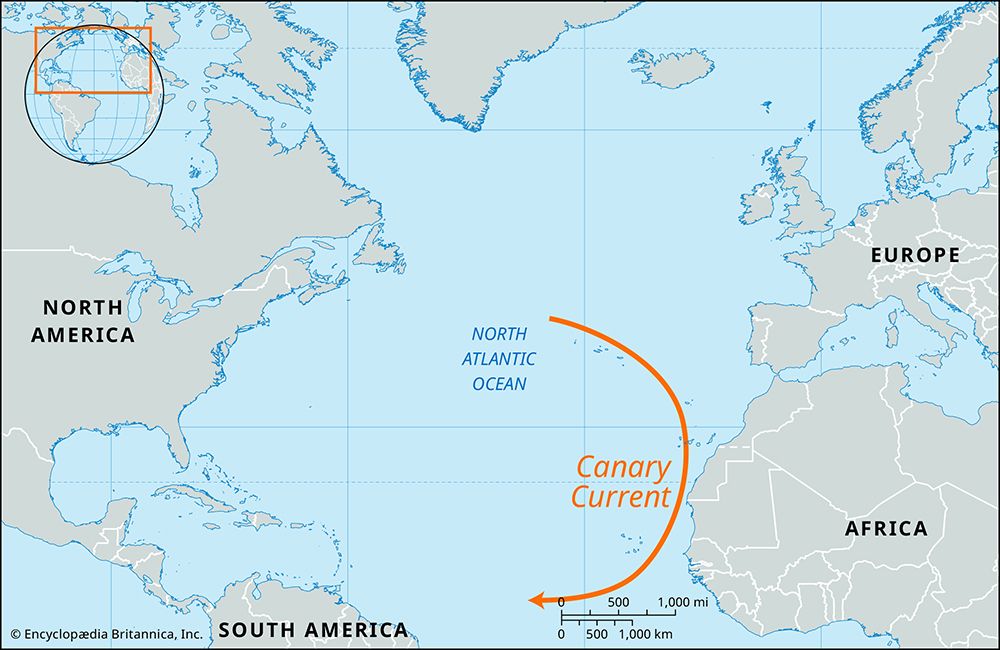
The Canary Current is a significant component of the clockwise-rotating ocean current system in the North Atlantic Ocean. It originates as a branch of the North Atlantic Current and flows in a southwestward direction along the northwest coast of Africa, reaching as far south as Senegal.12
The current is characterized by its cool water temperatures, which are primarily the result of upwelling—a process driven by offshore winds blowing from the African continent. As the current passes the Canary Islands, it helps mitigate the intense heat of the Sahara Desert to the east. Furthermore, the thermal mixing associated with this current fosters highly productive fishing grounds in the region. Eventually, the current turns westward to join the Atlantic North Equatorial Current, completing the North Atlantic circulation pattern.12
What is an ocean gyre and how does it function?
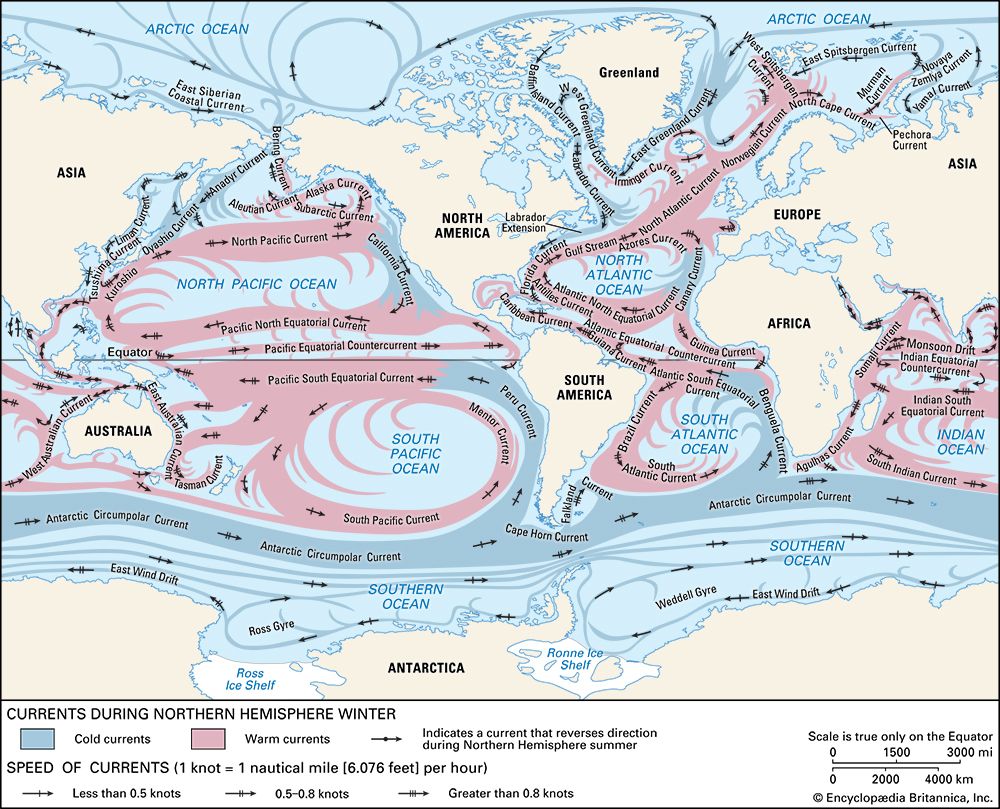
An ocean gyre is a vast, circular system of ocean currents that spirals around a central point. These systems are primarily categorized into two types:3
- Subtropical gyres: These large-scale systems ring subtropical high-pressure areas. They are driven largely by atmospheric circulation, specifically the clockwise rotation of subtropical anticyclones in the Northern Hemisphere.34
- Subpolar gyres: These are cyclonic circulation features that enclose areas of low atmospheric pressure over the oceans.35
How They Function
Gyres are primarily forced by wind patterns, which drive surface currents in the uppermost 100 meters of the ocean. However, these currents are not merely reflections of wind; they are significantly influenced by the Coriolis force, which causes water to be transported at an angle to the wind stress.46
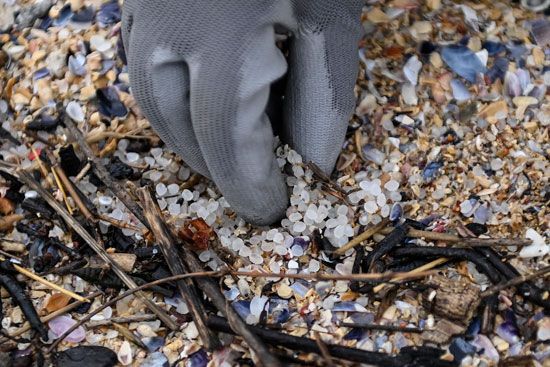
In subtropical gyres, this interaction leads to the convergence of surface waters, which are then forced downward into the deeper ocean, creating a “lens” of warm, saline water. Because these systems create a stable, rotating environment, they can trap floating debris, such as the plastic waste found in the Great Pacific Garbage Patch.47
How does upwelling support marine life and fishing?
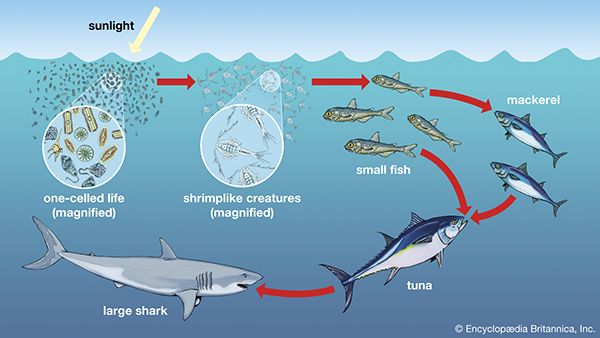
Upwelling is a critical oceanographic process that sustains marine life and supports some of the world’s most productive fisheries. By drawing cold, nutrient-rich subsurface water into the sunlit upper layers of the ocean, upwelling provides the essential ingredients—such as nitrogen and phosphorus—required for phytoplankton to thrive.8910
This process functions as the foundation of the marine food chain:
- Primary Production: Phytoplankton reproduce rapidly in these nutrient-dense conditions, converting solar energy into organic matter.810
- Consumer Support: These producers are grazed upon by [zooplankton], which in turn provide an abundant food supply for [nekton] and larger marine animals.8
- Economic Impact: Because this cycle supports high concentrations of fish, regions of persistent upwelling—such as the coastal waters off Peru and California—host the world’s richest fishing grounds.89
Conversely, when upwelling is disrupted, such as during El Niño events, the lack of nutrients can lead to a collapse in biological productivity and devastating consequences for both marine ecosystems and commercial fishing industries.8
What is the North Atlantic Current?
The North Atlantic Current, also known as the North Atlantic Drift, is a powerful, warm, and saline ocean current that serves as the northeastward extension of the Gulf Stream system.124
Characteristics and Path
Extending from the Grand Banks off Newfoundland to the Norwegian Sea, the current is composed of several broad flows. While the Gulf Stream is a concentrated, high-velocity current, the North Atlantic Current is broader and moves at slower speeds of approximately 0.2 knots. It plays a vital role in the thermohaline circulation, transporting warm, saline water into high-latitude polar seas.1213
Environmental Impact
The current significantly influences the environment of northwestern Europe:
- Climate: The combination of the warm current and prevailing westerly winds helps maintain a mild climate in regions such as the British Isles and Norway.1213
- Fisheries: By mixing with cold polar waters, the current creates nutrient-rich conditions that support excellent fishing grounds along the coasts of northwestern Europe.12
Sources
- Canary Current — Encyclopædia Britannica
- Atlantic Ocean - The North Atlantic — Encyclopædia Britannica
- gyre — Encyclopædia Britannica
- Climate - The Gulf Stream — Encyclopædia Britannica
- ocean current - The subpolar gyres — Encyclopædia Britannica
- Great Pacific Garbage Patch — Encyclopædia Britannica
- Marine ecosystem - Ocean currents — Encyclopædia Britannica
- Marine ecosystem - Upwelling — Encyclopædia Britannica
- upwelling — Merriam-Webster
- ocean current - Ekman layer — Encyclopædia Britannica
- primary productivity — Encyclopædia Britannica
- North Atlantic Current — Encyclopædia Britannica
- Climate - Thermohaline circulation — Encyclopædia Britannica
Published on · 3 min read