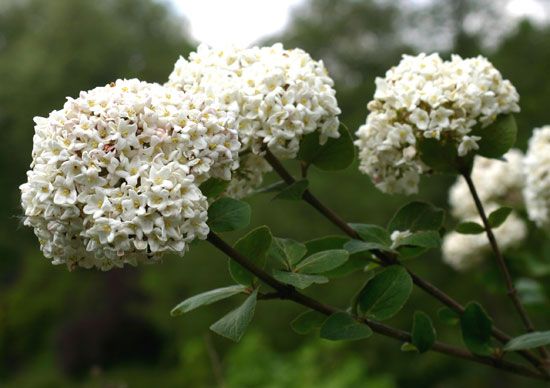
Caprifoliaceae
Plants in the Caprifoliaceae family, commonly known as the honeysuckle family, are characterized by having an inferior ovary that produces fleshy fruits.…
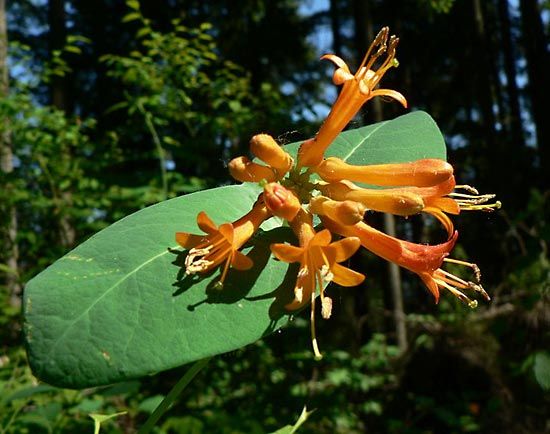
What types of fruits are produced by plants in the Caprifoliaceae family?
Plants in the Caprifoliaceae family, commonly known as the honeysuckle family, are characterized by having an inferior ovary that produces fleshy fruits. These fruits typically contain only a few seeds or sometimes just a single seed.1
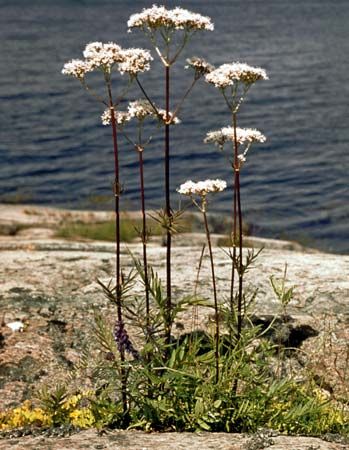
Are there any medicinal uses for plants in the Caprifoliaceae family?
Several plants within the Caprifoliaceae family are recognized for their medicinal properties. Specifically, species belonging to the genera Valeriana and Valerianella are noted for their importance in traditional herbal medicine. These plants are often distinguished by the rank odor emitted by their stems and leaves when dried.2
While the family is widely known for its ornamental shrubs and vines, such as honeysuckles and snowberries, the medicinal applications are primarily associated with the aforementioned genera.2
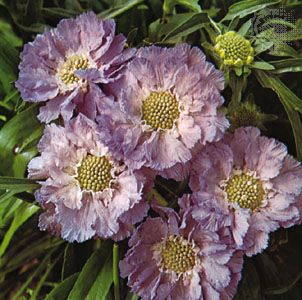
In what regions or habitats are Caprifoliaceae plants typically found?
Plants in the Caprifoliaceae family are primarily found in north temperate regions, though their distribution also extends to tropical mountain areas.1
While the family is widespread across the Northern Hemisphere, specific genera exhibit diverse geographical ranges:
- Honeysuckles (Lonicera): These are native to temperate zones in both hemispheres, with a significant concentration of species found in China, as well as the Himalayas, southern Asia, and North Africa.2
- Valerians (Valeriana and Valerianella): These are distributed throughout the Northern Hemisphere and in Andean South America.1
- Abelia: This genus is notably native to East Asia and Mexico.1
- Bush honeysuckle (Diervilla): These shrubs are native to North America.):** These shrubs are native to North America.2
- Himalaya honeysuckle (Leycesteria formosa): This species is native to temperate Asia.1
How do the flowers of Caprifoliaceae plants differ from other plant families?
The flowers of the Caprifoliaceae family are distinct primarily due to their structural arrangement regarding the ovary. A key characteristic that sets them apart from many other plant families is that their flowers feature a calyx tube that is adnate to the ovary.1
In botanical terms, this means the calyx—the outermost whorl of the flower—is fused or grown together with the ovary wall. This specific floral morphology is a defining trait used to identify members of this family, which also typically exhibit opposite leaves that usually lack stipules.1
Sources
- Caprifoliaceae — Merriam-Webster
- Caprifoliaceae — Encyclopædia Britannica
- hairy honeysuckle — Merriam-Webster
- honeysuckle — Encyclopædia Britannica
Published on · 2 min read