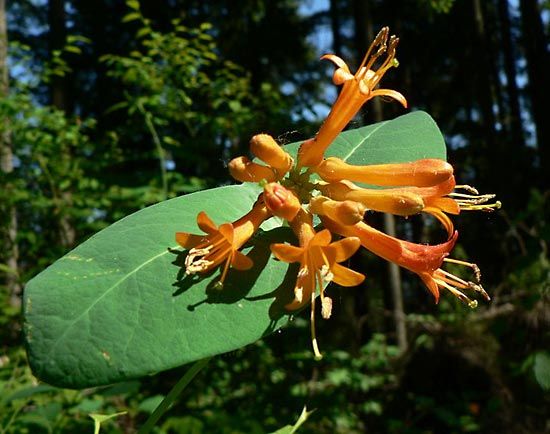
Dipsacales
Plants in the order Dipsacales hold significant value for both their ecological roles and their economic utility.
How are Dipsacales plants important ecologically or economically?
Plants in the order Dipsacales hold significant value for both their ecological roles and their economic utility.
Economic Importance
- Ornamental Horticulture: The order is widely recognized for its diverse ornamental shrubs, vines, and flowers. Popular cultivated genera include honeysuckle (Lonicera), viburnum, snowberry, abelia, and pincushion flower (Scabiosa).12
- Medicinal Use: Several species are utilized in traditional herbal medicine. For example, garden valerian is prized for its sedative properties, and black elderberry is also commonly used in herbal remedies.12
- Historical and Food Uses: Historically, the stiff bracts of fuller’s teasel were used in the process of fulling wool. Additionally, some species, such as Morina persica, have seeds that are consumed as a food source.2
Ecological Importance
- Pollination: Dipsacales exhibit complex pollination mechanisms, attracting a variety of pollinators including bees, hawk moths, and hummingbirds, depending on flower structure and scent.2
- Invasive Potential: Some species, such as the Japanese honeysuckle, can become aggressive invasive weeds that threaten local biodiversity by outcompeting native flora.12
Can you provide examples of well-known plants that belong to the Dipsacales order?
The order Dipsacales includes a diverse range of flowering plants, many of which are widely recognized for their ornamental value or medicinal properties. The order is divided into two primary families: Adoxaceae and Caprifoliaceae.2
Notable Plants in the Adoxaceae Family
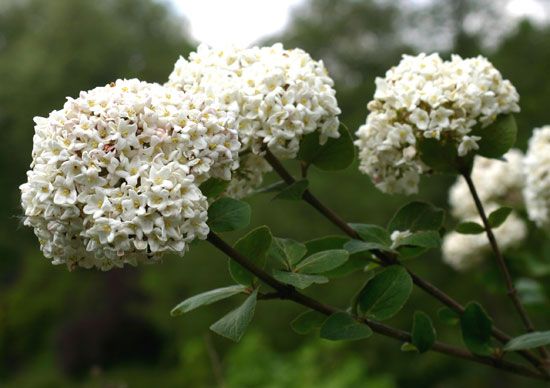
- Viburnum: A genus of about 175 species of shrubs and small trees, including the guelder rose (V. opulus), arrowwood (V. dentatum), and Chinese snowball (V. macrocephalum).21
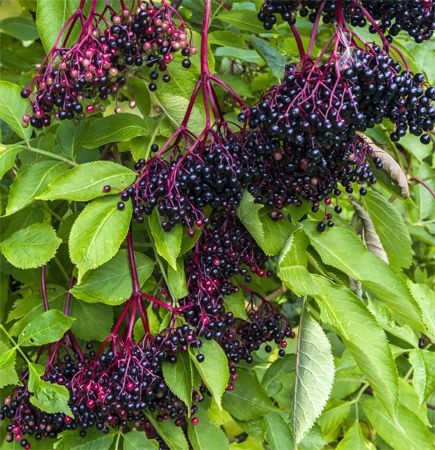
- Elderberries: Members of the genus Sambucus, such as the black elderberry (S. nigra), which is frequently used in herbal medicine.2
- Muskroot: The low-growing perennial herb Adoxa moschatellina.2
Notable Plants in the Caprifoliaceae Family
- Honeysuckles: Belonging to the genus Lonicera, these include various fragrant shrubs and vines, such as the Japanese honeysuckle.23
- Snowberries: Deciduous shrubs in the genus Symphoricarpos, such as the common snowberry (S. albus) and coralberry (S. orbiculatus).23
- Pincushion Flowers: Plants in the genus Scabiosa, often grown as ornamentals.23
- Valerians: Including garden valerian, a perennial herb known for its use as a natural sedative.23
- Teasels: Such as fuller’s teasel, historically significant for the process of fulling wool.2
- Abelia: A genus of shrubs including the glossy abelia (A. ×grandiflora).23
What are the main families included in the Dipsacales plant order?
The order Dipsacales consists of two primary families:
- Adoxaceae: Often referred to as the elderberry or moschatel family, this group includes five genera and approximately 200 species. These plants range from herbaceous perennials to woody shrubs and trees, such as viburnum and elderberries.2
- Caprifoliaceae: This is a larger, broadly circumscribed family containing 42 genera and over 890 species. Under modern botanical classification, this family incorporates several groups that were previously treated as discrete families, including Diervillaceae, Dipsacaceae, Linnaeaceae, Morinaceae, and Valerianaceae.25
Where are Dipsacales plants typically found geographically?
Plants in the order Dipsacales are distributed worldwide, though they are primarily centered in the Northern Hemisphere. Their geographic presence varies by family and clade:2
- Adoxaceae: These plants are found mostly in the north temperate zone, though the genus Viburnum also grows on certain tropical mountains.2
- Caprifoliaceae: Most species in this family are distributed throughout temperate regions of the Northern Hemisphere. Specific clades show distinct regional concentrations:2
- Lonicera and Linnaea clades: Primarily found in temperate areas of East Asia and North America.2
- Dipsacus and Morina clades: Largely Eurasian or African, with many species native to the Mediterranean region and areas extending from the Balkans to China.2
- Valeriana clade: Distributed across the Northern Hemisphere and in the Andes of South America.2
- Diervilla clade: Divided between North American species (Diervilla) and East Asian species (Weigela).2
Sources
- Caprifoliaceae — Encyclopædia Britannica
- Dipsacales — Encyclopædia Britannica
- viburnum — Encyclopædia Britannica
- viburnum — Merriam-Webster
- angiosperm - Annotated classification — Encyclopædia Britannica
- Adoxaceae — Merriam-Webster
- Adoxa — Merriam-Webster
- Dipsacaceae — Merriam-Webster
Published on · 3 min read