Captorhinus
Captorhinus is a genus of small, primitive reptiles that lived during the Permian Period (approximately 299 million to 251 million years ago) in North…
What is Captorhinus?
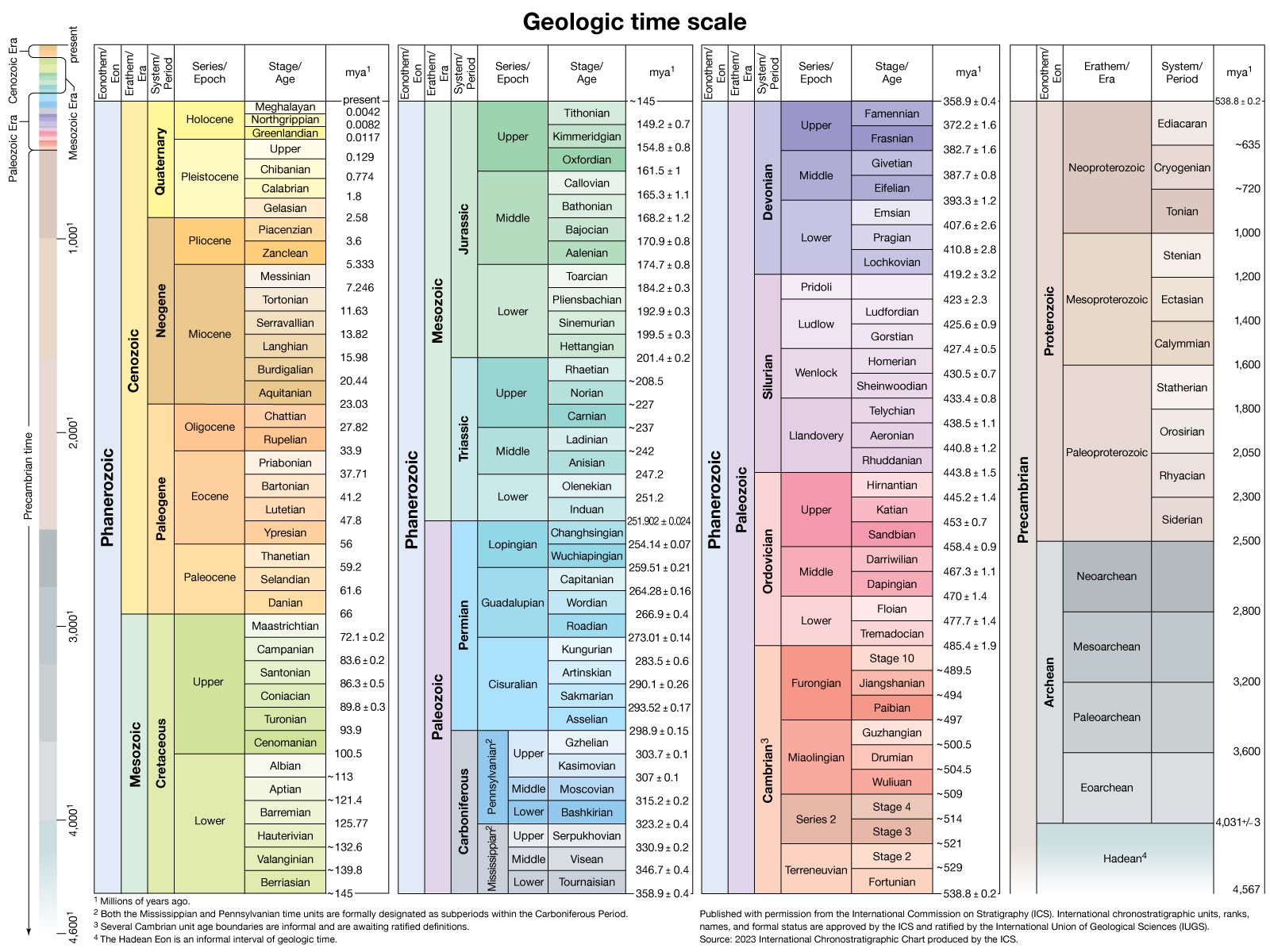
Captorhinus is a genus of small, primitive reptiles that lived during the Permian Period (approximately 299 million to 251 million years ago) in North America.1
Measuring about 30 cm (12 inches) in total length with a 7 cm (2.75 inch) skull, Captorhinus resembled a modern lizard. It is classified as a captorhinomorph, a group of “stem reptiles” characterized by nearly solid skulls that lacked openings for jaw muscle attachment. Because of this primitive skull structure, these reptiles were eventually succeeded by more advanced forms with stronger jaws capable of more efficient biting and chewing. While captorhinomorphs are considered the ancestral group from which most other reptiles evolved, only a small number persisted into the Triassic Period before going extinct.12
What are captorhinomorphs and why are they called stem reptiles?
Captorhinomorphs were a group of early, primitive reptiles that flourished during the Permian Period. They are characterized by their nearly solid skulls, which lacked the openings (temporal fenestrae) typically found in the skulls of more advanced reptiles for the attachment of jaw muscles.1
They are referred to as “stem reptiles” because they are considered the ancestral group from which most other reptiles evolved. As generalized forms, they represent an early stage in reptilian development before the emergence of more specialized lineages, such as those leading to modern lizards, snakes, turtles, and the archosaurs (which include dinosaurs, crocodiles, and birds). While they were highly successful in the Lower Permian, they were eventually succeeded by reptiles with more advanced skull structures and stronger, more efficient jaws for biting and chewing.21
How did the Permian Period environment shape early reptile evolution?
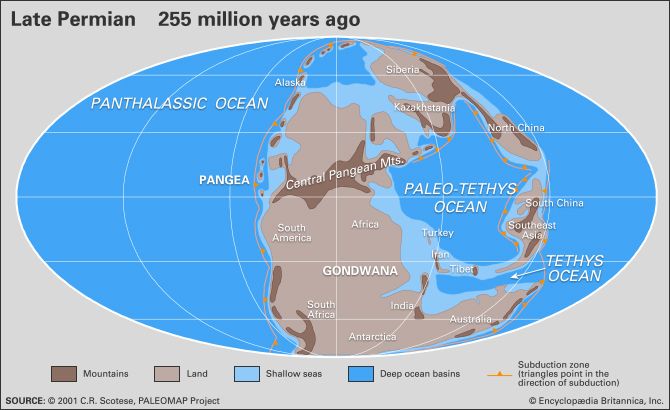
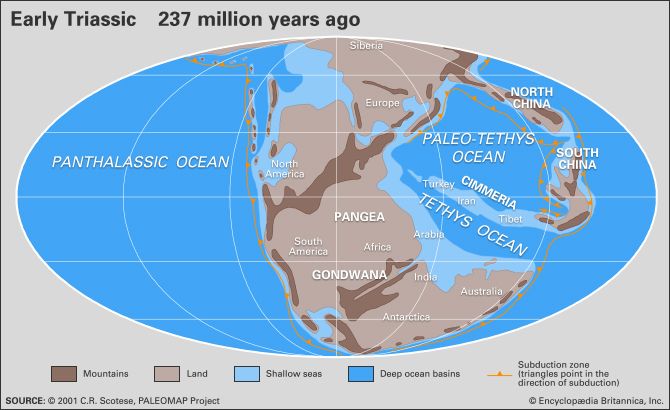
The environment of the Permian Period was a primary driver of early reptile evolution, characterized by the assembly of the supercontinent Pangea and a dramatic shift from glacial conditions to widespread aridity.25
These environmental pressures shaped reptilian development in several key ways:
- Climatic Adaptation: The transition to hot, dry climates and the formation of vast deserts forced terrestrial life to adapt. Reptiles, with their ability to thrive in drier habitats compared to their amphibian ancestors, diversified rapidly.65
- Geographic Isolation: The collision of landmasses and the creation of high mountain ranges disrupted atmospheric flow and isolated tropical shallow-water realms. This fragmentation created endemic biological provinces, encouraging the evolution of distinct lineages.2
- Evolutionary Transitions: The period saw the rise of synapsids, or “mammal-like reptiles,” which show a clear transition in skeletal and dental features toward mammals. The success of advanced synapsids like therapsids in high latitudes suggests they may have developed the ability to maintain elevated body temperatures.6
- Extinction Pressures: Toward the end of the period, massive volcanism (the Siberian traps) caused severe environmental degradation, including atmospheric changes and ocean oxygen depletion. This led to the largest mass extinction in Earth’s history, which eliminated many successful groups and cleared the way for the subsequent rise of new reptilian forms in the Mesozoic Era.257
What are the main differences between anapsids and other early reptile groups?
The primary distinction between anapsids and other early reptile groups lies in the structure of the skull. Anapsids are characterized by a solid skull that lacks temporal openings (temporal fenestrae) behind the eye sockets. In contrast, most other reptiles—including the vast majority of Mesozoic and modern species—are classified as diapsids, which possess two such openings on each side of the skull.9610
These openings in diapsids serve as attachment points for jaw muscles, allowing for more complex and efficient jaw mechanics compared to the more primitive anapsid condition. While anapsids were a diverse and prominent group during the Permian Period, they largely disappeared from the fossil record before the Mesozoic Era, with the notable exception of turtles, which are considered the only surviving representatives of this lineage. Other groups, such as the synapsids, followed different evolutionary trajectories, eventually leading to the development of mammals through distinct skeletal and dental transitions.4106911
Sources
- Captorhinus — Encyclopædia Britannica
- Permian Period - Emergence of important reptiles — Encyclopædia Britannica
- Captorhinomorpha — Merriam-Webster
- lizard - Skull and jaws — Encyclopædia Britannica
- Permian Period - Paleoclimate — Encyclopædia Britannica
- reptile - Fossil distribution — Encyclopædia Britannica
- Permian Period — Encyclopædia Britannica
- Permian extinction - Marine invertebrates — Encyclopædia Britannica
- reptile - Skull and dentition — Encyclopædia Britannica
- crocodile - Paleontology — Encyclopædia Britannica
- Anapsida — Merriam-Webster
- reptile - Historical development — Encyclopædia Britannica
Published on · 3 min read