Carbon Cycle
The carbon cycle is deeply interconnected with other biogeochemical cycles through shared environmental pathways and biological processes. Because these…
How does the carbon cycle interact with other biogeochemical cycles in ecosystems?
The carbon cycle is deeply interconnected with other biogeochemical cycles through shared environmental pathways and biological processes. Because these cycles operate within the same biosphere, the movement of carbon often influences or is influenced by the cycling of elements like nitrogen, oxygen, and phosphorus, as well as the hydrologic cycle.12
Key interactions include:
- The Hydrologic Cycle: Water serves as the primary medium for chemical transport across all cycles. Carbon dioxide dissolves in water to form carbonic acid, which dissociates into bicarbonate and carbonate ions, linking atmospheric carbon to the hydrosphere.34
- Biological Coupling: Photosynthesis and respiration are central to the carbon cycle, but they also regulate oxygen. During photosynthesis, plants convert carbon dioxide into biomass while releasing oxygen. Furthermore, the decomposition of organic matter—which releases carbon back into the environment—is a process driven by microbes that simultaneously recycle nitrogen and other essential nutrients.432
- Nutrient Limitations: The availability of nutrients like phosphorus can limit plant growth, thereby restricting the amount of carbon that can be sequestered from the atmosphere into biomass.5
What are carbon sinks, and why are they important in ecology?
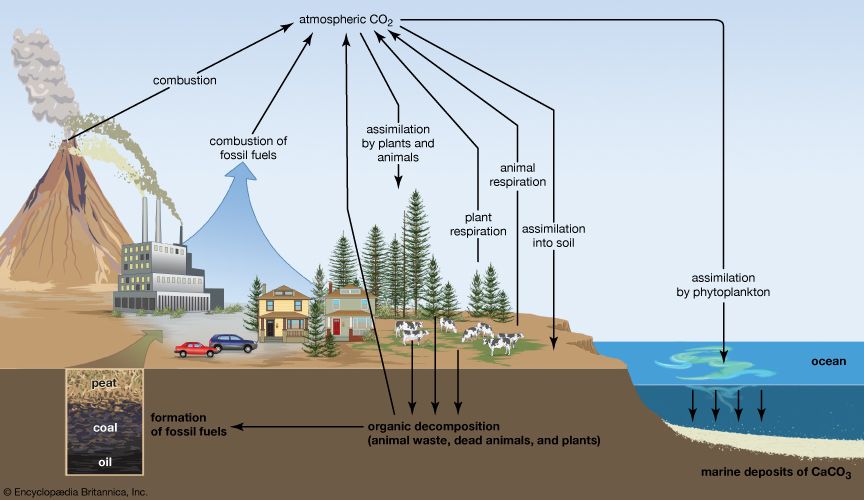
A carbon sink is any natural or artificial reservoir that accumulates and stores carbon-containing chemical compounds for an indefinite period, effectively removing them from the atmosphere. Major natural sinks include the ocean, soils, and forests.78
These sinks are vital to ecology and climate stability because they regulate the concentration of carbon dioxide in the atmosphere. By sequestering carbon through processes like photosynthesis in plants or the biological pump in oceans, these ecosystems mitigate the greenhouse effect and slow the pace of global warming.89
However, their importance is underscored by their vulnerability. If ecosystems are degraded by deforestation, rising temperatures, or changes in land use, these sinks can transition from carbon storage sites into carbon sources, releasing stored greenhouse gases back into the atmosphere through decomposition or combustion. Protecting these reservoirs is therefore a critical strategy for climate change mitigation.89
How do volcanic eruptions impact the carbon cycle?
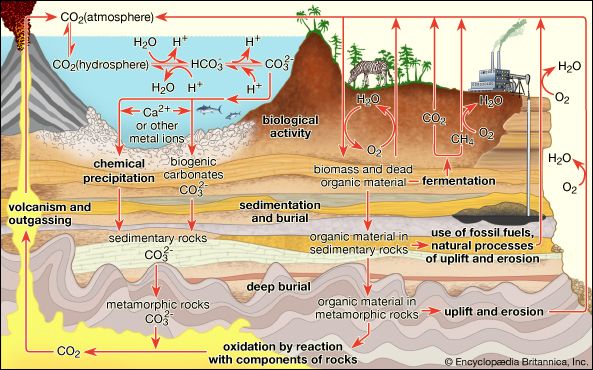
Volcanic eruptions play a fundamental role in the geologic carbon cycle by acting as a primary source of carbon injection into the atmosphere and oceans. Through outgassing, volcanoes release carbon dioxide that has been stored within the Earth’s crust and mantle.1112
Once released, this volcanic carbon enters a long-term cycle:
- Weathering: Atmospheric carbon dioxide dissolves in water to form carbonic acid, which reacts with rocks to produce bicarbonate ions. These ions are transported to the ocean, where they can be used by marine organisms to form calcite (calcium carbonate). calcite (calcium carbonate).15
- Sedimentation and Recycling: When these organisms die, their remains settle on the ocean floor, incorporating carbon into sedimentary rock. Over geologic timescales, this carbon is returned to the atmosphere through uplift, erosion, or subduction and subsequent volcanic activity.13
While volcanic carbon emissions are essential for maintaining the natural background level of atmospheric carbon dioxide over millions of years, their annual contribution is relatively low—far less than the carbon released by human fossil-fuel combustion.1112
What are the main components of the carbon cycle in ecology?
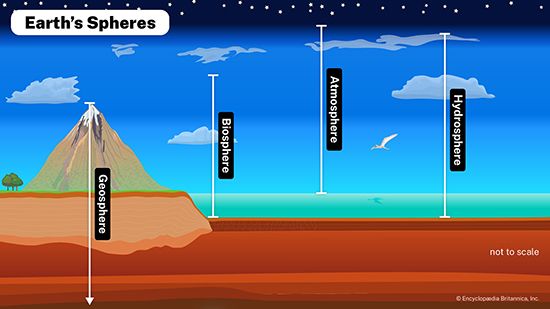
The carbon cycle is the complex process by which carbon circulates through the Earth’s atmosphere, hydrosphere, biosphere, and geosphere. Its main components include:1715
- Biological Cycling: Producers, such as plants and algae, fix atmospheric carbon dioxide through photosynthesis to create organic compounds. This carbon moves through the food chain to consumers and is eventually returned to the atmosphere via respiration or through the action of decomposers breaking down organic waste.1715
- Atmosphere-Hydrosphere Exchange: Carbon dioxide constantly exchanges between the air and water. It dissolves to form carbonic acid, which dissociates into bicarbonate and carbonate ions, linking aquatic and atmospheric systems.15
- Geologic Cycling: This slow-moving component involves the storage of carbon in sedimentary rocks, such as limestone, and fossil fuels. Carbon is released back into the atmosphere through volcanic activity, weathering, and human industrial processes.17615
These components function as reservoirs, including the ocean, forests, and soils, which regulate global climate by storing or releasing carbon.15
Sources
- Biogeochemical cycle — Encyclopædia Britannica
- soil - Carbon and nitrogen cycles — Encyclopædia Britannica
- ecosystem — Encyclopædia Britannica
- Phosphorus cycle — Encyclopædia Britannica
- Biosphere - The cycling of phosphorus and other essential nutrients — Encyclopædia Britannica
- Biosphere - The carbon cycle — Encyclopædia Britannica
- carbon sink — Merriam-Webster
- Carbon sequestration — Encyclopædia Britannica
- Global warming - Carbon cycle feedbacks — Encyclopædia Britannica
- decarbonization - Natural carbon removal — Encyclopædia Britannica
- Climate change - Volcanic activity — Encyclopædia Britannica
- volcano - Long-term environmental effects — Encyclopædia Britannica
- volcano - Gas clouds — Encyclopædia Britannica
- Global warming - Carbon dioxide — Encyclopædia Britannica
- evolution of the atmosphere - Geologic carbon cycle — Encyclopædia Britannica
- Global warming - Volcanic aerosols — Encyclopædia Britannica
- Carbon cycle — Encyclopædia Britannica
Published on · 3 min read