Biogeochemical Cycle
Human activities have profoundly altered biogeochemical cycles, the natural pathways by which essential elements circulate through the biosphere. These…
How do human activities impact biogeochemical cycles?
Human activities have profoundly altered biogeochemical cycles, the natural pathways by which essential elements circulate through the biosphere. These impacts are largely driven by industrialization, agriculture, and land-use changes.1
Carbon Cycle
The combustion of fossil fuels and widespread deforestation have disrupted the balance of the carbon cycle. By releasing vast amounts of stored carbon into the atmosphere as carbon dioxide, human activity has contributed to global warming. Furthermore, the oceans act as a sink for this excess carbon, leading to ocean acidification, which threatens marine biodiversity and coral reefs.12
Nitrogen Cycle
The development of the Haber-Bosch process for industrial nitrogen fixation has increased the amount of usable nitrogen in the environment by 150 percent. While this has boosted agricultural yields, it has also led to environmental imbalances, including the creation of oxygen-depleted areas in water bodies.13
Phosphorus Cycle
Human activities, such as the use of phosphorus-rich fertilizers and detergents, have accelerated the phosphorus cycle. Runoff from these sources into rivers and lakes can cause explosive growth of microorganisms, depleting oxygen and harming aquatic life.4
We could dive deeper into how these specific disruptions contribute to climate change or explore the long-term consequences for global ecosystems.
What are the main components of a biogeochemical cycle?
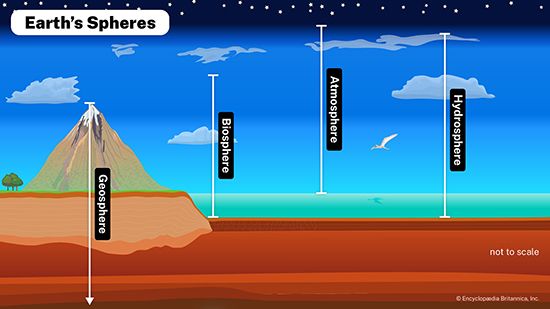
A biogeochemical cycle consists of the natural pathways that circulate essential elements between the nonliving (abiotic) and living (biotic) components of the biosphere. Each cycle is fundamentally composed of two primary pools:
- Reservoir (Nutrient) Pool: A large, slow-moving, and typically abiotic portion of the cycle, such as the atmosphere, oceans, or Earth’s crust.3
- Exchange (Cycling) Pool: A smaller, more active portion that facilitates the rapid transfer of elements between biotic and abiotic aspects of an ecosystem.3
Cycles are often categorized by their primary reservoir:
- Gaseous cycles: These involve reservoirs in the air or oceans and include elements like nitrogen, oxygen, carbon, and water.3
- Sedimentary cycles: These involve reservoirs in the lithosphere (soil and crust) and include elements like phosphorus, sulfur, and calcium.39
Elements move through these pools by alternating between inorganic and organic states, driven by biological processes, weathering, and the actions of decomposers following an organism’s death.39
How does the carbon cycle work, and why is it important?
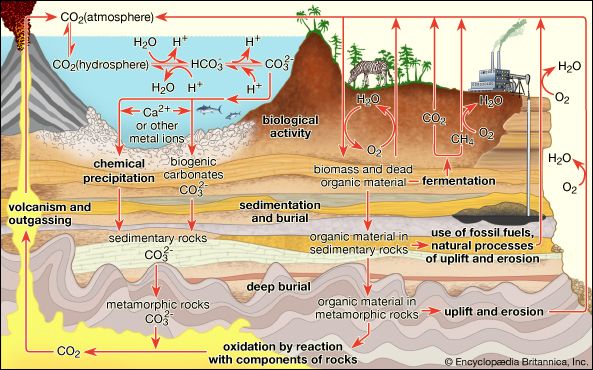
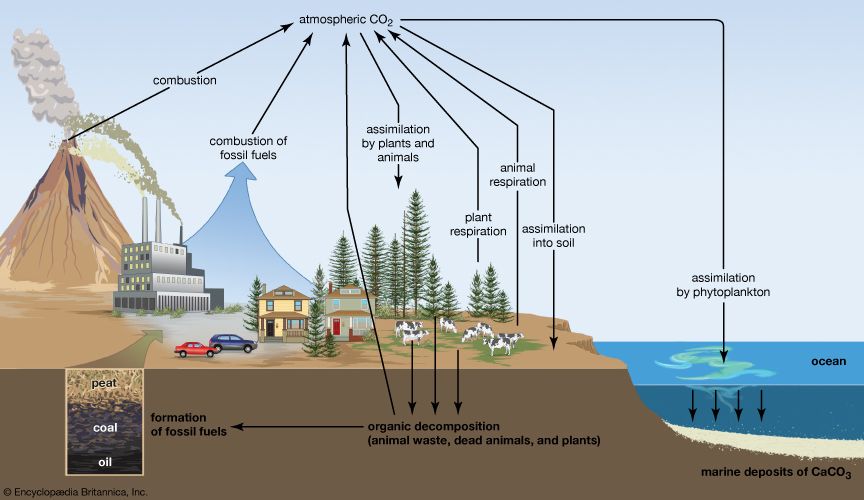
The carbon cycle is the essential process by which carbon circulates through the Earth’s biosphere, atmosphere, and hydrosphere. Because carbon is a fundamental constituent of all organic compounds, this cycle is vital for sustaining life on Earth.104
How the Cycle Works
The cycle operates through several key pathways:
- Fixation: Through photosynthesis, plants and algae convert atmospheric carbon dioxide into carbohydrates, which serve as energy for metabolism and growth.104
- Consumption and Respiration: Animals consume these carbon-based compounds and release carbon dioxide back into the atmosphere as a byproduct of [respiration].104
- Decomposition: When organisms die, decomposers (such as bacteria and fungi) break down their remains, releasing carbon back into the environment.10
- Storage and Exchange: Carbon is stored in long-term reservoirs like fossil fuels, limestone, and forests. It also undergoes continuous physical exchange between the atmosphere and the oceans.104
Why It Is Important
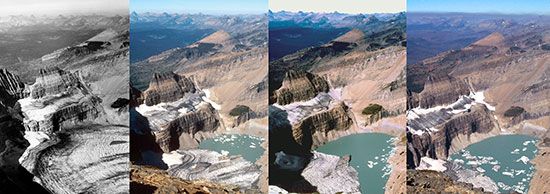
The carbon cycle regulates the Earth’s climate by balancing the amount of carbon dioxide in the atmosphere. However, human activities—such as burning fossil fuels and deforestation—have disrupted this balance, leading to increased atmospheric carbon dioxide and global warming.104
Can you explain the nitrogen cycle and its significance in ecosystems?
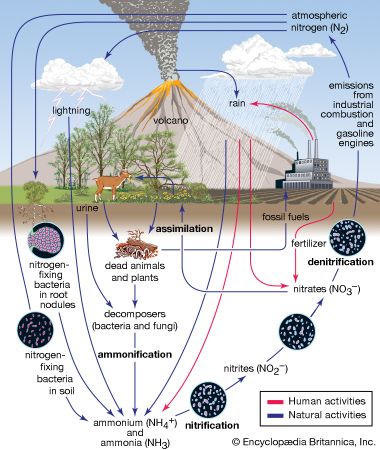
The nitrogen cycle is the essential process by which nitrogen circulates through nature. Although nitrogen gas makes up 78 percent of the atmosphere, most organisms cannot use it in this form. Through microbial transformations, nitrogen is converted into reactive compounds that sustain life.1213
Key Processes
- Nitrogen Fixation: Nitrogen gas is converted into inorganic compounds (like ammonia) by specific bacteria, blue-green algae, or abiotic means like lightning.1213
- Assimilation: Plants absorb nitrates and ammonia to build proteins and nucleic acids, which animals then obtain by consuming plants.1213
- Ammonification & Nitrification: Decomposers break down waste into ammonia, which nitrifying bacteria then convert into nitrates for plant uptake.12
- Denitrification: Denitrifying bacteria convert nitrates back into atmospheric nitrogen gas.12
Significance
Nitrogen is fundamental to life because it is a core component of DNA, RNA, amino acids, chlorophyll, and ATP. By cycling this nutrient through the biosphere, the cycle ensures that nitrogen remains available for the growth and survival of all living organisms.131214
Sources
- Anthropocene Epoch - The scale of human activity — Encyclopædia Britannica
- hydrosphere - Buildup of greenhouse gases — Encyclopædia Britannica
- Biogeochemical cycle — Encyclopædia Britannica
- Biosphere - The carbon cycle — Encyclopædia Britannica
- nitrogen fixation — Encyclopædia Britannica
- soil - Soils and global warming — Encyclopædia Britannica
- Biosphere - The cycling of phosphorus and other essential nutrients — Encyclopædia Britannica
- Phosphorus cycle — Encyclopædia Britannica
- Biosphere - Nutrient cycling — Encyclopædia Britannica
- Carbon cycle — Encyclopædia Britannica
- photosynthesis - Photorespiration — Encyclopædia Britannica
- Nitrogen cycle — Encyclopædia Britannica
- Why is nitrogen essential to life? — Encyclopædia Britannica
- soil - Carbon and nitrogen cycles — Encyclopædia Britannica
Published on · 3 min read