Cassiopea
Cassiopea, commonly known as the upside-down jellyfish, maintains a unique nutritional strategy through a symbiotic relationship with algae known as…
How do Cassiopea jellyfish obtain their nutrients, and what is their relationship with symbiotic algae?
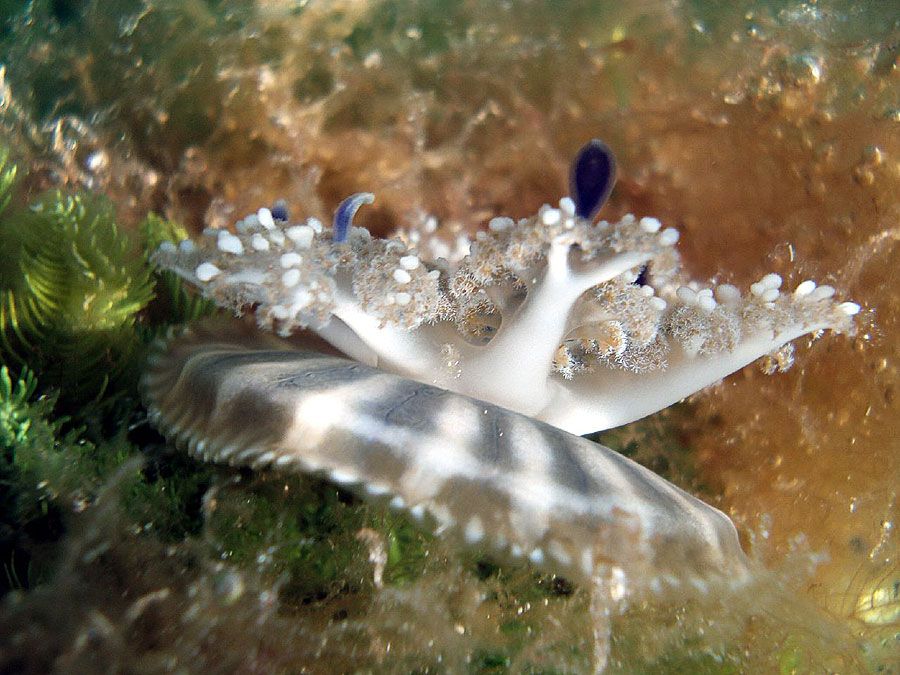
Cassiopea, commonly known as the upside-down jellyfish, maintains a unique nutritional strategy through a symbiotic relationship with algae known as zooxanthellae.1
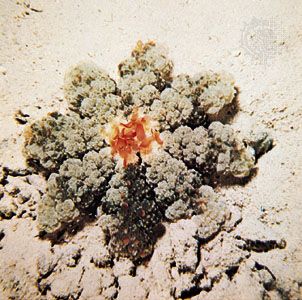
These jellyfish host the algae within specialized pouches located on their oral arms and across the surface of their bell-shaped medusa body. The jellyfish obtain essential nutrients from the photosynthesis performed by these symbionts. To facilitate this process, Cassiopea typically rests in an inverted position in shallow tropical waters, which maximizes the exposure of the algae to sunlight. Because they rely heavily on this energy source, these jellyfish swim infrequently compared to other species. The algae also provide the jellyfish with their diverse range of colors.1
How do Cassiopea jellyfish compare to other jellyfish genera in terms of behavior and physiology?
The genus Cassiopea, or upside-down jellyfish, exhibits distinct behavioral and physiological adaptations that set it apart from most other jellyfish genera within the class Scyphozoa.
Behavioral Differences
While most scyphozoan jellyfish are active, free-swimming predators that drift through the water column, Cassiopea is characterized by its sedentary lifestyle. It spends the majority of its time resting in an inverted position on the seafloor in shallow tropical waters. This behavior is a direct adaptation to its unique nutritional strategy, as it allows the jellyfish to maximize sunlight exposure for its symbiotic algae. In contrast, other members of the order Rhizostomeae—such as the “football jellyfish” (Rhizostoma)—are typically vigorous swimmers.12
Physiological Distinctions
Physiologically, Cassiopea differs from many other jellyfish in the following ways:
- Nutritional Strategy: Unlike many jellyfish that capture prey using stinging tentacles, Cassiopea relies heavily on nutrients derived from the photosynthesis of symbiotic zooxanthellae housed in its oral arms and bell.1
- Anatomy: While other rhizostomes use their fused, spongy oral arms for filter feeding, Cassiopea has evolved to utilize these structures primarily as a habitat for its symbionts. Furthermore, Cassiopea lacks the marginal tentacles found in many other jellyfish species.12
- Coloration: The presence of varied symbiotic algae gives Cassiopea a wide range of color varieties, a trait less pronounced in many other jellyfish genera.1
How does the Cassiopea jellyfish’s unique upside-down orientation affect its behavior and lifestyle?
The upside-down orientation of the Cassiopea jellyfish is a specialized adaptation that fundamentally dictates its lifestyle and energy acquisition. By resting inverted on the seafloor in shallow tropical waters, the medusa maximizes the surface area of its oral arms and bell exposed to sunlight.1
This positioning is essential for the jellyfish’s survival because it hosts symbiotic algae (zooxanthellae) within specialized pouches on its body. These algae provide the jellyfish with vital nutrients through photosynthesis. Consequently, the jellyfish’s behavior is largely sedentary; it swims infrequently compared to other jellyfish, as its primary nutritional needs are met by the energy produced by its symbionts rather than active hunting.1
What are some of the most common species within the Cassiopea genus?
It appears there is a misunderstanding regarding the classification of the Cassiopea genus. While the provided search results describe the general characteristics of the genus Cassiopea—such as its inverted lifestyle and symbiotic relationship with algae—they do not list specific species within this genus.
It is important to distinguish Cassiopea (the jellyfish) from other similarly named entities mentioned in the search results, such as the constellation Cassiopeia and the plant genus Cassiope, which are unrelated to the marine animal jellyfish.1456
Because the provided information does not contain a list of specific species within the Cassiopea jellyfish genus, I cannot provide those details.
Sources
- Cassiopea — Encyclopædia Britannica
- Feeding behaviour - Types of food procurement — Encyclopædia Britannica
- jellyfish — Encyclopædia Britannica
- Cassiopeia — Encyclopædia Britannica
- Cassiope — Merriam-Webster
- Cassiopeia — Merriam-Webster
Published on · 3 min read