Cheilostomata
Cheilostomata is a major order of calcified bryozoans, which are small, colonial, aquatic invertebrate animals. First appearing during the Jurassic period…
What is Cheilostomata?
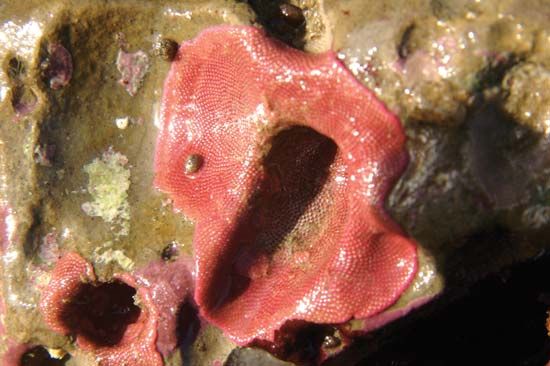
Cheilostomata is a major order of calcified bryozoans, which are small, colonial, aquatic invertebrate animals. First appearing during the Jurassic period, these exclusively marine organisms are the most abundant and diverse group of modern bryozoans, with approximately 2,800 described species.12
Individual members of a cheilostome colony are typically less than 1 mm in size and are protected by a calcareous or chitinous covering. A defining feature of the order is the presence of an operculum—a lidlike structure that closes the aperture when the animal’s polypide is retracted. These colonies often exhibit an attractive, plantlike appearance and can grow in either erect or encrusting forms.12
What are bryozoans and how do they live in colonies?
Bryozoans, also known as moss animals or Ectoprocta, are aquatic invertebrates that live in colonies composed of numerous interconnected units called zooids. While each zooid functions as a complete animal—possessing a digestive tract, nervous system, and a lophophore (a ring of ciliated tentacles for feeding)—they remain physically and physiologically linked within the colony.3
Colony Structure and Life
Colonies are formed through asexual budding, where all zooids originate from a single founding individual. These colonies vary significantly in form, ranging from gelatinous or membranous crusts to hard, calcified skeletons that may branch like twigs or form leaflike fronds.34
Integration within the colony is maintained through interzooidal pores and specialized tissues, such as the funiculus, which distribute nutrients to different areas, including growing edges. This connectivity allows for coordinated behavior; for instance, a disturbance to one zooid can trigger a withdrawal response in its neighbors. While colonies can be partially damaged without fatal consequences, they continue to expand through budding until environmental conditions or catastrophes terminate their growth.56
How do marine animals build calcareous skeletons?
Marine animals build calcareous skeletons by extracting calcium carbonate from seawater to construct their protective structures. This process is essential for a wide variety of organisms, including corals, mollusks, echinoderms, and bryozoans.891011
Mechanisms of Calcification
- Secretion: Many organisms, such as corals, secrete calcium carbonate from their ectoderm (outer tissue layer) to form rigid skeletal cups or frameworks. In colonial corals, this process is often aided by symbiotic, photosynthetic algae called zooxanthellae, which help the coral-algae complex secrete the calcium carbonate matrix.10912
- Layered Growth: Mollusks, such as bivalves and gastropods, grow their shells through marginal and surface additions of calcium carbonate on the inner side of the shell.10
- Internal Structures: Echinoderms, including starfish and sea urchins, develop calcareous ossicles within their mesoderm (middle tissue layer), which provide structural support and protection.10
- Planktonic Deposition: Microscopic organisms like foraminiferans and coccolithophores secrete calcium carbonate tests (shells) while floating in the upper ocean; upon death, these shells settle to the seafloor.136
Environmental Sensitivity
The ability of these organisms to build and maintain their skeletons depends on the availability of carbonate ions in seawater. Because ocean acidification reduces the concentration of these ions, it makes it increasingly difficult for marine calcifiers to obtain the raw materials necessary for skeletal growth, potentially threatening the stability of marine food chains8.8
What other types of animals are found in the Jurassic period?
The Jurassic Period (201.3 million to 145 million years ago) was a time of significant biological diversification, characterized by the dominance of dinosaurs on land and a thriving array of life in the oceans.15
Terrestrial Animals
On land, archosaurs—including dinosaurs, crocodiles, and pterosaurs—dominated the ecosystems.1516
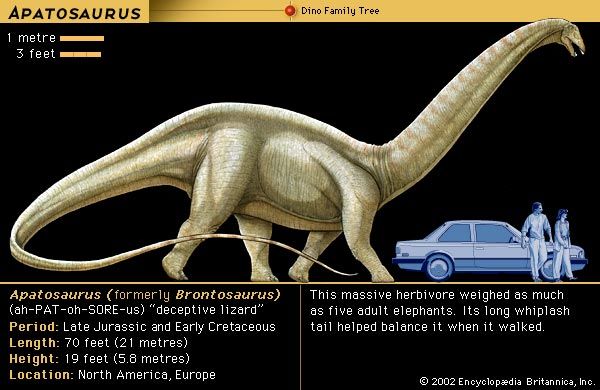
- Dinosaurs: These included massive, long-necked sauropods like Apatosaurus, carnivorous theropods such as Allosaurus, and armored ornithischians like Stegosaurus.16
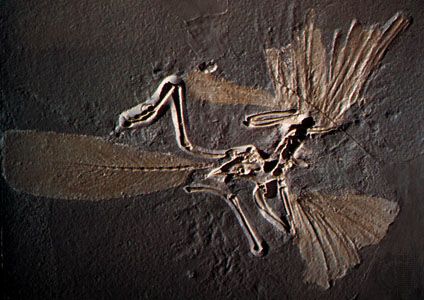
- Early Birds: Birds made their first appearance, evolving from small theropods; the famous feathered dinosaur Archaeopteryx is a key example.1516
- Other Vertebrates: Early mammals were present but remained small and insignificant. Other reptiles, such as turtles and modern forms of lizards, also inhabited the landscape.16
Marine Animals
The oceans were highly diverse, featuring both invertebrates and large swimming vertebrates.15
- Marine Reptiles: Large predators included ichthyosaurs, plesiosaurs, and pliosaurs, which were among the largest carnivorous reptiles ever discovered.1718
- Fish: Cartilaginous fishes (sharks) and bony fishes were abundant, including the massive Leedsichthys.18
- Invertebrates: Cephalopods like ammonites and squidlike belemnites were common. Other marine life included bivalves, gastropods, echinoderms (such as crinoids and sea urchins), and the first true crabs and lobsters.19
Sources
- Cheilostomata — Encyclopædia Britannica
- Cheilostomata — Merriam-Webster
- moss animal — Encyclopædia Britannica
- moss animal - Colonies — Encyclopædia Britannica
- moss animal - Size range and diversity of structure — Encyclopædia Britannica
- moss animal - Distribution and abundance — Encyclopædia Britannica
- moss animal - Reproduction and life cycle — Encyclopædia Britannica
- ocean acidification — Encyclopædia Britannica
- skeleton - Calcareous structures — Encyclopædia Britannica
- seawater - Dissolved inorganic substances — Encyclopædia Britannica
- hydrosphere - The modern hydrosphere — Encyclopædia Britannica
- coral reef - Corals and other reef-building organisms — Encyclopædia Britannica
- Marine ecosystem - Benthos — Encyclopædia Britannica
- sedimentary rock - Origin of limestones — Encyclopædia Britannica
- A Journey Through Time Since the Precambrian - Jurassic Period: 201.3 million to 145 million years ago — Encyclopædia Britannica
- Jurassic Period - Protists and invertebrates — Encyclopædia Britannica
- Jurassic Period - Vertebrates — Encyclopædia Britannica
- Jurassic Period - Marine life — Encyclopædia Britannica
- Jurassic Period - Vertebrates — Encyclopædia Britannica
Published on · 3 min read