Bagheera Kiplingi
Bagheera kiplingi is a unique jumping spider that has adapted to a largely herbivorous diet, relying on swollen-thorn acacia trees for both food and shelter.
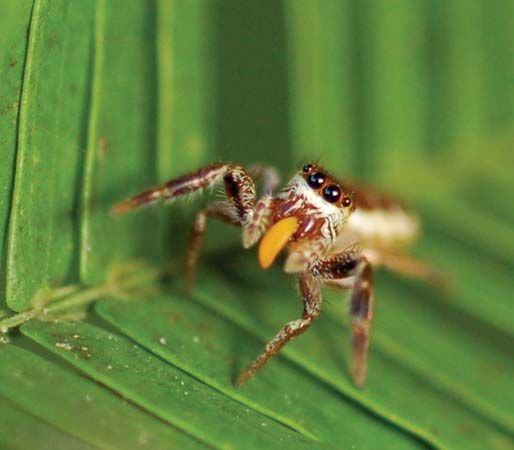
How does Bagheera kiplingi interact with the acacia trees it lives on?
Bagheera kiplingi is a unique jumping spider that has adapted to a largely herbivorous diet, relying on swollen-thorn acacia trees for both food and shelter.12
The spider interacts with the tree and its resident insects in the following ways:
- Foraging: The spider primarily feeds on “Beltian bodies,” which are protein- and sugar-rich nubs found on the tree’s leaflets and stalks. It also consumes acacia nectar.21
- Avoiding Mutualists: The acacia trees maintain a mutualism with aggressive Pseudomyrmex ants, which defend the tree. B. kiplingi actively avoids these ants by nesting in areas where ant populations are sparse, such as on old leaves, and using its agility to jump away if an encounter occurs.12
- Opportunistic Feeding: While primarily vegetarian, the spider may occasionally consume nectar flies or the larvae of the resident ants.12
Scientists believe this behavior evolved because the acacia provides a reliable, year-round food source and secure nesting site.2
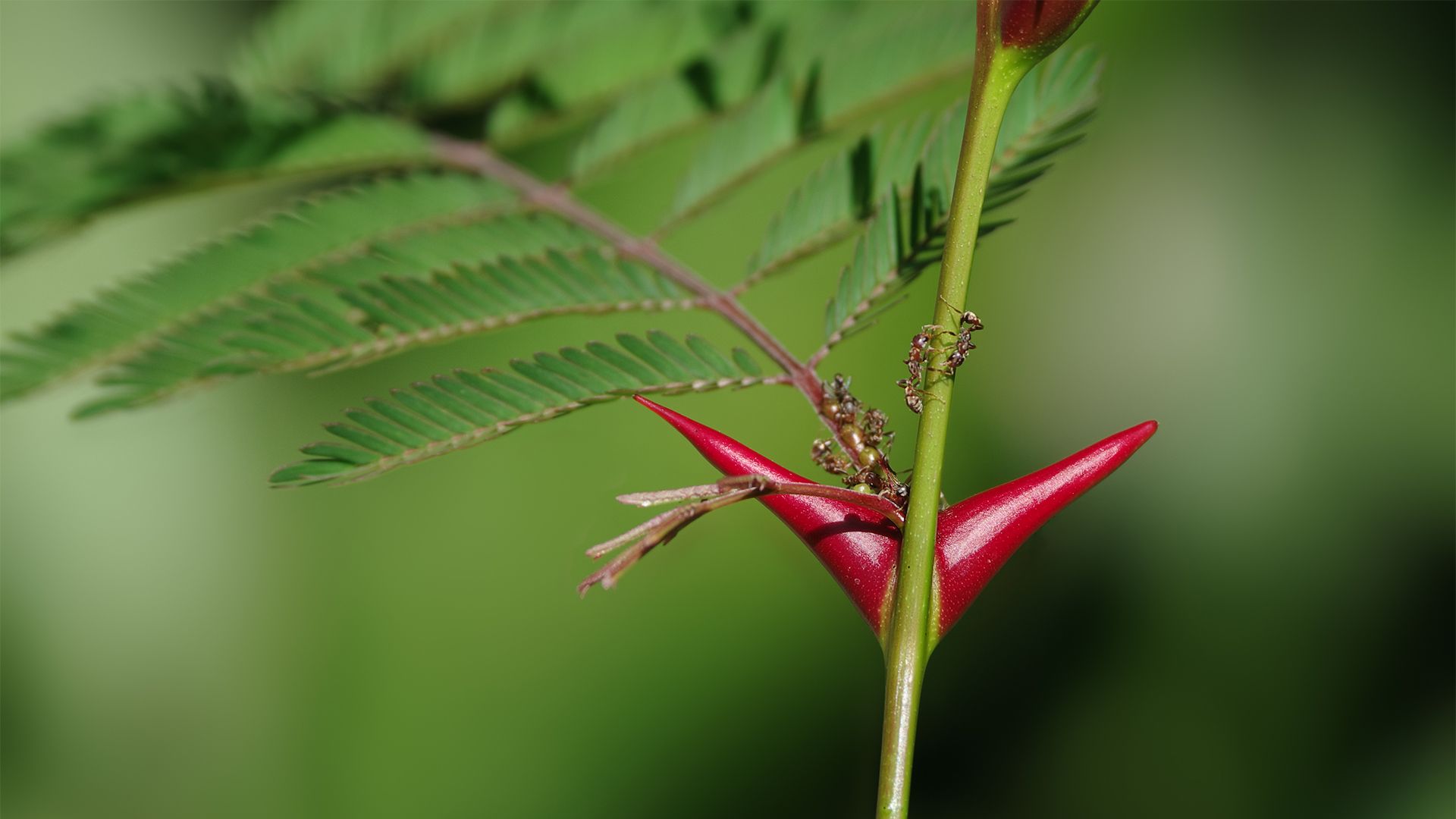
What physical characteristics help Bagheera kiplingi in its herbivorous lifestyle?
The herbivorous lifestyle of Bagheera kiplingi is primarily supported by behavioral adaptations rather than specialized physical features for plant consumption. While most jumping spiders are carnivorous ambush hunters, B. kiplingi utilizes its inherent agility and sensory capabilities to forage for plant-based food sources.12
Key factors that facilitate its unique diet include:
- Agility and Locomotion: Like other jumping spiders, B. kiplingi possesses an internal hydraulic system that allows it to leap many times its body length. This physical capability is essential for its survival, as it allows the spider to quickly jump to nearby leaves to avoid the aggressive Pseudomyrmex ants that defend the acacia trees.21
- Vision: The spider benefits from the excellent vision characteristic of the Salticidae family, which features eight eyes and high-resolution depth perception. This allows the spider to navigate its environment, locate protein-rich “Beltian bodies” on the acacia leaflets, and detect the presence of patrolling ants.123
- Foraging Behavior: Because it does not build webs, the spider must actively hunt and forage. Its ability to move across the tree canopy enables it to exploit the year-round availability of acacia nectar and Beltian bodies, which serve as its primary food source.1
Where is the natural habitat of Bagheera kiplingi?
The natural habitat of Bagheera kiplingi is located in Mexico and Central America.12
Within these regions, the spider is specifically associated with swollen-thorn acacia trees, which serve as its primary environment for both nesting and foraging. Because these trees maintain their leaves year-round, they provide a stable habitat and a consistent food source for the spider, which must navigate the presence of the aggressive Pseudomyrmex ants that also inhabit these plants. To avoid these ants, the spiders often build their nests on older leaves or in areas of the tree where ant activity is less frequent.12
We could dive deeper into the specific mutualistic relationships that define the ecosystems where these spiders live.
How do scientists study Bagheera kiplingi in the wild?
Sorry, the Britannica knowledge base does not contain information regarding the specific methodologies scientists use to study Bagheera kiplingi in the wild.
While the provided resources detail the spider’s unique herbivorous diet, its mutualistic environment, and its physical characteristics, they do not describe the field techniques or research protocols employed by scientists to observe or collect data on this species in its natural habitat.
Sources
- Nine Incredible Jumping Spiders - Bagheera kiplingi : The vegetarian — Encyclopædia Britannica
- Bagheera kiplingi — Encyclopædia Britannica
- jumping ant spider — Encyclopædia Britannica
- jumping spider — Encyclopædia Britannica
- spider - Courtship — Encyclopædia Britannica
- arachnid - Locomotion — Encyclopædia Britannica
Published on · 3 min read