Castor-oil Plant
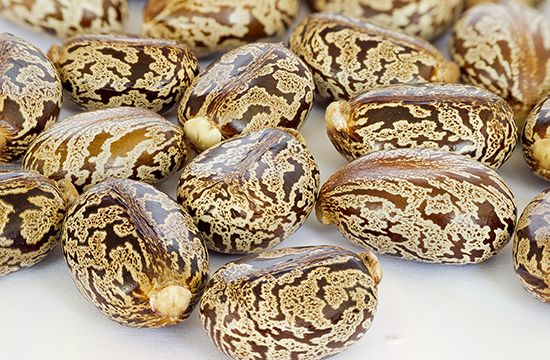
The castor-oil plant (Ricinus communis) is believed to be native to tropical Africa. While it originated in that region, it has since become naturalized…
Where is the castor oil plant native to, and in which regions is it cultivated?
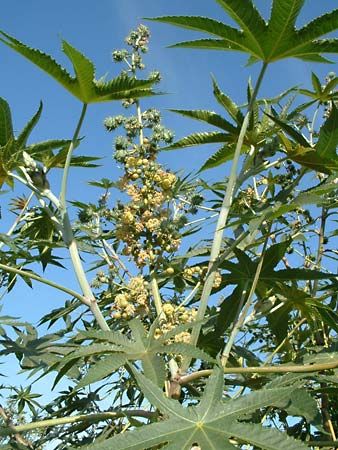
The castor-oil plant (Ricinus communis) is believed to be native to tropical Africa. While it originated in that region, it has since become naturalized throughout warm climates across the globe.1
Commercially, the plant is primarily cultivated in India, China, and Brazil. These regions produce the majority of the world’s supply of castor oil, which is extracted from the plant’s seeds for a wide variety of industrial and pharmaceutical applications. Because the seeds contain ricin, a highly toxic substance, the plant requires careful handling, and it is often grown as an ornamental annual in temperate regions where it does not reach its full tropical height.12
What are the primary uses and applications of castor oil extracted from this plant?
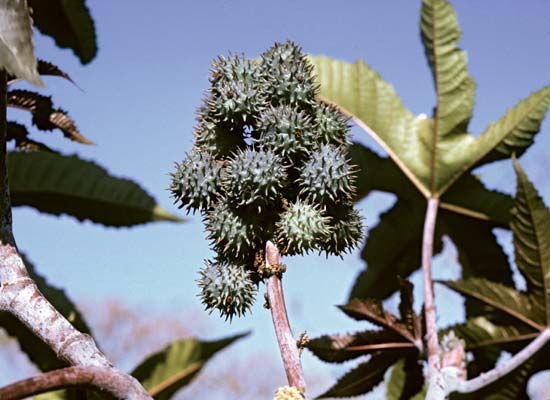
Castor oil is a versatile, nonvolatile fatty oil derived from the seeds of the castor-oil plant. Due to its unique chemical composition, which consists almost entirely of the triglyceride ricinoleic acid, it serves a wide range of industrial and commercial purposes.2
Industrial and Chemical Applications
The majority of castor oil is consumed by the industrial sector for the production of:
- Materials: Synthetic resins, plastics, fibers, paints, and varnishes.2
- Chemical Additives: It is used to create drying oils, plasticizers, and various chemical derivatives.2
- Lubricants: Its high viscosity makes it effective for greases, lubricants, and hydraulic fluids.2
- Textiles and Printing: It is utilized in textile finishing, printing inks, and as a dyeing aid, such as in the production of Turkey-red oil.2
Other Uses
Beyond heavy industry, castor oil is found in cosmetics, hair oils, soaps, and fungistatic compounds. It has also been used in specialized applications like embalming fluid. While historically used as a cathartic, its internal use can be harmful and is generally discouraged.23
What role has the castor oil plant played in history and traditional medicine?
The castor-oil plant (Ricinus communis) has a long history of human interaction, primarily centered on its potent seeds. While the plant is native to tropical Africa, it has been utilized globally for centuries, with its name likely originating from its historical use as a medicinal substitute for castoreum, a substance derived from beavers.213
In traditional medicine, castor oil was widely employed as a cathartic to treat digestive issues. However, it is important to note that the plant’s seeds contain ricin, one of the most toxic substances known. Because of this, the internal use of the oil can be harmful, and modern medical consensus discourages its use as a laxative due to these significant health risks.231
Beyond its medicinal history, the plant has been cultivated for its oil-rich seeds since at least the 18th century for various industrial applications. Today, it is also valued as an ornamental plant in landscaping, though the toxic nature of its seeds requires careful management.2314
How is castor oil extracted from the plant, and what is the process involved?
Castor oil is extracted from the seeds of the castor bean (Ricinus communis) through two primary methods: pressing or solvent extraction.2
- Pressing: This mechanical process involves applying high pressure to the seeds to force the oil out of the plant material. It is a traditional and common method for extracting vegetable oils.2
- Solvent Extraction: This method utilizes chemical solvents to dissolve and separate the oil from the seed solids. After the oil is extracted, the solvent is typically removed, leaving behind the crude oil.2
Once the oil has been obtained, it may undergo further processing, such as bleaching, if specific color requirements are needed. During bleaching, the oil is treated with agents like fuller’s earth, activated carbon, or activated clays to adsorb impurities and pigments, which are then removed through filtration.5
Sources
- castor-oil plant — Encyclopædia Britannica
- castor oil — Encyclopædia Britannica
- castor oil — Merriam-Webster
- castor-oil plant — Merriam-Webster
- fat and oil processing - Bleaching — Encyclopædia Britannica
Published on · 3 min read